
In This Article
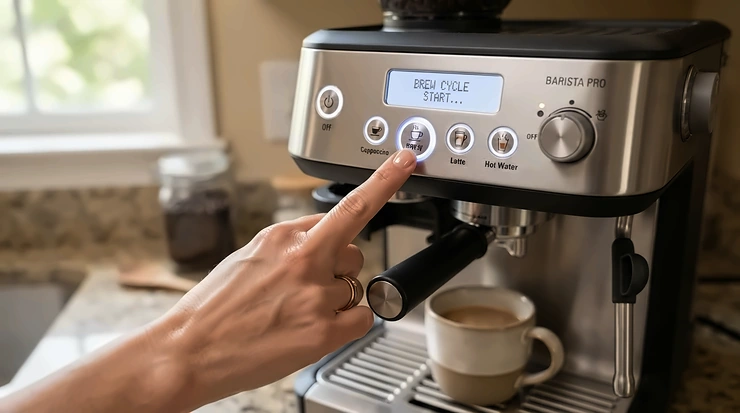
A thermoblock espresso machine heats water on demand by pushing it through a metal block with a built-in heating element, rather than keeping a full tank hot. That means a ready-in-seconds start, a compact body, and a friendlier price. The trade-off is less temperature stability than a boiler. That’s the bargain every thermoblock espresso machine makes.
Here’s the thing about 2026: the home espresso aisle is crowded, loud, and packed with promises. Some machines cost more than a used scooter. Meanwhile, a good thermoblock espresso machine can take you from cold counter to first shot before your toast pops, without demanding a degree in thermodynamics. If you want the history of how pump machines evolved, the espresso machine overview on Wikipedia is a solid starting point.
A quick note on how this guide works. I haven’t pulled shots on these seven machines, and I won’t pretend otherwise. What you’ll get instead is spec-by-spec analysis, aggregated sentiment from published reviews, and plain-spoken reasoning about who each model suits. Where reviewers disagree, I’ll say so.
We’ll cover seven real models, from a low-cost thermoblock machine around $100-$150 to a prosumer dual-thermoblock showpiece. Along the way we’ll weigh what a value thermoblock espresso machine really delivers, why quick warm-up matters more than spec sheets admit, and how much basic espresso functionality you actually need.
Thermoblock Espresso Machine Quick Comparison
Short on time? Here’s the lineup at a glance. Heat-up times come from published reviews and manufacturer descriptions, and prices are ranges, so check current price before you buy.
| Model | Reported Heat-Up | Heating Tech | Price Range | Best For |
|---|---|---|---|---|
| Capresso EC100 | ~45 sec | Thermoblock | $100-$150 | First-timers on a tight budget |
| De’Longhi Dedica EC685 | ~35-40 sec | Thermoblock | $170-$230 | Tiny kitchens |
| Breville Bambino | ~3 sec | ThermoJet | Around $300 | Fast, compact manual control |
| Breville Bambino Plus | ~3 sec | ThermoJet | $400-$500 | Hands-free milk drinks |
| Calphalon Temp iQ | ~1 min | Thermoblock + PID | $300-$400 | Steadier temps on a budget |
| De’Longhi La Specialista Arte Evo | ~40 sec | Thermoblock-based dual heating | $450-$700 | Built-in grinder convenience |
| Ascaso Steel DUO PID | ~3-5 min | Dual thermoblock + PID | Upper-$1,000s | Brewing and steaming at once |
Read the table top to bottom and a pattern emerges: price climbs with control, not speed. The Capresso EC100 and De’Longhi Dedica EC685 are quick enough already, while the Breville Bambino and Breville Bambino Plus win the stopwatch by a mile. Pay more and you’re really buying temperature stability, a grinder, or the ability to brew and steam together, as with the De’Longhi La Specialista Arte Evo and Ascaso Steel DUO PID.
💬 Just one click — help others make better buying decisions too!😊
Top 7 Thermoblock Espresso Machine Picks: Expert Analysis
1. Capresso EC100 — cheapest ticket to real pump espresso
The Capresso EC100 earns its slot by putting a genuine 15-bar pump and a stainless-lined thermoblock within a $100-$150 budget.
One published review says the pump is regulated to roughly 9 bars at the puck, and the thermoblock reportedly reaches brew-ready in about 45 seconds. In practice, that’s a morning shot without a ritual. Brew temperature sits in the mid-to-high 190s°F with a swing of several degrees, which is fine for medium and dark roasts but unkind to delicate light roasts.
Based on the spec comparison, this is a low-cost thermoblock machine for someone leaving pods behind. Twin frothing positions and a self-locking filter holder keep basic espresso functionality nearly idiot-proof. Chase single-origin nuance and you’ll hit the ceiling quickly.
Reviewers on retail sites consistently describe it as easy to use and good for the money, though many of those reviews are several years old. Treat the sentiment as directional, not current.
Pros:
- ✅ Real 15-bar pump at entry-level cost
- ✅ Beginner-friendly twin frothing positions
- ✅ Works with ground coffee or ESE pods
Cons:
- ❌ Temperature swings limit light roast results
- ❌ Small review pool, mostly older reviews
Typically in the $100-$150 range; check current price. Verdict: a strong value thermoblock espresso machine for the truly budget-minded.
2. De’Longhi Dedica EC685 — narrowest footprint here, about 6 inches
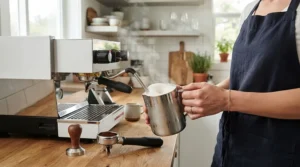
The De’Longhi Dedica EC685 solves a problem spec sheets ignore: your counter is already full.
At roughly 15 cm wide, it fits beside a kettle and a toaster. Inside sit a 15-bar pump, a thermoblock that reviewers clock at 35-40 seconds, a 51mm portafilter with pressurized baskets, and a manual panarello steam wand. Translation: quick warm-up, forgiving shots, and milk drinks that look decent with a little practice.
My read is that the Dedica suits one or two drinks at a time. Because a single thermoblock handles both jobs, switching from brew to steam takes roughly 30-40 seconds, per reviewers. That’s fine for a solo latte and tedious when guests arrive. Flushing a little water through the group first tightens up shot temperature.
Reviewers praise the size and speed. The most common long-term complaints involve scale-related thermoblock trouble and weakening pumps, both tied to descaling habits.
Pros:
- ✅ Remarkably slim, about 6 inches wide
- ✅ Quick warm-up of roughly 35-40 seconds
- ✅ Pressurized baskets make early shots forgiving
Cons:
- ❌ Slow switch between brewing and steaming
- ❌ Scale-sensitive without disciplined descaling
Roughly $170-$230; check current price. Verdict: the best small-kitchen pick on this list.
3. Breville Bambino — ready in about three seconds
Three seconds. That’s the Breville Bambino‘s whole personality, and it’s a good one.
Breville’s ThermoJet heater is technically a thermocoil-style design that reviewers routinely lump in with thermoblocks, so it earns a place here. It reaches roughly 93°C almost instantly, with PID control, a 15-bar pump regulated to 9-bar extraction, and low-pressure pre-infusion. The 54mm portafilter shares baskets and accessories with Breville’s wider lineup, so upgrading later doesn’t mean starting over. At about 6.3 inches wide, it tucks under most cabinets.
On paper this means you can grind, dose, and pull a shot before the kettle finishes boiling. Beginners who want to learn real technique will appreciate that the manual steam wand teaches milk texturing instead of hiding it. The catch, as owners tend to discover, is a fixed brew temperature near 200°F, which can make light roasts taste sour.
Review roundups consistently praise value and speed, and the most common long-run note is that enthusiasts outgrow the fixed temperature.
Pros:
- ✅ Near-instant ThermoJet heat-up
- ✅ PID control with pre-infusion at this price
- ✅ 54mm portafilter with wide accessory support
Cons:
- ❌ Fixed brew temperature around 200°F
- ❌ Can’t brew and steam simultaneously
Typically around $300, give or take; check current price. Verdict: arguably the strongest value thermoblock espresso machine for learners who care about technique.
4. Breville Bambino Plus — hands-free milk texturing
The Breville Bambino Plus takes everything good about the Breville Bambino and adds an automatic steam wand.
You get the same 3-second ThermoJet, PID control, and 54mm stainless portafilter holding about 18 grams. The addition is automatic milk texturing at roughly 266°F steam, with a manual mode when you want control. One published test measured brew temperature holding within about 1°F, territory usually claimed by far pricier machines.
Here’s what to weigh: auto milk is a real convenience for a household with one espresso fan and one “just a latte, please” partner. It also helps beginners get decent microfoam on day one. But one review site flags reliability caveats, so factor in warranty support.
Aggregated sentiment is strongly positive, with one review site citing roughly 4.2 out of 5 on an Amazon listing. Recurring praise centers on instant start and consistent milk.
Pros:
- ✅ Automatic milk texturing plus manual mode
- ✅ Same 3-second heat-up and PID control
- ✅ Stainless 54mm portafilter, single and dual-wall baskets
Cons:
- ❌ Costs noticeably more than the Breville Bambino
- ❌ Some reviewers flag long-term reliability concerns
Roughly $400-$500; check current price. Verdict: worth the premium if milk drinks are your daily default. Otherwise buy the base Breville Bambino and spend the difference on a grinder.
5. Calphalon Temp iQ — PID stability with a 58mm portafilter
Few machines in this range pair PID control with a café-size 58mm portafilter, and that’s exactly the Calphalon Temp iQ‘s pitch.
It combines a 15-bar Italian pump, thermoblock heating, pre-infusion, and a dial interface with preset single and double shots. The PID aims to hold brew water near 198°F. Reviewers report roughly a minute to readiness and about 15 seconds to switch from brewing to steaming, quicker than most single-boiler machines. The wider basket gives coffee more room and spreads water more evenly.
The honest read: this is for the buyer who wants fewer variables, not more. Presets and PID make shots repeatable. The flip side, per reviewers, is no over-pressure valve, which can mean occasional over-pressurized shots. They also cite a plastic base and a portafilter and drip tray that draw design complaints.
Retail reviewers are largely positive about crema and ease of use, while more critical sites rate espresso quality as merely average.
Pros:
- ✅ PID plus thermoblock for steadier temperatures
- ✅ Commercial-size 58mm portafilter
- ✅ Brew-to-steam switch of about 15 seconds
Cons:
- ❌ No over-pressure valve, per reviewers
- ❌ Plastic base and fiddly drip tray
Roughly $300-$400; check current price. Verdict: a decent middle ground, but compare it against the Breville Bambino Plus before buying.
6. De’Longhi La Specialista Arte Evo — grinder and tamping station built in
The De’Longhi La Specialista Arte Evo is less a machine than a workflow: grind, tamp, brew, steam.
An integrated burr grinder (8 settings, per owner reviews) feeds a 51mm portafilter. A Smart Tamping Station presses the puck, Active Temperature Control offers three brew-temperature presets, and a front gauge shows pressure. Retailer listings describe the heating as a thermoblock plus a second heating element, while some reviewers call it a dual thermoblock. One test of the closely related Arte measured steam recovery near 40 seconds.
Think of the extra cost as a grinder you don’t have to buy. One reviewer noted that a Breville Bambino Plus plus a decent grinder lands at roughly the same total. The temperature presets let you nudge extraction by bean. The downsides, mentioned by some buyers: dense foam and modest crema, and a cold brew mode that underwhelms.
Buyers rate it strongly, from small samples near 4.8 out of 5 at one retailer to the low-4s on larger Amazon-linked counts.
Pros:
- ✅ Built-in grinder and tamping station
- ✅ Three brew-temperature presets
- ✅ Front pressure gauge helps you learn
Cons:
- ❌ Dense foam and modest crema for some buyers
- ❌ Cold brew mode underwhelms
Roughly $450-$700 with frequent discounts reported; check current price. Verdict: the best all-in-one for people who hate gadget-shopping.
7. Ascaso Steel DUO PID — brews and steams at the same time
This is what happens when a thermoblock grows up. The Ascaso Steel DUO PID uses two stainless thermoblocks, each with independent PID control, so you can pull a shot while steaming milk.
Add volumetric programming and a 58mm portafilter. Brew temperature adjusts in one-degree steps, and pressure adjusts with a set screw underneath. It’s about 15 kg and roughly 10.5 inches wide. Reported readiness runs from about 3 to 5 minutes, slower than budget machines but far quicker than most boilers.
Simultaneous brew and steam makes two-latte mornings painless. One European test said its shot-to-shot consistency stands up to heat-exchanger machines. Milk-first drinkers should pause, though. A reviewer called frothing not its core strength, and others dislike the wide, bulbous steam tip.
Owners praise consistency and build, with a recurring complaint about a plastic water tank that can leach taste or smell.
Pros:
- ✅ Dual PID thermoblocks for simultaneous brew and steam
- ✅ Adjustable temperature and volumetric shot control
- ✅ Solid build for a thermoblock design
Cons:
- ❌ Steam wand design draws criticism
- ❌ Premium price and tank odor complaints
Upper-$1,000s range; check current price. Verdict: not a value thermoblock espresso machine, but a justified step-up for committed enthusiasts.
Practical Usage Guide: Your First 30 Days with a Thermoblock Espresso Machine
Product listings tell you what’s in the box. They rarely tell you what to do on a Tuesday morning. This routine is built from setup advice published for these machines, so adapt it to your model’s manual.
Day 1: Flush and prime. Run water through the machine and portafilter to clear manufacturing residue, and follow your manual’s priming steps.
Week 1: Preheat everything. Run a short blank shot through the group and portafilter, then warm your cup. Reviewers of the De’Longhi Dedica EC685 and similar models note that cold metal produces cooler, sourer shots, and thermoblocks are especially sensitive because they hold little heat.
Week 2: Dial in by time. Aim for a shot of roughly 25-30 seconds. Gushing means grind finer, choking means grind coarser. With pressurized baskets, moderate level tamping is plenty.
Week 3: Master steam sequencing. Pull the shot first, then switch to steam and wait for the ready light. On single-thermoblock models that wait runs roughly 15-40 seconds, per reviews. Purge the wand before and wipe it right after.
Week 4: Lock in descaling. Put a reminder on your calendar now, because skipping it is the classic thermoblock killer.
Three first-month mistakes show up again and again: skipping preheat, letting milk bake onto the wand, and ignoring the water tank.
Real-World Scenarios: Matching a Thermoblock Espresso Machine to Your Life
Specs only matter when they meet a real kitchen. Here are four profiles, each with a budget, a space, and a usage pattern.
The studio-apartment commuter ($200, one latte daily). Counter space is the constraint, so the De’Longhi Dedica EC685 fits the brief. Its slim body and quick warm-up suit a single weekday drink, and the brew-to-steam wait barely registers when you’re making one cup.
The couple splitting espresso and milk drinks ($450, five or six drinks weekly). The Breville Bambino Plus shines here. One partner pulls shots, the other presses auto milk, and nobody argues over steaming technique.
The upgrading enthusiast ($1,800 and up, double-latte mornings). The Ascaso Steel DUO PID answers the one thing smaller machines can’t: simultaneous brewing and steaming. Add a quality grinder and you have a serious setup in a compact footprint.
The student ($120, a dorm shelf). The Capresso EC100 is the sensible low-cost thermoblock machine here. It teaches grinding, dosing, and basic milk texturing without a big commitment.
✨ Ready to Pick Your Machine?
🔍 Take your home espresso to the next level with these carefully selected models. Click any highlighted product name to check current pricing and availability. These machines can help you create café-style drinks your household will love!
How to Choose a Thermoblock Espresso Machine
To choose a thermoblock espresso machine, match heat-up speed, milk needs, and budget to how you actually drink coffee, then weigh grinder and maintenance costs. A Seattle Coffee Gear explainer on thermoblocks notes the core trade: faster heating, but less consistent brew and steam temperatures. Use these steps:
- Set your total budget first. Include a grinder, because pre-ground coffee caps shot quality on any machine.
- Decide how many drinks you make at once. One drink at a time suits a single thermoblock. Back-to-back milk drinks point toward a dual-thermoblock design.
- Check footprint and cup clearance. A 6-inch machine solves space problems but may limit taller mugs.
- Pick your milk workflow. Manual wands teach technique, while automatic wands trade control for convenience.
- Weigh temperature control. PID and presets matter if you drink light roasts, less so with dark ones.
- Read the maintenance reality. Narrow thermoblock channels reward descaling and filtered water.
- Confirm warranty and support. Reliability caveats show up across the category, so coverage matters.
Head-to-Head: Seven Machines at a Glance
Specs read differently side by side. This table distills standout features, milk systems, and reviewer sentiment into one view.
| Model | Standout Spec | Milk System | Price Range | Reviewer Sentiment | Best For |
|---|---|---|---|---|---|
| Capresso EC100 | 15-bar pump, twin frother positions | Manual frother | $100-$150 | Positive on ease and value | Budget beginners |
| De’Longhi Dedica EC685 | ~6-inch width, 51mm | Manual panarello | $170-$230 | Positive on size; scale caveats | Small kitchens |
| Breville Bambino | 54mm, PID, pre-infusion | Manual wand | Around $300 | Strong on value; fixed temp caveat | Learners |
| Breville Bambino Plus | 54mm, auto milk | Auto + manual | $400-$500 | Strong; some reliability concerns | Milk drinkers |
| Calphalon Temp iQ | 58mm, PID | Manual wand | $300-$400 | Mixed to positive | Steady-temp seekers |
| De’Longhi La Specialista Arte Evo | Grinder, tamping station | Manual wand | $450-$700 | Strongly positive | All-in-one buyers |
| Ascaso Steel DUO PID | Dual PID, volumetrics | Manual no-burn wand | Upper-$1,000s | Positive; steam wand gripes | Enthusiasts |
The cleanest value story belongs to the Breville Bambino and De’Longhi Dedica EC685, which deliver quick warm-up and forgiving shots at modest prices. If milk convenience drives your decision, the Breville Bambino Plus justifies its premium. Reserve the Ascaso Steel DUO PID for when you’ve outgrown everything else, not as a first machine.
Thermoblock Espresso Machine vs Traditional Boiler Machines
Boilers store hot water, while a thermoblock espresso machine heats it as it flows. That single difference ripples through everything. A Clive Coffee guide to boiler types frames thermoblocks as cheaper and able to brew and steam together in some designs, but poorly suited to high drink volumes.
| Factor | Thermoblock | Traditional Boiler |
|---|---|---|
| Warm-up | Seconds to a few minutes | Often 10+ minutes |
| Temperature stability | Good with PID, variable without | Generally steadier |
| Footprint and price | Compact, lower cost | Larger, higher cost |
| Heavy milk sessions | Limited on single-block models | Better steam reserves |
| Best For | Quick weekday shots, small kitchens | Entertaining, tinkerers |
One reviewer reported that a heat-exchanger machine took around 25 minutes to reach optimal temperature, versus a few minutes for a budget thermoblock model. That gap decides whether you actually use the machine on weekdays. If you make two or three drinks daily, a thermoblock wins on convenience. If you host brunch weekly, a boiler earns its space.
Value Thermoblock Espresso Machine: Where Your Money Works Hardest
A value thermoblock espresso machine isn’t the cheapest one. It’s the one where each extra dollar buys something you’ll use. Here’s how the tiers compare.
| Tier | Models | Price Range | What You Gain | Best For |
|---|---|---|---|---|
| Budget | Capresso EC100, De’Longhi Dedica EC685 | $100-$230 | Real pump espresso, quick warm-up | Beginners |
| Mid-range | Breville Bambino, Breville Bambino Plus, Calphalon Temp iQ | $300-$500 | PID, pre-infusion, better accessories | Learners |
| Premium | De’Longhi La Specialista Arte Evo, Ascaso Steel DUO PID | $450-upper-$1,000s | Grinder or dual-thermoblock control | Enthusiasts |
Cost-per-use is the honest way to judge. A $200 machine used daily for three years works out to under 20 cents a day before beans, a sliver of a café drink. The sweet spot for most people is the mid-range tier, where the Breville Bambino gives you PID and pre-infusion without paying for features you may never touch. Spend more only when a specific limit, such as milk volume or temperature control, is actually bothering you.
Low-Cost Thermoblock Machine: What You Gain and What You Give Up
A low-cost thermoblock machine delivers surprising value, as long as you know where the corners were cut. The Capresso EC100 and De’Longhi Dedica EC685 both offer a 15-bar pump and quick warm-up under roughly $230, and that’s the real prize.
What you give up shows up in four places. Temperature swings of several degrees limit light roasts, and plastic construction raises durability questions. Pressurized baskets mask grind mistakes but also cap shot quality, and milk steaming is serviceable rather than silky.
My advice: buy the low-cost thermoblock machine, then invest in the grinder before anything else. Fresh, adjustable grinding improves shots more than a pricier machine paired with stale pre-ground coffee. If you find yourself craving more control after six months, that’s your cue to move up to the Breville Bambino.
A low-cost thermoblock machine also forgives you for being a beginner. Flushing the group, preheating the cup, and descaling on schedule will stretch its lifespan far more than any accessory.
Quick Warm-Up: What Fast Heat-Up Really Buys You
Quick warm-up changes behavior. A machine that takes 25 minutes gets used on weekends. One that takes under a minute gets used on Tuesday.
The range here is wide. The Breville Bambino and Breville Bambino Plus report about 3 seconds, the Capresso EC100 and De’Longhi Dedica EC685 land around 35-45 seconds, and the Calphalon Temp iQ takes roughly a minute. The Ascaso Steel DUO PID takes 3-5 minutes, still brisk next to a boiler.
Here’s the nuance spec sheets skip: a ready light doesn’t equal a stable shot. Reviewers recommend a short flush and a preheated portafilter even on the fastest machines. With quick warm-up, you’re buying time and energy savings, not permission to skip preparation.
Quick warm-up also pays off when you make a single decaf in the evening or a fast cup before a school run. For households where coffee happens in small, unplanned moments, this is the strongest argument for choosing a thermoblock espresso machine over a boiler.
Basic Espresso Functionality: What You Actually Need
Basic espresso functionality comes down to four things: a pump that delivers about 9 bars at the puck, a heater that holds a usable temperature, a portafilter that makes forgiving shots, and a steam wand that can texture milk.
Every machine in this guide clears that bar. The Capresso EC100 delivers basic espresso functionality for the least money, with pressurized baskets that produce crema even from imperfect grinds. The De’Longhi Dedica EC685 adds a slim body without sacrificing the essentials.
What isn’t required: gauges, grinders, and temperature presets. They’re nice, and the De’Longhi La Specialista Arte Evo includes all three, but they don’t define a good first machine.
Think of pressurized baskets as training wheels. They protect you early and limit you later. When you’re ready for single-wall baskets and finer control, choose a machine like the Breville Bambino, whose 54mm ecosystem lets you graduate without replacing everything.
Long-Term Cost & Maintenance of a Thermoblock Espresso Machine
The sticker price is only the opening bid. Water is the real long-term variable, because narrow thermoblock channels clog when scale builds up.
The USGS explanation of water hardness defines hardness as dissolved calcium and magnesium, and it varies widely across the United States. Water classed as hard or very hard will scale your machine faster, so descale on a tighter schedule.
Reviewers tie the most common complaints on the De’Longhi Dedica EC685, such as scale-related thermoblock trouble and weakening pumps, to descaling discipline. Budget a small yearly sum for descaler, a water filter or filtered water, and gaskets. Check the manual for your model’s recommended interval.
Over three years, a well-maintained Capresso EC100 or Breville Bambino can cost less per cup than most café habits. The same machine neglected can cost you a replacement. Total cost of ownership comes down to habits, not just hardware.
FAQ
❓ Can a thermoblock espresso machine make several milk drinks back to back?
❓ Is a low-cost thermoblock machine better than a pod machine?
❓ Do I need a grinder with a value thermoblock espresso machine?
❓ How often should I descale my machine?
❓ Are thermoblock espresso machines reliable long term?
Final Verdict
A thermoblock espresso machine rewards people who value speed, space, and simplicity. After weighing specs and aggregated reviews, here’s where I’d point each buyer.
If budget rules, the Capresso EC100 is the low-cost thermoblock machine that delivers basic espresso functionality for the least money. Tight on space? The De’Longhi Dedica EC685 is hard to beat. For most learners, the Breville Bambino is the best value thermoblock espresso machine here, with the Breville Bambino Plus worth the premium if milk drinks dominate your routine.
The Calphalon Temp iQ suits buyers who want PID steadiness and a larger portafilter, while the De’Longhi La Specialista Arte Evo wins for all-in-one convenience. The Ascaso Steel DUO PID is the enthusiast’s upgrade, built for simultaneous brewing and steaming.
Whichever you choose, remember the pattern: quick warm-up is a daily joy, but stable shots come from preheating, a good grinder, and regular descaling. Check current price and availability, pick the machine that matches your actual routine, and start pulling shots.
Recommended for You
- PID Espresso Machine For Espresso And Milk Drinks: 7 Best 2026
- PID-Controlled Single Boiler Espresso Machine: 7 Proven Picks 2026
- PID-Controlled Espresso Machine For Consistency: 7 Picks Worth Your Counter In 2026
Disclaimer: This article contains affiliate links. As an Amazon Associate, I earn from qualifying purchases. If you purchase products through these links, we may earn a small commission at no additional cost to you.
✨ Found this helpful? Share it with your friends! 💬🤗
