
In This Article
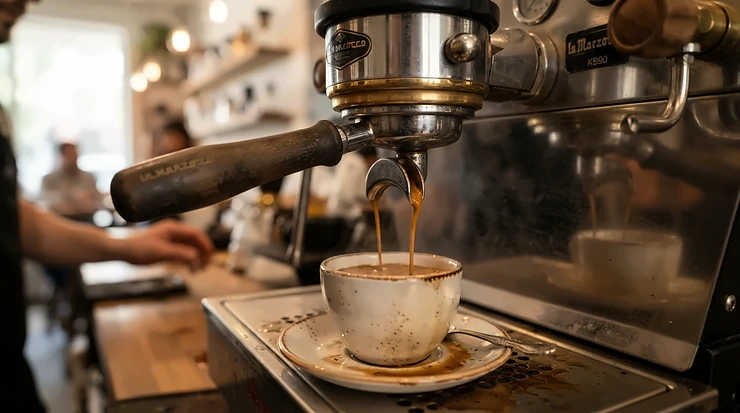
It’s 6:42 a.m. The dog needs out, your calendar is already lying to you, and the espresso machine is “thinking.” It glows, it ticks, it warms up like a cat deciding whether to leave the couch. A thermoblock espresso machine for quick heat-up exists to end that standoff. Instead of heating a whole tank of water for ten minutes, it flash-heats water on demand, so the wait shrinks from a coffee break to a held breath.
This guide is for people who care about warm-up time more than latte-art trophies. We compared seven real machines, from budget workhorses to a showpiece dual-thermoblock. The comparison draws on manufacturer specs, published expert reviews, and the aggregated themes in retailer customer feedback. No hands-on testing is claimed here. What you get is spec-by-spec reasoning, honest trade-offs, and plain-English advice.
Here’s the plot twist most listicles skip: “fast heat-up” covers a huge range. Some machines are ready in about 3 seconds. Others need two to five minutes before the whole brew path, portafilter included, is properly warm. A fast heat-up espresso machine only wins if the shot at second 40 tastes worth the shortcut.
That’s why we look at the full picture. We’ll cover the heating tech, the steam trade-offs, and the descaling chores nobody mentions at checkout. We’ll also show how a quick-start thermoblock machine can quietly improve your morning routine efficiency. Instant-on heating sounds like magic, and magic usually has fine print. Let’s read it together.
Quick Comparison: 7 Fast Heat-Up Picks at a Glance
| Machine | Heating System | Reported Heat-Up | Price Range | Best For |
|---|---|---|---|---|
| CASABREWS 5418 Pro | Thermoblock (FlashHeat) | ~25-45 sec | Around $130-$250 | CASABREWS 5418 Pro: tight budgets, first machine |
| Dedica Arte | Thermoblock | ~35-40 sec | Around $200-$300 | Dedica Arte: narrow counters, beginners |
| Temp iQ | Thermoblock + PID | ~30-60 sec | Mid-range; check current price | Temp iQ: step-up features without a grinder |
| Bambino | ThermoJet + PID | ~3 sec | Roughly $300-$400 | Bambino: black-coffee and Americano people |
| Bambino Plus | ThermoJet + PID | ~3 sec | Roughly $400-$500 | Bambino Plus: milk drinkers in a hurry |
| Barista Pro | ThermoJet + PID | ~3 sec | Around $650-$900 | Barista Pro: all-in-one bean-to-cup |
| Steel Duo PID | Dual thermoblock, dual PID | ~2-5 min | Upper-$1,000s | Steel Duo PID: brewing and steaming together |
Prices are ranges that may vary by retailer and date, so check current price before buying. Heat-up times are as reported by manufacturers and published reviews, and they differ by source. The pattern is clear. Breville’s ThermoJet trio dominates raw speed, while the Dedica Arte and CASABREWS 5418 Pro win on price and size. The Steel Duo PID is the odd one out: slower to fully warm, but it’s the only machine here that brews and steams at the same time.
If your priority is “ready before the toast pops,” look at the Bambino family first. If you’re watching your wallet, the budget thermoblocks cut the wait from minutes to under a minute for much less money.
💬 Just one click — help others make better buying decisions too!😊
What Is a Thermoblock Espresso Machine for Quick Heat-Up?
A thermoblock espresso machine for quick heat-up is a pump espresso machine that heats water on demand by pushing it through a metal block with an embedded heating element, rather than keeping a tank of water hot. Because only a small volume is heated, most models reach brewing temperature in roughly 3 to 60 seconds instead of several minutes.
Think of it as the difference between a kettle that sits simmering all day and a tankless water heater. A traditional boiler stores hot water, which is great for stability but slow to start. A thermoblock is instant-on heating in practice: cold water goes in, hot water comes out, and the machine only works while you’re actually brewing.
Wikipedia’s overview of espresso machine types describes the classic home categories: single boiler, heat exchanger, and dual boiler. It also notes that thermoblock setups can deliver a more stable brew temperature but trade away some steaming performance and speed. That trade-off is the main thing to understand. You gain speed and a smaller footprint. You give up some steam muscle and the heat reservoir that big boilers offer.
For a morning routine, that’s usually a fair swap. Few people pull six back-to-back lattes at breakfast. Most of us want one or two drinks, fast, with minimal babysitting.
Top 7 Thermoblock Espresso Machine for Quick Heat-Up Picks: Expert Analysis
1. CASABREWS 5418 Pro — cheapest ticket to quick starts
The headline feature is a rapid-heat thermoblock marketed as FlashHeat, aimed at shrinking the gap between “power on” and “first pour” without a premium price. Reviewers report roughly 25 to 45 seconds from a cold start, though sources vary. The pump is advertised at 20 bar, but that’s a ceiling the pump can reach, not the pressure at the coffee. Espresso is typically extracted around 9 bar, so treat the number as packaging. The front-mounted pressure gauge is the real prize, because it turns “why does this taste off?” into something you can see.
Based on the spec comparison, this is a learning machine. It suits first-timers on a tight budget who want to watch the effects of grind and dose, and who will accept pressurized baskets. Tinkerers chasing precise temperature control should look higher up this list.
User reviews of the CASABREWS line consistently praise the value and the gauge. A notable minority of retail reviewers report gauges that never move or heating problems after some months, and the stock plastic tamper draws complaints. Much of that data covers the sibling CM5418, so read the Pro’s own reviews too.
Pros:
- ✅ Visible gauge makes dialing in educational
- ✅ Compact footprint suits small counters
- ✅ Very low entry price for fast heating
Cons:
- ❌ Some reviewers report gauge or heating failures
- ❌ “20-bar” label overstates real brewing pressure
Around $130-$250 at the time of research; check current price. Verdict: strong value if you accept some quality-control risk.
2. Dedica Arte — slimmest footprint with a real portafilter
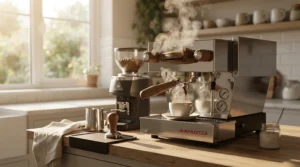
Its standout trait is width: roughly 15 cm, which lets it fit where nothing else will. The thermoblock typically reaches temperature in about 35 to 40 seconds. The 15-bar pump is again a marketing ceiling, with actual extraction pressure lower. The 51mm portafilter is smaller than the 54mm and 58mm sizes elsewhere on this list, and it ships with pressurized baskets that forgive imperfect grinds. The manual steam wand can produce workable microfoam with practice.
What most buyers overlook is the steam recovery. Reviewers note the thermoblock needs a cooling pause after steaming, around 20 to 25 seconds by one account, so back-to-back milk drinks will expose its limits. For a one- or two-drink household, that’s a non-issue.
Retail customers frequently mention ease of use, the slim design, and quick warm-up, and they describe a modest learning curve around tamping and shot volume. Some reviewers call the build plastic-heavy, which fits the price.
Pros:
- ✅ Narrowest footprint in this comparison
- ✅ Quick thermoblock warm-up under a minute
- ✅ Beginner-friendly pressurized baskets included
Cons:
- ❌ Steam output limits back-to-back milk drinks
- ❌ Plastic-heavy build and small 51mm portafilter
Around $200-$300 range; check current price. Verdict: the tidy, no-drama starter for tiny kitchens.
3. Temp iQ — PID and pre-infusion on a thermoblock
The standout is the feature stack. This is a thermoblock machine with PID temperature control, pre-infusion, and, per reviews, a 58mm portafilter. Published reviews put readiness at roughly 30 to 60 seconds, with about 15 seconds to switch from brewing to steaming. PID matters because it holds temperature steady during the shot, which is exactly where cheap thermoblocks wobble.
Here’s the catch the spec sheet won’t mention. Several reviewers say brew temperature runs low, describing thin, flat shots. One review cites a maximum around 160°F. Others report the machine is light enough to shift when you lock in the portafilter. Treat those as recurring review themes rather than universal results, but they’re worth weighing.
Customers on retail sites praise ease of use and consistency, while professional testers rate espresso quality as middling. Note that harsher lab results I found concern the grinder-equipped version, so this no-grinder model is the one to shop.
Pros:
- ✅ PID control and pre-infusion at a modest tier
- ✅ Fast brew-to-steam switching
- ✅ Full-size 58mm portafilter
Cons:
- ❌ Reviewers report cool, thin-tasting shots
- ❌ Lightweight body can shift during locking
Mid-range, and prices fluctuate, so check current price. Verdict: decent features, but run a blank shot first.
4. Bambino — three-second heat-up for the minimalist
Its standout is ThermoJet, Breville’s proprietary flash-heating system, which the brand says reaches extraction temperature in about 3 seconds. That puts it in a different speed class from the standard thermoblocks above. It pairs that with PID control, a 54mm portafilter, and low-pressure pre-infusion followed by 9-bar extraction.
Worth being honest here: ThermoJet is a close cousin of the thermoblock idea rather than a classic one. Breville positions it as using up to 32% less energy than a conventional thermoblock, which is a brand claim. For your morning, the practical meaning is simple. You walk up, press a button, and you’re pulling a shot.
The Bambino uses a manual steam wand, so you’re texturing milk yourself. Reviewers describe it as an easy on-ramp to real espresso, though some flag build quality and long-term reliability as the soft spots.
Pros:
- ✅ Reported 3-second heat-up is class-leading
- ✅ PID and pre-infusion improve shot consistency
- ✅ Compact and beginner-friendly workflow
Cons:
- ❌ Manual steam wand needs practice
- ❌ Reliability caveats appear in reviews
Roughly $300-$400 range; check current price. Verdict: the best pick here for Americano and black-coffee people.
5. Bambino Plus — instant heat plus hands-free milk
The standout is automatic milk texturing layered on the same 3-second ThermoJet heating. Breville lists a 266°F steam setting, adjustable milk temperature and texture, a 54mm portafilter, and a tank of about 47 ounces. That tank is generous for a compact machine, so you’re not refilling mid-week.
The analytical take: this is the machine for people who want a latte before the first meeting and don’t want a steaming apprenticeship. Automation costs flexibility, since some enthusiasts eventually prefer manual control. For a rushed weekday, hands-free is a gift.
Reviewers frequently describe it as the easiest on-ramp to café-style drinks at home, and several rank it among the best compact machines for beginners. The recurring caveat is build feel and a few reliability reports, which echo the Bambino family.
Pros:
- ✅ Auto steam wand frees your hands
- ✅ Reported 3-second heat-up with PID
- ✅ Large water tank for its size
Cons:
- ❌ Automation limits steaming control
- ❌ Plastic-leaning build in reviews
Roughly $400-$500 range; check current price. Verdict: top choice for milk-drink commuters.
6. Barista Pro — bean-to-cup speed in one box
The standout is the integrated conical burr grinder with 30 settings, which sits beside ThermoJet’s 3-second heat-up and an LCD with shot timer. A four-hole steam tip also speeds milk work. One review pegs the whole bean-to-espresso flow at under a minute.
What the spec sheet won’t tell you, but reviewers note: a 20 to 30 second blank shot is recommended so the whole thermal path is warm. The “3 seconds” is real, and the “first great shot” arrives a little after it. The built-in grinder is also the quality ceiling, as one review puts it, and community advice now often favors a cheaper machine plus a separate grinder.
Reviewers like the speed, the grind range, and the clean interface. They also mention that the Barista Pro replaces the older ThermoCoil Barista Express, which needs roughly 30 to 45 seconds.
Pros:
- ✅ Grinder, heater, and LCD in one footprint
- ✅ Fast brew-to-steam transition
- ✅ Wide 30-step grind adjustment
Cons:
- ❌ Built-in grinder caps shot quality
- ❌ Blank-shot warm-up still advised
Around $650-$900 range; check current price. Verdict: efficient for one-box simplicity, less so for upgraders.
7. Steel Duo PID — brew and steam simultaneously
The standout is two separate PID-controlled thermoblocks, so you can pull a shot and steam milk at the same time. Reviews cite roughly 2 minutes to ready, and one benchmark measures about 5 minutes to a properly tasty first shot. The 58mm portafilter is commercial-standard, and volumetric controls let you program shot size.
The analysis: it’s the slowest to heat on this list, yet it can be the fastest to finish two drinks. A reviewer notes the thermoblocks warm quickly while the portafilter lags, so a pre-wake timer helps. It also needs a 20-amp plug, and the steam wand tip draws mild criticism for being wide.
Owners and reviewers praise the build, the PID display, and the simultaneous brewing and steaming. The weight, roughly 15 kg, tells you it’s a statement piece.
Pros:
- ✅ Brew and steam together, no waiting
- ✅ Dual PID and volumetric controls
- ✅ Premium build and 58mm group
Cons:
- ❌ Slowest full warm-up in this lineup
- ❌ Needs a 20-amp plug; heavy at 15 kg
Upper-$1,000s, nearly $2,000 in some listings; check current price. Verdict: worth it only for multi-drink households.
Side-by-Side Verdict: Which Machine Wins Which Morning?
| Machine | Standout Advantage | Main Trade-Off | Best For |
|---|---|---|---|
| CASABREWS 5418 Pro | Gauge feedback | Quality-control variance | Learners on budgets |
| Dedica Arte | 15 cm width | Limited steam recovery | Tiny kitchens |
| Temp iQ | PID, pre-infusion | Cooler shots reported | Feature-seekers |
| Bambino | 3-sec heat-up | Manual milk | Black-coffee drinkers |
| Bambino Plus | Auto milk | Less steam control | Commuting latte fans |
| Barista Pro | Built-in grinder | Grinder ceiling | One-box simplicity |
| Steel Duo PID | Dual thermoblocks | Slow full warm-up, 20-amp | Households of two+ |
Looking at the comparison above, the Bambino and Bambino Plus are the clear speed leaders, and the Bambino Plus is the better buy if milk drinks are your routine. If budget is the hard limit, the Dedica Arte and CASABREWS 5418 Pro deliver sub-minute starts at a fraction of the cost. The Steel Duo PID earns its price only when two people want two different drinks at once.
✨ Don’t Miss These Exclusive Deals!
🔍 Take your mornings to the next level with these carefully selected machines. Click on any highlighted product name to check current pricing and availability. These picks can help you create a faster, calmer coffee routine your whole household will love!
Morning Routine Efficiency: A Practical Setup and Maintenance Guide
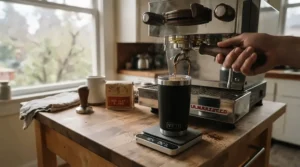
Instant-on heating saves minutes only if the rest of the routine keeps up. Here’s a repeatable sequence that fits any machine above, with notes where they differ.
The night before (60 seconds). Fill the tank with fresh water, since a full tank beats a half-empty one when you’re half asleep. Weigh your dose into a small cup or load the hopper if you own a Barista Pro. Set the portafilter within reach.
At wake-up (about 2 minutes).
- Power on. On the Bambino family, you’re ready almost immediately. On the Dedica Arte, Temp iQ, or CASABREWS 5418 Pro, expect under a minute.
- Run a short blank shot or hot-water flush through the locked-in portafilter. This preheats the brew path. One review of the Barista Pro suggests 20 to 30 seconds of this.
- Dose, tamp, brew. Steam milk last, then purge the wand.
Cooling and recovery. Thermoblock machines like the Dedica Arte need a short cooldown after steaming before the next shot. Plan to brew first, steam second.
Weekly and quarterly. Rinse the portafilter and drip tray weekly. Descale on the schedule your manual specifies. Some owners descale roughly every three months, and hard-water households may need it more often.
First-30-days mistakes. Skipping the blank shot, grinding too coarse for pressurized baskets, and ignoring the steam-wand purge cause most early disappointments. The Steel Duo PID adds one more: set a wake-up timer, because the portafilter lags the thermoblocks.
Real-World Scenarios: Matching Machine to Morning
Scenario 1: The commuting nurse. She has about 12 minutes before leaving, drinks one oat-milk latte daily, and lives in a rental with a small counter. The Bambino Plus fits: 3-second heat-up, automatic milk, and a compact body. Budget: roughly $400-$500.
Scenario 2: The college student with a dorm-sized counter. One or two drinks a day, a strict budget, and almost no space. The Dedica Arte is the narrow fit, and the CASABREWS 5418 Pro is the cheaper alternative if the gauge appeals. Budget: roughly $130-$300.
Scenario 3: The couple with different drinks. One wants a flat white, the other an Americano, both at 7:15 a.m. daily. The Steel Duo PID brews and steams simultaneously, which removes the wait between drinks. Budget: upper-$1,000s, and a 20-amp outlet is a must.
Scenario 4: The one-box minimalist. A home-office worker wants beans-to-cup with no extra gear. The Barista Pro consolidates grinder, heater, and timer, at around $650-$900.
If your situation doesn’t match any of these, the decision logic is simple. Prioritize raw speed with the Bambino family. Prioritize price with the budget thermoblocks. Prioritize simultaneous drinks with the Steel Duo PID.
Common Problems and Quick Fixes
Problem 1: Shots taste sour or thin. Likely cause: low brew temperature or a cold portafilter. Run a blank shot first. If you own a Temp iQ and notice this pattern, you’re matching a theme in reviews, so try a finer grind and a hot preheat.
Problem 2: Milk drinks stall back-to-back. The thermoblock needs recovery time after steam. With a Dedica Arte, steam last and allow the cooldown. Or move to a dual-circuit machine like the Steel Duo PID.
Problem 3: The pressure gauge barely moves. On a CASABREWS 5418 Pro, a gauge that never rises can mean the grind is too coarse, the dose is too light, or, in some reviews, a defective unit. Adjust grind first, then contact the seller.
Problem 4: Flow slows over months. Scale is the usual suspect, and descaling restores flow in many cases. Check your manual’s procedure.
Problem 5: “Ready” in 3 seconds, but the first shot is lukewarm. That’s the Bambino, Bambino Plus, and Barista Pro gap between heater-ready and system-ready. Flush hot water through the portafilter before you dose.
How to Choose a Thermoblock Espresso Machine for Quick Heat-Up
- Define your real wait tolerance. If 3 seconds matters, shortlist ThermoJet models. If 40 seconds is fine, budget thermoblocks open up.
- Decide how you take your coffee. Milk drinks favor automatic or stronger steam. Black espresso favors simpler machines.
- Count your drinks. One or two a morning suits single-circuit machines. More than that, especially simultaneous drinks, points to dual thermoblocks.
- Check portafilter size and baskets. Pressurized baskets forgive grind mistakes. Non-pressurized baskets reward skill.
- Look for temperature control. PID reduces drift during extraction, a major reason mid-range machines outperform basic ones.
- Plan for the grinder. A good grinder matters as much as the machine. Decide between built-in or separate.
- Verify power and space. Measure the counter and confirm outlet requirements before you click buy.
Warm-Up Time vs. Real Readiness: What to Expect
Warm-up time is the number everyone quotes and the one least likely to mean what you think. A heater being “ready” is not the same as a brew path being “ready.” The group head, portafilter, and water line all absorb heat, and a cold metal portafilter can steal temperature from your first shot.
Temperature targets matter here. The Specialty Coffee Association’s frequently cited window is roughly 92 to 96°C, a figure discussed in this University of California eScholarship paper on brew temperature. That research concerns brewed coffee generally and not espresso machines specifically, and it questions how rigid the window needs to be. As a practical benchmark for espresso, though, it helps explain why reviewers who measure cool shots on certain machines call them thin or sour.
Real-world sequence, by machine type:
- Bambino family and Barista Pro: heater ready in about 3 seconds, plus a short flush for the first shot.
- Dedica Arte, Temp iQ, CASABREWS 5418 Pro: about 30 to 60 seconds, plus a flush.
- Steel Duo PID: about 2 minutes for thermoblocks, closer to 5 for a properly warm path.
The practical rule: budget the number on the box, then add 20 to 30 seconds. Even then, that’s far less than the long warm-ups of traditional boiler machines.
Instant-On Heating Explained: Thermoblock vs. Boiler vs. Heat Exchanger
| Feature | Thermoblock | Heat Exchanger | Dual Boiler |
|---|---|---|---|
| Typical warm-up | Seconds to a few minutes | Often 10+ minutes | Often 5-10+ minutes |
| Steam strength | Moderate, recovery pauses | Strong | Strong |
| Size and cost | Compact, lower | Larger, mid to high | Largest, highest |
| Best for | Fast, small-batch mornings | Frequent milk drinks | Enthusiasts, entertaining |
Warm-up figures here reflect ranges in published reviews and comparison tables, so treat them as approximate. Instant-on heating wins on speed and footprint, which is why it dominates quick-start designs. Boilers win when you pull many shots in a row, because they hold a reservoir of heat. Heat exchangers need a cooling flush before the first shot, which adds its own ritual.
For one or two drinks at breakfast, the thermoblock’s speed usually outweighs the boiler’s stability. For a dinner party, flip that.
Quick-Start Thermoblock Machine Features That Actually Matter (And Those That Don’t)
Features that matter:
- PID temperature control. It keeps brew temperature steadier than a basic thermostat, which improves consistency.
- Pre-infusion. A gentle first wetting helps even extraction.
- Portafilter size. A 54mm or 58mm basket gives more flexibility than 51mm.
- Steam recovery. Matters for milk-drink households.
- Tank size. A larger tank, like the Bambino Plus at about 47 ounces, means fewer refills.
Features that matter less than marketing suggests:
- Pump “bar” numbers. A 20-bar or 15-bar rating is a pump ceiling. Real espresso is extracted near 9 bar, and one reviewer measured a Dedica Arte-family machine peaking near 12 bar.
- Cup-warming trays on thermoblock machines. Reviews describe passive warming as modest.
- Built-in grinders as a selling point alone. Convenient, but the Barista Pro review consensus is that the grinder sets the quality ceiling.
The takeaway: pay for control (PID, pre-infusion, steam recovery), not for headline numbers.
Fast Heat-Up Espresso Machine for Specific Audiences
Beginners. The Dedica Arte and CASABREWS 5418 Pro forgive grind errors with pressurized baskets. The Bambino Plus goes further by automating milk.
Small-space dwellers. Width matters most. The Dedica Arte, at roughly 15 cm wide, is the clear compact winner.
Milk-drink lovers. The Bambino Plus for automation, or the Steel Duo PID for strength and simultaneity.
Black-coffee and Americano drinkers. The Bambino delivers the fastest start without paying for automatic milk.
Tinkerers and upgraders. The Temp iQ and Steel Duo PID expose more variables (PID, volumetrics). Pair either with a quality separate grinder.
Evening decaf drinkers. One review argues the 3-second heat-up makes a single late-night shot effortless, which suits the Bambino Plus.
Long-Term Cost and Maintenance
| Machine | Price Range | Maintenance Burden | Value Verdict |
|---|---|---|---|
| CASABREWS 5418 Pro | Around $130-$250 | Descale, replace tamper | High if it works |
| Dedica Arte | Around $200-$300 | Descale, steam wand care | High for small homes |
| Temp iQ | Mid-range | Descale, expect cool-shot tweaks | Moderate |
| Bambino | Roughly $300-$400 | Descale, group flush | High |
| Bambino Plus | Roughly $400-$500 | Descale, auto-wand cleaning | High for milk drinkers |
| Barista Pro | Around $650-$900 | Descale, grinder cleaning | Moderate-high |
| Steel Duo PID | Upper-$1,000s | Descale, two circuits | Premium, niche |
Cost-per-use depends on your habits. If you assume a café drink costs $5 to $7 in many U.S. cities (an assumption, not a measured figure), a machine in the $300-$500 range can pay for itself within months of daily home use, before counting beans and your time. Thermoblocks are also energy-lean because they heat water only when you’re brewing, and Breville claims ThermoJet cuts annual energy use further.
The recurring cost is scale. The USGS Water Science School explains that when hard water is heated, calcium carbonate deposits can form, shortening equipment life and reducing efficiency. Small flow passages are exactly where thermoblocks feel it first. Use filtered or softer water where possible and descale on schedule.
Safety, Power, and Compliance Guide
Electrical load. Compact thermoblock machines draw significant power. The Bambino Plus is listed at 1560W, and CASABREWS-line machines at about 1350W. Avoid running them on the same circuit as other heavy appliances like microwaves.
The 20-amp exception. The Steel Duo PID ships with a 20-amp plug, and reviewers note it needs a 20-amp circuit to perform at full potential. Check your outlet first.
Steam and burns. Steam wands run very hot. The Bambino Plus lists 266°F steam. Purge the wand, wipe it after each use, and keep hands clear of the nozzle.
Water and electronics. Keep outlets away from splash zones. A GFCI-protected outlet near a kitchen sink is standard practice.
Pressurized baskets and expectations. Pressurized baskets are safe and forgiving but produce a different crema than non-pressurized ones.
Listings and warranties. Confirm safety certifications and warranty terms on the manufacturer’s page for your exact model, because details varied across the sources I reviewed.
FAQ
❓ Do thermoblock espresso machines make good espresso?
❓ Can a thermoblock machine brew and steam at the same time?
❓ Is a 3-second heat-up really ready to brew?
❓ Which machine is best for a small kitchen?
❓ Do I need a separate grinder?
Conclusion
A thermoblock espresso machine for quick heat-up turns the morning wait from a chore into a non-event. The right pick depends on what kind of morning you run. If you want the shortest wait, the Bambino and Bambino Plus lead on speed, with the Bambino Plus the smarter choice for milk drinks. If budget and space rule, the Dedica Arte and CASABREWS 5418 Pro deliver sub-minute starts at accessible prices. The Temp iQ adds PID and pre-infusion, though reviewers flag cooler shots. The Barista Pro consolidates everything into one box. The Steel Duo PID is the premium choice when two people want two drinks at once.
Remember the fine print: “ready” and “ready to brew well” are different, and a quick blank shot closes the gap. Descale on schedule, keep your water as soft as practical, and treat bar numbers as marketing.
Whatever you choose, a quick-start thermoblock machine can raise your morning routine efficiency in a way few kitchen upgrades can.
✨ Ready to reclaim your mornings?
🔍 Click on any highlighted machine name above to check current pricing and availability. Your faster, calmer, better-tasting coffee routine is only a few clicks away! ☕
Recommended for You
- Thermoblock Espresso Machine For Small Apartments: 7 Best 2026
- Thermoblock Espresso Machine For Beginners: 7 Best Easy Picks 2026
- Thermoblock Espresso Machine: 7 Proven Picks For 2026
Disclaimer: This article contains affiliate links. As an Amazon Associate, I earn from qualifying purchases. If you purchase products through these links, we may earn a small commission at no additional cost to you.
✨ Found this helpful? Share it with your friends! 💬🤗
