
In This Article
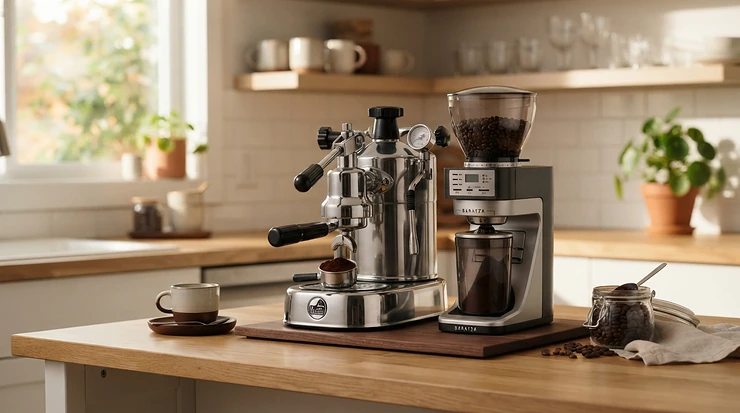
A PID-controlled single boiler espresso machine is a semi-automatic espresso maker that uses one boiler for both brewing and steaming, paired with a digital PID controller that holds water temperature within about a degree of your setting. It delivers stable, repeatable shots in a compact, affordable body, at the cost of brewing and steaming in sequence.
Single boilers used to have a reputation problem. Critics pointed to wobbly temperatures, long waits between shots and milk, and factory settings built for supermarket pre-ground coffee. That reputation is out of date. A PID controller constantly measures and corrects heat, so the boiler stops swinging wildly above and below your target. Where an older machine made you guess, a modern PID-controlled single boiler espresso machine simply holds the number you chose.
This matters more than most buyers realize. One retailer’s 2026 guide argues that a PID-equipped single boiler with a quality 58mm group produces espresso that is hard to tell apart from a dual boiler’s in a blind tasting. The dual boiler’s real advantage is workflow speed, not flavor. If you make one to three drinks a morning, the money you save can go toward a better grinder, which changes your cup more than any boiler layout will.
Below you’ll find seven real machines, honest trade-offs, a retrofit guide, and a 30-day plan for getting good shots quickly. Prices are ranges only and shift often, so check current pricing before you buy.
Quick Comparison Table: PID-Controlled Single Boiler Espresso Machine Options at a Glance
| Machine | Boiler | PID Out of the Box? | Best For |
|---|---|---|---|
| Lelit Anna PID (PL41TEM) | 250ml brass | Yes | Budget buyers who want PID without modding |
| Gaggia Classic Pro E24 | ~100ml brass | No (mod-ready) | Tinkerers and upgrade fans |
| Rancilio Silvia | ~300ml brass | No (mod-ready) | Long-term, repairable ownership |
| Lelit Glenda PL41PLUST | ~300ml | Yes | 58mm compatibility on a modest budget |
| Profitec Go | 0.3L eco-brass | Yes | Fast heat-up and first-machine simplicity |
| Lelit Victoria PL91T | Single boiler | Yes | Pre-infusion and shot timer on a small footprint |
| ECM Classika PID | Stainless, larger | Yes | E61 purists who steam occasionally |
The table shows a clear split. Four machines ship with PID already installed. The Gaggia Classic Pro E24 and Rancilio Silvia are cheaper starting points that reward you if you’re willing to add PID yourself. Boiler size is the quiet variable: the Gaggia Classic Pro E24‘s small boiler suits one or two drinks, while the Rancilio Silvia‘s larger one recovers better between shots.
If your priority is temperature precision with zero tinkering, the Lelit Anna PID or Profitec Go are the shortest paths. If you enjoy projects, the Gaggia Classic Pro E24 gives you the most room to grow.
💬 Just one click — help others make better buying decisions too!😊
Top 7 PID-Controlled Single Boiler Espresso Machines: Expert Analysis
Every machine here is a single boiler that either includes PID or is a well-known platform for adding it. Independent guides also converge on the same category logic: single boilers are compact, affordable and PID-friendly, and their one real trade-off is that brewing and steaming take turns. For a wider look at how retailers slot these machines into tiers, Clive Coffee’s single-boiler guide is a useful cross-reference.
1. Lelit Anna PID (PL41TEM) — cheapest ticket to factory PID control
The Anna’s pitch is simple. It ships with a PID, pressure gauge and over-pressure valve already installed, so you get temperature stability without touching a soldering iron.
The 250ml brass boiler is about 2.5 times the size of the Gaggia Classic Pro E24‘s. That extra thermal mass steadies temperature from shot to shot and gives you a little more steam. The catch is the 57mm portafilter. It’s a non-standard size, so baskets and accessories are harder to shop for than the industry-standard 58mm.
Based on the spec comparison, the Anna suits someone who wants to pull good shots this week rather than spend a month modding. One comparison notes the boiler needs manual refilling after steaming sessions, which makes it better for one or two milk drinks than for a household latte rush.
Reviewers consistently praise the included PID and gauge for the price. The usual complaints are the unusual portafilter size and a basic steam wand.
Pros:
- ✅ PID, gauge and OPV included from the factory
- ✅ Larger brass boiler than the Gaggia
- ✅ Compact and lightweight for tight counters
Cons:
- ❌ Non-standard 57mm portafilter limits accessories
- ❌ Steam wand and boiler refill need patience
Price range: roughly $550-$700 depending on retailer, so check current price. Strong value if you want PID without the DIY.
2. Gaggia Classic Pro E24 — the modder’s blank canvas
The Gaggia’s hook is its ecosystem. Few espresso machines have decades of community knowledge, spare parts and upgrade paths behind them.
The current brass-boiler version is a real improvement over the old aluminum-boiler Classics. One comparison puts the brass boiler at roughly 1,330g against the aluminum’s 523g, and more thermal mass means fewer temperature swings. You also get a 58mm portafilter, a 2.1-liter tank and a factory 9-bar OPV. The machine itself has no PID, though, and Tom’s Guide lists it among its no-PID specs.
That absence is the point for tinkerers. This is the classic PID upgrade single boiler machine platform: add a PID kit, or go all the way to a Gaggiuino build for pressure profiling. Out of the box, expect to manage temperature by timing your shots. Its small boiler handles about one or two consecutive milk drinks.
Reviewer sentiment splits by personality. Enthusiasts describe the espresso as wonderful and the machine as tough, while the recurring complaints are the lack of PID and missing basic accessories.
Pros:
- ✅ Enormous upgrade and parts ecosystem
- ✅ 58mm portafilter and stronger steam than thermoblock rivals
- ✅ Brass boiler improves thermal stability
Cons:
- ❌ No PID unless you add one
- ❌ Small boiler limits back-to-back milk drinks
Price range: around $500-$550 for the machine; a PID kit typically adds roughly $100-$200 depending on parts and shipping. Best value for hobbyists.
3. Rancilio Silvia — the rugged classic that begs for a PID
The Silvia is the machine other single boilers are measured against. It was introduced in the late 1990s and has barely changed since.
Its larger brass boiler and 58mm group give it more heat capacity than the Gaggia. One retailer says its technicians still see late-’90s units running strongly in their original homes, which speaks to repairability. There’s no factory PID or shot timer, and the switch from brewing to steaming takes about a minute.
Here’s what the spec sheet won’t tell you, but forum consensus suggests: the Silvia “needs” a PID. Without one, you’re temperature surfing, timing the heating cycle and firing the shot at the right moment. That’s a fun ritual for some and a chore for others. Add a PID and it becomes a very capable single boiler PID espresso machine.
Reviewers describe the Silvia as legendary but demanding. Advice on enthusiast forums is to budget a couple hundred dollars extra for a PID.
Pros:
- ✅ Rugged, endlessly repairable build
- ✅ Larger boiler than the Gaggia and Anna
- ✅ Strong modding and community support
Cons:
- ❌ No PID or shot timer from the factory
- ❌ Slowest brew-to-steam switch in this group
Price range: low-to-mid $800s for the base machine; a PID retrofit pushes total cost toward $1,000 or more. Worth it if you value longevity.
4. Lelit Glenda PL41PLUST — 58mm group with PID on a modest budget
The Glenda’s hook is combining a PID with the same 300ml, 58mm group found in the Silvia’s class of machine.
Older enthusiast discussions describe it as a Silvia-competitive boiler and group wrapped in a lower-cost body so that a PID could be included at a competitive price. That means 58mm portafilter compatibility and a bigger thermal reservoir than the Anna’s. Sources on this model are thinner and older than for the others here, so verify current specs and availability before buying.
On paper, the Glenda targets the buyer who finds the Anna’s 57mm size limiting but doesn’t want to pay Victoria money. The trade-off is that its case and controls sit closer to budget territory than the premium single boilers below.
Owner comments in older forum threads lean positive on value, but the review pool is small and dated. Treat that as directional, not conclusive.
Pros:
- ✅ PID included with a 58mm group
- ✅ Larger boiler than the Anna
- ✅ Competes with the Silvia on core hardware
Cons:
- ❌ Less current review data available
- ❌ Budget-style case and controls
Price range: past listings sat in the high-$700s to low-$900s; check current price. Good value if it’s in stock near the lower end.
5. Profitec Go — fastest path from cold to first shot
The Go’s standout is speed. A fast heat-up mode has it ready in about 5 to 6 minutes, which is unusual for a machine with a saturated group.
The insulated 0.3L eco-brass boiler, steel chassis and top-mounted pressure valve show German engineering priorities. The PID and integrated shot timer let you lock in a recipe and repeat it. A saturated group also keeps the brew path warm, which helps consistency more than most spec sheets let on.
For a first serious machine, this is a strong all-rounder. It brews well, steams well enough for occasional lattes, and keeps the small footprint that makes a compact machine design worth choosing. Recent updates include a quieter reservoir lid and a larger drip tray. If you want modern control without the modding project, the Go is the machine retailers most often recommend to beginners.
Aggregated reviewer sentiment praises shot quality, heat-up speed and simplicity. I couldn’t verify a large independent review pool, so weigh retailer and editorial opinions accordingly.
Pros:
- ✅ Saturated group with PID and shot timer
- ✅ Heats up in roughly 5 to 6 minutes
- ✅ Adjustable brew pressure via top valve
Cons:
- ❌ Still a brew-then-steam workflow
- ❌ Priced above the entry-level Gaggia and Anna
Price range: roughly the mid-$800s to around $1,000, depending on color and retailer; check current price. Excellent value for beginners.
6. Lelit Victoria PL91T — premium single boiler with pre-infusion
The Victoria’s hook is control: PID, programmable pre-infusion, a shot timer and a pressure gauge on a compact, well-finished body.
The 58mm group opens up the full accessory market. Programmable pre-infusion gently wets the puck before full pressure arrives, which can reduce channeling on tricky coffees. One 2026 guide calls it the entry point into real prosumer espresso, and a retailer comparison describes it as the most feature-rich and compact of its group.
If you mostly drink straight espresso and steam occasionally, the Victoria is arguably all the machine you need. It’s the natural next step up from the Lelit Anna PID when you want a 58mm portafilter and finer shot control.
Reviewers praise its fit and finish, and one prominent reviewer singles out the small plastic steam dial as a minor letdown.
Pros:
- ✅ PID, pre-infusion and shot timer together
- ✅ Standard 58mm portafilter and gauge
- ✅ Premium fit and finish for a single boiler
Cons:
- ❌ Plastic steam dial feels cheap
- ❌ Higher price than most rivals here
Price range: around $1,100. Fair value for precision-focused espresso drinkers.
7. ECM Classika PID — E61 character with German build quality
The Classika’s calling card is the E61 group head, the classic heavy brass group that defines prosumer espresso.
It pairs that group with PID control, an integrated shot timer, a fast heat-up mode (about 10 minutes) and a spring-loaded quick steam valve. A larger stainless boiler and standardized E61 parts also make it easier to service over the long run. One 2026 total-cost analysis rates it the strongest long-term-value single boiler.
Based on the specs, this is the purist’s pick: someone who wants E61 aesthetics and reliability and steams milk only occasionally. It’s also offered in a flow-control version for pressure profiling, and it’s the priciest single boiler in this lineup.
Retailer and editorial reviews are consistently positive on build and looks. I couldn’t verify a broad independent review base, so treat that as expert-reviewer sentiment.
Pros:
- ✅ Classic E61 group with premium build
- ✅ PID, shot timer and quick steam valve
- ✅ Standardized parts for long-term serviceability
Cons:
- ❌ Highest price among single boilers here
- ❌ Longer warm-up than the Profitec Go
Price range: around $1,600; check current price. Justified if E61 and longevity matter to you.
Spec Snapshot: Top 7 Side by Side
| Machine | Portafilter | Price Range | Standout | Best For |
|---|---|---|---|---|
| Lelit Anna PID | 57mm | ~$550-$700 | Factory PID | First-time buyers |
| Gaggia Classic Pro E24 | 58mm | ~$500-$550 | Mod ecosystem | Tinkerers |
| Rancilio Silvia | 58mm | Low-to-mid $800s | Longevity | Repair-minded owners |
| Lelit Glenda PL41PLUST | 58mm | Check current | PID + 58mm | Budget 58mm shoppers |
| Profitec Go | 58mm | ~$850-$1,000 | Fast heat-up | Beginners |
| Lelit Victoria PL91T | 58mm | ~$1,100 | Pre-infusion | Precision fans |
| ECM Classika PID | 58mm | ~$1,600 | E61 group | Purists |
Notice how price tracks features more than performance. The three most affordable options still give you a brass boiler and a proper group, and the premium tier mostly buys convenience, pre-infusion and build. Value-minded buyers should look hard at the Lelit Anna PID or a Gaggia Classic Pro E24 with a PID kit, while those who want to skip DIY entirely will find the Profitec Go the cleanest buy. Buyers who plan to keep a machine for a decade should compare the Rancilio Silvia and ECM Classika PID on repairability.
Your First 30 Days: Setup, Dialing In and a Maintenance Schedule
Unboxing is the easy part. What follows is a practical plan built around how a single boiler PID espresso machine behaves.
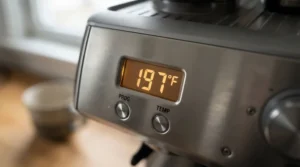
Week 1: Set the baseline. Flush the machine with fresh water, wash the portafilter and baskets, and set the PID to a starting brew temperature of about 200°F (93°C). Lighter roasts usually taste better a touch hotter, and darker roasts a touch cooler. Change one variable at a time: grind first, then dose, then temperature.
Week 2: Learn the steam routine. After your shot, switch to steam mode, wait for the indicator or PID display, purge the wand until it delivers dry steam, steam your milk, then switch back to brew mode and let the boiler return to temperature. Wait times run from around 30 seconds on the fastest single boilers to more than a minute on slower ones.
Week 3: Track your recipe. Write down dose, yield, time and temperature. Even a phone note counts. This is where a shot timer earns its keep.
Week 4: Start maintenance habits. Backflush per your manufacturer’s instructions, wipe the steam wand after every use, and empty the drip tray regularly. Use filtered water in the 35-85 ppm range, since scale is the quiet killer of espresso machines.
Common first-month mistakes: chasing temperature before fixing grind size, skipping the wand purge, using distilled water without remineralizing it, and ignoring the OPV setting.
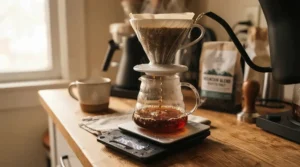
Real-World Scenarios: Three Kitchens, Three Machines
Specs are abstract. Here are three example buyer profiles, built from the specs and typical use patterns above.
Scenario 1: The apartment commuter. Small counter, one to two straight shots before work, a $700 budget for everything. The Lelit Anna PID fits the space and the PID is already there. Save the leftover money for a solid hand or electric grinder, because the grinder will change your results more than the boiler.
Scenario 2: The weekend tinkerer. Comfortable with wiring, enjoys forums and projects, wants pressure profiling someday. A Gaggia Classic Pro E24 plus a PID kit or Gaggiuino build gives you the most room to learn. Expect to spend a few hundred dollars over the base price, which still undercuts many dual-boiler starting points.
Scenario 3: The two-latte household. Two people, two milk drinks, every morning. A single boiler works, but the Profitec Go or Lelit Victoria PL91T will feel more comfortable than the smallest-boiler options. If the wait between drinks starts to feel like friction, that’s your signal to look at heat exchanger or dual boiler machines instead.
Problem → Solution: Five Fixes for Common Single Boiler Headaches
- Sour, thin shots. Often the water is too cool or the grind too coarse. Raise PID temperature by 1-2°F and tighten the grind slightly.
- Weak steam. A small boiler can run out of steam quickly. Preheat the milk pitcher, use less milk, and start steaming as soon as the machine reaches steam temperature.
- Slow wait between brew and steam. Pull your shot first, then steam while the shot rests briefly. Machines like the Profitec Go recover fastest in this group.
- Temperature drops on the second shot. Flush the group briefly before locking in the portafilter, and use a preheated cup.
- Scale worries. Filtered, soft water and periodic descaling per the manufacturer’s guidance protect the boiler on any of these machines.
How to Choose a PID-Controlled Single Boiler Espresso Machine
Answer these in order, and the shortlist usually narrows itself.
- Decide how many milk drinks you make. One or two a day suits a single boiler. Four or more back-to-back points you toward a different machine type.
- Choose PID built in or PID later. Built in saves time. Retrofitting saves money and teaches you the machine.
- Check the portafilter size. 58mm opens up a huge accessory market, while 57mm narrows it.
- Look at boiler size and material. Brass boilers hold heat better than thin aluminum, and larger boilers recover faster.
- Consider features you’ll actually use. Shot timers help repeatability, and pre-infusion helps difficult coffees. Flow control is exciting but only matters if you’ll use it.
- Measure your counter. A compact machine design matters more than most buyers expect once cabinets and outlets are involved.
- Budget for the grinder. A capable machine with a weak grinder produces weak espresso.
Single Boiler Limitations: What This Category Can’t Do
Every single boiler limitations discussion starts with the same fact: one boiler can’t brew and steam at once. Even a heavily modified single boiler needs roughly 45 to 90 seconds to change modes, and no modification changes that.
Other single boiler limitations follow from it. Steam volume is modest compared with heat exchangers, so texturing milk for several drinks gets slow. Small boilers also lose temperature faster on long shots or back-to-back extractions. Steam wands are usually basic, which can make latte art harder.
Here’s the balancing perspective. For straight espresso, Americanos and the occasional latte, these limitations rarely matter. For a household making several milk drinks in a rush, they compound into daily friction. Knowing which group you’re in is the most important decision in this whole guide.
Temperature Surfing Alternative: Why PID Ends the Guessing Game
Temperature surfing is the old workaround for machines without PID. You watch the boiler’s heating cycle, wait for it to click off, then time your shot to catch water at the right temperature. It works, but it demands attention, and a bad morning can turn it into a coin flip. One reviewer of the Gaggia E24 explicitly said they didn’t want to spend an hour temperature surfing, as they had with a Silvia.
A PID is the most practical temperature surfing alternative. The controller measures boiler temperature many times per second and adjusts the heater in small increments, so brew temperature stays near your setting. That’s why a single boiler is such a good PID candidate: it only has to hold one temperature at a time during a shot, which is a simpler job than managing steam and brew water together. If you want to see how one editorial team describes the difference in practice, Tom’s Guide’s Gaggia review covers the trade-off well.
For most home baristas, this is the biggest jump in consistency the category offers.
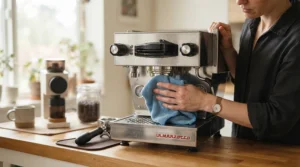
PID Upgrade Single Boiler Machine: Retrofit or Buy Built-In?
Should you retrofit or buy a machine that already has PID? It comes down to money, time and temperament.
Retrofit path. A base Gaggia Classic Pro E24 or Rancilio Silvia plus a PID kit lands in the low-to-mid hundreds above the base price. A full upgrade stack (PID or microcontroller, precision basket, shower screen, OPV spring, gasket) can bring a $500-$850 base machine to roughly $650-$1,150 total, according to one 2026 upgrade guide. You get pressure control, learning and pride.
Built-in path. Machines like the Lelit Anna PID or Profitec Go include PID and a shot timer from day one, with warranty support and no wiring. You’ll pay a bit more up front, but you save hours and avoid the risk of a bad install.
Which is better? If you enjoy projects, retrofit. If you want to make coffee tomorrow, buy built in. Either way, a well-implemented PID upgrade single boiler machine setup delivers real gains, but only if the rest of the workflow, especially grind quality, is sound.
Compact Machine Design: Getting Real Espresso Into a Small Kitchen
A compact machine design is one of the best reasons to choose a single boiler. With one boiler and a reservoir, these machines are among the smallest prosumer espresso makers, which suits apartments, dorms and vacation homes.
Space isn’t just about width. Consider these practical points:
- Height clearance. Reservoir lids and portafilter handles need room to move, and upper cabinets matter.
- Weight. The Gaggia Classic Pro E24 weighs around 17.8 lbs, while some E61 machines are heavier.
- Reservoir access. Side-loading tanks are easier under cabinets.
- Drip tray size. Smaller trays mean more emptying.
- Cord and outlet placement. Check both before you buy.
For tight kitchens, the Lelit Victoria PL91T and Profitec Go balance small footprints with strong control. Espresso-only drinkers can go smaller still: the LUCCA Solo skips the steam wand entirely to save space.
Single Boiler PID Espresso Machine vs Heat Exchanger and Dual Boiler
When does it make sense to leave the category? A single boiler PID espresso machine wins on price, size and simplicity. Heat exchanger and dual boiler machines win on speed and multitasking. For a deeper explanation of how espresso machines differ mechanically, see this overview of the espresso machine.
| Feature | Single Boiler + PID | Heat Exchanger | Dual Boiler |
|---|---|---|---|
| Brew and steam simultaneously | No | Yes | Yes |
| Typical price | Lowest | Middle | Highest |
| Footprint | Smallest | Larger | Largest |
| Temperature precision | Excellent with PID | Good, needs management | Excellent |
| Best For | Espresso-first drinkers | Milk-drink households | Entertaining and workflow |
The table shows the trade-off cleanly. Heat exchangers typically cost roughly $1,500-$2,500 and dual boilers about $1,600-$3,000, per one 2026 roundup, which is a real jump from most single boilers. If you make one or two drinks at a time, that money buys convenience you may never use. If you regularly serve four milk drinks in a row, it buys back your morning.
Long-Term Cost and Maintenance: What Ownership Really Costs
The sticker price is only part of the story. Over years of daily use, materials, parts availability and water quality decide whether a machine is a bargain.
| Machine Type | Upfront Tier | Likely Extras | Value Verdict |
|---|---|---|---|
| Gaggia Classic Pro E24 | Lowest | PID kit, accessories | Best budget flexibility |
| Lelit Anna PID | Low-mid | 58mm-compatible accessories are limited | Best out-of-box PID for the money |
| Rancilio Silvia | Mid | PID retrofit | Best repairability |
| ECM Classika PID | Highest | Little | Best long-term serviceability |
The math depends on your habits. Machines with standard 58mm parts and E61 groups have widely available components, which lowers repair costs over time. Water is the biggest variable. Filtered, soft water in the 35-85 ppm range is the best preventive maintenance available, and it’s easier than descaling after damage. Avoid pure distilled or reverse-osmosis water unless it’s remineralized, as Clive Coffee’s guide recommends.
Well-maintained single boilers can last for many years. The cheapest way to make that happen is a simple habit: backflush, wipe, descale on schedule, and use good water.
FAQ
❓ How much does a PID-controlled single boiler espresso machine cost in 2026?
❓ Can I add a PID upgrade to any single boiler machine?
❓ Which single boiler PID espresso machine is best for milk drinks?
❓ How long does a single boiler take to heat up?
❓ How much should I spend on a grinder to go with a PID espresso machine?
Conclusion
A PID-controlled single boiler espresso machine is the smartest entry point into serious home espresso for most people. It costs less, takes up less space and, thanks to PID, holds temperature about as well as machines costing far more. The trade-off is simple: brew first, steam second.
For quick wins, the Lelit Anna PID gives you factory PID on a modest budget, and the Profitec Go offers a polished, fast-heating first machine. If you love tinkering, the Gaggia Classic Pro E24 or Rancilio Silvia rewards effort and grows with your skills. When you want more control, the Lelit Victoria PL91T adds pre-infusion, and the ECM Classika PID delivers E61 pedigree for the long haul.
Whatever you choose, remember the three inputs that matter as much as the machine: a good grinder, fresh beans and clean, filtered water.
Recommended for You
- PID-Controlled Espresso Machine For Consistency: 7 Picks Worth Your Counter In 2026
- PID Espresso Machine For Beginners: 7 Picks That Won’t Punish You (2026)
- PID-Controlled Espresso Machine: 7 Real Picks Tested & Ranked For 2026
Disclaimer: This article contains affiliate links. As an Amazon Associate, I earn from qualifying purchases. If you purchase products through these links, we may earn a small commission at no additional cost to you.
✨ Found this helpful? Share it with your friends! 💬🤗
