In This Article
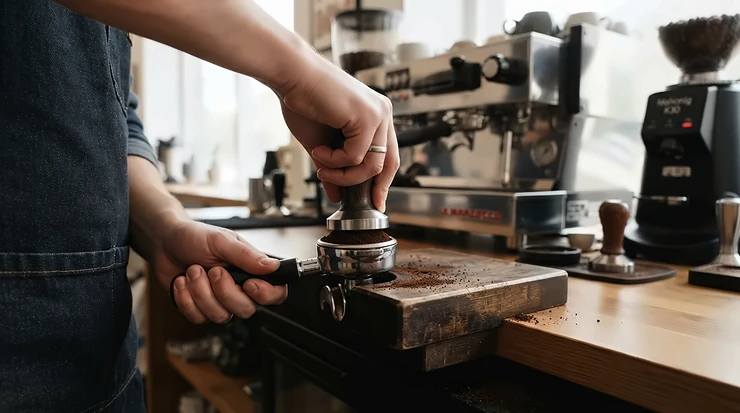
A thermoblock espresso machine with built-in milk frother heats water on demand as it flows through a compact metal block. It then pairs that fast heating with an integrated way to texture milk: a steam wand, an automatic wand, or a self-cleaning carafe. You get espresso and foam from one small footprint, usually in under a minute of warm-up.
Here’s the pitch. Traditional espresso machines can feel like adopting a moody, expensive pet. They need long warm-ups, a separate frothing gadget, and a degree in temperature management. The all-in-one thermoblock machine skips most of that drama. It heats only the water it needs, wakes up fast, and (depending on the model) will make your milk foam for you.
But “built-in frother” covers a lot of ground. It can mean a bare steam wand on a $100-range machine, a clever automatic wand, or a fridge-ready carafe that cleans itself. The right pick depends on how much hands-on work you want and how much cleanup you’ll tolerate on a Tuesday morning.
I’ve ranked seven real machines below, using manufacturer specs, retailer listings, and aggregated review themes from published reviews. Each one gets honest commentary on what the numbers mean in your kitchen. Where I couldn’t verify deep review data, I say so instead of papering over it.
Quick Comparison: Thermoblock Espresso Machines With Built-In Milk Frothers
| Product | Milk Setup | Style | Price Range | Best For |
|---|---|---|---|---|
| De’Longhi Magnifica Evo | LatteCrema carafe | Bean-to-cup, one-touch | $600-$800 | Daily latte drinkers |
| De’Longhi Dedica Maestro Plus | Auto LatteArt wand | Semi-automatic | $300-$450 | Learners who want auto foam |
| De’Longhi Magnifica Start | LatteCrema carafe | Bean-to-cup, one-touch | $450-$650 | Budget bean-to-cup |
| Philips 3300 LatteGo | Tube-free LatteGo | Bean-to-cup, one-touch | $400-$550 | Fast milk cleanup |
| Nespresso Lattissima One | Single-serve milk jug | Capsule | $300-$450 | Zero-fuss capsule fans |
| De’Longhi Dedica EC685 | Adjustable manual frother | Semi-automatic | $200-$300 | Tight counters |
| CASABREWS CM5418 | Manual steam wand | Semi-automatic | $100-$150 | Lowest-cost entry |
Prices are ranges at the time of research and shift often, so check current prices before buying. The pattern is clear: the more the machine automates, the more you pay, and the more the milk system dictates how much cleaning you’ll do. If you want to learn real milk technique, the two Dedicas and the CASABREWS CM5418 reward effort. If you want a cappuccino on a dead-tired morning, the carafe machines win.
💬 Just one click — help others make better buying decisions too!😊
Top 7 Thermoblock Espresso Machines With Built-In Milk Frother: Expert Analysis
Every machine below uses thermoblock heating, based on manufacturer or retailer spec listings. Each has a built-in way to froth milk. None needs a separate frothing gadget.
1. De’Longhi Magnifica Evo (ECAM29084SB) — best true all-in-one for lattes
This is the closest thing here to a full café loop on a single counter spot: grind, brew, froth. Its seven one-touch recipes include a “My Latte” option, and the built-in conical burr grinder has 13 settings.
Those 13 settings matter more than they sound. As beans age or you switch roasts, you can nudge the grind finer or coarser, which is the difference between a thin shot and a good one. The 60 fl oz tank and 24 oz bean hopper mean refills are a few-times-a-week chore, not a daily one. The thermoblock only heats the water each drink needs, so it’s ready quickly and doesn’t idle hot all day.
Based on the spec comparison, this is the best answer to the all-in-one thermoblock machine promise. The LatteCrema carafe handles foam automatically, and a passively heated cup tray warms mugs. Reviewers describe the foam as dense and stable through a whole cappuccino. One reviewer notes the carafe still wants a rinse between uses, even though its parts are dishwasher safe.
Pros:
- ✅ Grinder, brewer, and milk system in one unit
- ✅ Dense foam that holds through the cup
- ✅ Large tank and hopper cut refill frequency
Cons:
- ❌ Carafe needs rinsing between milk drinks
- ❌ Takes more counter space than semi-automatics
Price range: roughly $600-$800 depending on retailer, so check current price. Verdict: the best value if lattes are your daily habit.
2. De’Longhi Dedica Maestro Plus (EC950.M) — automatic steam wand with latte art settings
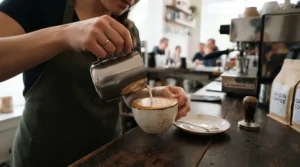
The Auto LatteArt wand textures milk for you in three temperatures (low for plant milks, medium for dairy, high for to-go cups) and three textures (latte art, fine, dense). That is genuinely unusual at this size.
The “advanced thermoblock” also offers three brew-temperature profiles. A hotter profile tends to emphasize bitterness while a cooler one favors acidity, so you can tune shots to your beans. It ships with a stainless tamper, steel milk jug, and both single- and dual-wall baskets. Dual-wall baskets forgive sloppy technique, while single-wall baskets reward fresh beans and careful tamping. An automatic steam-cleaning purge handles the wand’s leftover milk.
Here’s what to weigh: this is a semi-automatic machine with a hands-free wand, not a bean-to-cup. You still grind, dose, and tamp. I couldn’t verify a deep pool of independent reviews for this newer model, so the spec sheet is the solid ground. Reviews of other automatic-wand machines suggest auto steaming is convenient but gives you less control over latte art.
Pros:
- ✅ Hands-free milk with temperature and texture choices
- ✅ Three brew-temperature profiles
- ✅ Metal jug and tamper included
Cons:
- ❌ Requires a separate grinder
- ❌ Auto wand limits microfoam control
Price range: around $300-$450, so check current price. Verdict: strong value for people who want to learn without fighting a manual wand.
3. De’Longhi Magnifica Start (ECAM22080) — budget route to a bean-to-cup
It’s narrow, at roughly 9.5 inches wide, 14 inches tall and 17 inches deep, with a 1.8 L tank and an integrated milk container. Retail listings cite a thermoblock system, a 15-bar pump, and automatic cleaning of the milk frothing pipes.
Variants differ, so read the listing carefully. The “milk” version uses the LatteCrema carafe, and some versions add a manual frother for hot water or hot milk. The carafe can reportedly be stored in the fridge, which keeps milk cold between drinks.
My analytical take: this is for someone who wants a bean-to-cup without paying Evo money. You trade away some recipe variety (five presets on one listing, versus the Evo’s seven). One buyer review I found says the milk system is very easy to clean. Beyond that, verified review depth was thin, so treat that as a single data point.
Pros:
- ✅ Slim footprint for a bean-to-cup
- ✅ Self-cleaning milk lines
- ✅ Fridge-friendly milk carafe
Cons:
- ❌ Fewer recipes than the Evo
- ❌ Variant confusion between milk and manual-frother versions
Price range: roughly $450-$650, so check current price. Verdict: good value if a smaller feature set is fine.
4. Philips 3300 LatteGo (EP3341 family) — milk system rinses in seconds
Two parts, no tubes. That’s the LatteGo pitch, and for milk cleanup it’s the right pitch. The reservoir has no hidden tubing for residue to hide in, and Philips markets the sibling 3200 system as cleanable in as little as 15 seconds (a manufacturer claim). A European retailer lists the 3300 with a thermoblock, a 1.8 L tank, and a hot water function.
What does that mean in practice? Tubes are where milk goes sour. Removing them cuts your daily chore to a rinse. One European buyer calls the machine user-friendly and says cleaning the parts is easy.
Two cautions. A Tom’s Guide review of the 3200 sibling called the coffee solid but unspectacular and a little weak. And a few harshly negative longevity complaints appear on aggregator pages, so weigh durability honestly.
Pros:
- ✅ Tube-free milk system cleans fast
- ✅ Simple one-touch operation
- ✅ Hot water function included
Cons:
- ❌ Coffee strength can feel mild
- ❌ Mixed long-term durability chatter online
Price range: around $400-$550, so check current price. Verdict: pick it if milk hygiene is your top priority.
5. Nespresso Lattissima One (by De’Longhi) — capsule thermoblock with a one-touch milk jug
This one skips beans entirely. A 19-bar pump and a thermoblock that heats in about 25 seconds drive Nespresso Original capsules, and a small single-serve milk jug froths directly into your cup.
An optical sensor reportedly recognizes how much milk is in the jug and uses all of it for one drink, which cuts waste. You also get flow stop for your preferred cup length, a descale alert, an eco mode after three minutes, and auto-off after nine minutes.
On paper, this is the lowest-effort path to a cappuccino at home. You drop in a capsule, pour milk to a line, and press a button. The trade-off is capsule cost and a smaller drink range than a bean-to-cup. Reviewers disagree on cleaning. A few say the milk dispenser is hard to clean, while others call it simple. Retailer-hosted reviews also skew positive, so read independent sources too.
Pros:
- ✅ Fast heat-up and true one-touch milk drinks
- ✅ Single-serve jug is dishwasher safe
- ✅ Compact, energy-saving standby
Cons:
- ❌ Capsules cost more per cup than beans
- ❌ Mixed feedback on milk dispenser cleaning
Price range: listings varied widely at the time of research, roughly $300-$450, so check current price. Verdict: great for capsule loyalists.
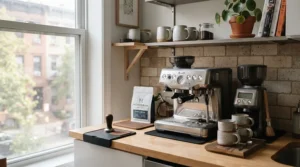
6. De’Longhi Dedica EC685 — slimmest thermoblock for tight counters
Six inches wide, metal body, 15-bar pump. This is the machine for galley kitchens and dorm shelves. Comparison guides note it steps up from the cheaper Stilosa with thermoblock heating, a flow-stop function that ends shots automatically, and an adjustable frother.
Dedica-family spec listings show roughly a 40-second heat-up (0.67 minutes) and a tank of about a liter. That’s quick for a morning shot.
The adjustable frother is more forgiving than a bare wand, and it works for lattes and flat whites with practice. But be realistic: reviewers of sibling Dedica models and similar thermoblocks describe modest steam power, so milk takes patience. A comparison guide recommends stretching to the Dedica if you can afford it, because the thermoblock, flow stop, and slim footprint survive the beginner phase. I couldn’t verify a large body of independent reviews for this exact model.
Pros:
- ✅ Very narrow metal body
- ✅ Programmable flow-stop shot length
- ✅ Adjustable frother is beginner-friendly
Cons:
- ❌ Steam power is modest
- ❌ No grinder or hands-free milk
Price range: around $200-$300, so check current price. Verdict: the smart small-space pick.
7. CASABREWS CM5418 — cheapest real steam wand
For roughly the cost of a month of café cappuccinos, you get a 20-bar pump, a pressure gauge, a 34 oz removable tank, a 51 mm portafilter, and a proper steam wand. Reviewers have cheered that last part, since it’s a real wand rather than a cheap pannarello sleeve.
Quick reality check on “20 bar”: reviewers note you want about nine bar at the cup, so treat the big number as marketing. What matters is that this is a single thermoblock machine, so it heats fast but struggles to steam and brew at once.
Aggregated review themes are mixed in a useful way. One aggregator shows about a quarter of reviewers praising the espresso, while about half mention noise and roughly a quarter report overheating. Tom’s Guide found the steam sequence fiddly (press steam, wait for the light, turn the knob), and TechRadar noted no milk pitcher is included.
Pros:
- ✅ Genuine steam wand at a tiny price
- ✅ Pressure gauge helps you learn
- ✅ Compact, with removable tank
Cons:
- ❌ Loud during pumping and steaming
- ❌ No milk pitcher included
Price range: around $100-$150, so check current price. Verdict: unbeatable entry cost if you accept a learning curve.
Top 7 Specs at a Glance
| Product | Heating | Key Spec | Milk Cleanup Effort | Price Range |
|---|---|---|---|---|
| De’Longhi Magnifica Evo | Thermoblock | 13-step grinder, 15 bar | Rinse carafe | $600-$800 |
| De’Longhi Dedica Maestro Plus | Advanced thermoblock | 3 temps, 3 textures | Auto purge | $300-$450 |
| De’Longhi Magnifica Start | Thermoblock | 1.8 L tank, 15 bar | Auto line cleaning | $450-$650 |
| Philips 3300 LatteGo | Thermoblock | 1.8 L tank, no tubes | Two-part rinse | $400-$550 |
| Nespresso Lattissima One | Thermoblock | 19 bar, 25-sec heat | Dishwasher-safe jug | $300-$450 |
| De’Longhi Dedica EC685 | Thermoblock | 15 bar, flow stop | Wipe and purge wand | $200-$300 |
| CASABREWS CM5418 | Thermoblock | 20 bar, 34 oz tank | Wipe wand each use | $100-$150 |
The table shows that heating technology is nearly constant. Milk cleanup effort is the real dividing line. Buyers who hate cleaning should gravitate to the Philips 3300 LatteGo or Magnifica Start, while hobbyists who enjoy technique will get more from the Maestro Plus or Dedica EC685. Budget shoppers should note that the CASABREWS CM5418 costs a fraction of the rest but demands the most skill.
✨ Ready to Find Your Perfect Match?
🔍 Take your cappuccino at home to the next level with these carefully compared machines. Click any highlighted product name to check current pricing and availability. A better morning cup could be one decision away!
Cappuccino at Home: Your Setup Guide for the First 30 Days
Espresso gear has a century-long history, yet the first month with a new machine still decides whether it becomes a habit or a countertop ornament. These steps apply to nearly any model above.
Days 1-3: Prime and rinse. Run water through the machine and froth wand per the manual. Flush the portafilter or brew path. If your model has a water hardness test (several De’Longhi models include one), use it now and set the hardness correctly.
Week 1: Dial in one coffee. Buy one fresh-roasted bean and stay with it. On bean-to-cups, adjust the grinder a click or two at a time. On semi-automatics, pair a grinder with the machine and tamp consistently.
Cappuccino method that works on most machines:
- Preheat your cup with hot water.
- Pull the shot first.
- Froth cold milk in a cold jug, which gives you more working time.
- Aim for glossy foam, not stiff bubbles.
- Pour the milk into the espresso and swirl.
Thermoblock-specific tip: after steaming, the block runs hotter than brew temperature. Many machines have a cooling or purge routine, so check your manual before pulling a second shot.
Mistakes in the first 30 days: skipping milk-system rinses, letting the tank run low, and chasing “stronger” coffee by overfilling the basket.
How to Choose a Thermoblock Espresso Machine With Built-In Milk Frother
Pick by priority, not by hype. Work down this list in order:
- Decide your effort level. Do you want one touch (carafe/LatteGo/capsule) or hands-on control (steam wand)? This single choice narrows the field fast.
- Check the milk system’s cleanup. Tubes and carafes need regular rinses. Tube-free designs, such as the Philips 3300 LatteGo, simplify this.
- Count your counter. Bean-to-cups are tall and deep, while the De’Longhi Dedica EC685 and CASABREWS CM5418 are around six inches wide.
- Match the drink range to your habits. If you drink only cappuccinos, a short recipe list is fine.
- Consider beans vs capsules. Beans are cheaper per cup but need a grinder and cleaning. Capsules are cleaner but cost more.
- Check your water. Hard water shortens a machine’s life without regular descaling.
- Set a total budget. Include a grinder (for semi-autos), filters, and a milk pitcher.
Built-In Frother Espresso Machine: Automatic vs Steam Wand
A built-in frother espresso machine comes in three flavors, and each changes your mornings differently.
Carafe/LatteGo systems (Magnifica Evo, Magnifica Start, Philips 3300 LatteGo) froth automatically and dispense into the cup. They’re the most hands-off but offer the least control over microfoam.
Automatic wands (Dedica Maestro Plus) keep the wand and jug but let the machine manage temperature and texture. They’re a good midpoint: you see and feel the process, but it’s forgiving.
Manual wands (Dedica EC685, CASABREWS CM5418) give maximum control and the steepest learning curve. Single-thermoblock steam is also modest, so milk takes patience.
What the spec sheet won’t tell you: automatic systems produce consistent results for dairy and plant milks, which makes them better for households where everyone has a different order. Manual wands let hobbyists chase latte art, but only if you invest the practice time.
All-In-One Thermoblock Machine vs Boiler Espresso Machines
An all-in-one thermoblock machine and a boiler machine solve the same problem differently. As Seattle Coffee Gear explains, a thermoblock is a heated block with a small tube that water passes through, so it heats on demand. A boiler holds a volume of heated water ready to go.
The practical differences: thermoblock machines usually reach brew temperature in a minute or less, which is great for rushed mornings. A single thermoblock, however, struggles to brew and steam at the same time, and these machines can spike power draw. Boilers offer steadier, more traditional café workflow but take longer to warm up and cost more.
A middle path exists too. Breville’s Bambino Plus uses a “ThermoJet” heating system that the company says reaches temperature in about three seconds and uses less energy than a thermoblock. It’s a close cousin rather than a true thermoblock, so I’ve left it out of the ranked list.
Reality check: if you make a few drinks a day, a thermoblock is plenty. If you entertain and pull six lattes in a row, a boiler’s stability starts to matter. For the average household, the thermoblock’s speed and size usually win.
Real-World Scenarios: Which Machine Fits Your Life
The college commuter on a tight budget. You have a small shelf, a $150 ceiling, and a 7:45 class. The CASABREWS CM5418 is the logical pick, but buy a small stainless pitcher. If you prefer zero technique, save a bit more for the Nespresso Lattissima One.
The busy parent with three different orders. One wants oat, one wants dairy, one wants straight espresso. The De’Longhi Magnifica Start or Philips 3300 LatteGo handles varied orders with a touch, and the easy milk cleanup is the tiebreaker at 6:30 a.m.
The remote worker making 3-4 lattes daily. Volume matters. The De’Longhi Magnifica Evo has the big tank, hopper, and seven recipes. At roughly $5-$6 per café latte, daily café visits would add up to a few hundred dollars a quarter, so the machine can pay itself back within months.
The curious beginner who wants to learn. The De’Longhi Dedica Maestro Plus or Dedica EC685 gives you real portafilter technique without bean-to-cup bulk.
Features That Actually Matter (And Those That Don’t)
Matter:
- Milk cleanup design. You’ll do it daily, so make it easy.
- Grinder quality and range (on bean-to-cups). Thirteen steps beats three.
- Tank and hopper size. Fewer refills equal more consistent use.
- Cup clearance. Tall latte glasses need adjustable trays.
Don’t (much):
- Peak bar numbers. “20 bar” doesn’t mean better espresso; around nine bar at the puck is the target.
- Dozens of recipes. Most people repeat three drinks.
- App connectivity. Nice, but rarely changes the cup.
- Brand-name milk logos. Judge by cleaning effort and foam quality.
Common Mistakes When Buying a Thermoblock Espresso Machine With Built-In Milk Frother
Buying on bar pressure alone. Marketing numbers are loud, and what matters is stable extraction pressure and good beans.
Ignoring milk cleanup. Many abandoned machines die from a sour carafe, not a broken pump.
Skipping the water check. Hard water is common in the U.S., and scale shortens thermoblock life. Test your water first.
Expecting boiler behavior. Back-to-back steaming and brewing on a single thermoblock needs patience.
Forgetting accessories. Some budget machines, like the CASABREWS CM5418, don’t include a milk pitcher.
Choosing capsules without math. Capsule cost per cup adds up over years compared with beans.
Long-Term Cost and Maintenance
Ownership cost is more than the sticker price. Budget for descaling, water filters, replacement milk parts, and beans or capsules.
Water hardness drives much of this. USGS describes hardness as the concentration of dissolved calcium and magnesium, and it varies across the United States. Harder water means more frequent descaling, so check your local utility report or use the test strip some machines include.
| Product | Upfront Range | Ongoing Cost Driver | Value Take |
|---|---|---|---|
| CASABREWS CM5418 | $100-$150 | Beans, pitcher | Highest value, most effort |
| De’Longhi Dedica EC685 | $200-$300 | Beans, grinder | Strong for learners |
| Nespresso Lattissima One | $300-$450 | Capsules | Easy, higher per-cup cost |
| De’Longhi Magnifica Evo | $600-$800 | Beans, descaling | Best daily-use ROI |
The table shows a classic trade: cheap machines cost less upfront but ask more of you, while premium ones cost more but automate the work. For heavy daily drinkers, the Magnifica Evo can pay off through volume. Light users are better served by the Dedica EC685 or CASABREWS CM5418, where a lower buy-in matters more.
Problem → Solution Guide
Problem: Thin, bubbly foam. Use cold, fresh milk. On wands, keep the tip just below the surface for a few seconds, then submerge to swirl.
Problem: Lukewarm or sour shots after steaming. The block is running hot. Run a short cooling flush if your manual allows it.
Problem: Milk smell from the system. Rinse the carafe or reservoir after each use. The Philips 3300 LatteGo and Magnifica Evo parts are designed for easy rinsing.
Problem: Weak coffee. Grind finer, use fresh beans, and raise the strength setting. Reviewers of the Philips line note mild strength by default.
Problem: Loud machine. Some compact pumps, like the CASABREWS CM5418, are loud according to reviewers. Place a mat under it.
Benefits vs Traditional Alternatives
| Alternative | Pros | Cons | Best For |
|---|---|---|---|
| Daily café visits | No cleanup, expert barista | Costs add up fast | Occasional treats |
| Boiler machine plus separate frother | Steadier temps, more control | Slow warm-up, more gear | Enthusiasts |
| Pod machine plus handheld frother | Simple, compact | Weak foam, extra step | Nespresso Lattissima One upgraders |
| Moka pot plus whisk | Cheap, charming | Not true espresso | Minimalists |
A thermoblock machine with built-in frother sits in a sweet spot: faster than boilers, cheaper per cup than cafés, and tidier than assembled setups. Choose based on how much hands-on time you want. The De’Longhi Dedica Maestro Plus is a good middle path for people who want some craft without full barista labor.
FAQ
❓ How long does a thermoblock take to heat up?
❓ Is a built-in frother better than a separate one?
❓ Can automatic frothers handle oat or almond milk?
❓ How often should I descale a thermoblock machine?
❓ Do I need a grinder with a built-in frother machine?
Conclusion
A thermoblock espresso machine with built-in milk frother is the sweet spot for most households in 2026. It’s quick, compact, and far friendlier than traditional gear.
If you want it all with minimal effort, the De’Longhi Magnifica Evo is my top pick for daily lattes. For a hands-on-but-forgiving path, the De’Longhi Dedica Maestro Plus stands out. The Philips 3300 LatteGo wins on cleanup, the Magnifica Start on budget bean-to-cup value, and the Nespresso Lattissima One on pure convenience. Small-space shoppers should look at the De’Longhi Dedica EC685, and the CASABREWS CM5418 remains the cheapest way to learn on a real steam wand.
Remember the lesson that runs through every section: heating technology is a given, but milk cleanup, effort level, and your daily habits decide which machine you’ll actually keep using. Choose the one that fits Tuesday morning, not just the showroom.
Recommended for You
- Compact Thermoblock Espresso Machine For Dorm Rooms: 7 Best 2026
- Thermoblock Espresso Machine For Quick Heat-Up: 7 Proven Picks 2026
- Thermoblock Espresso Machine For Small Apartments: 7 Best 2026
Disclaimer: This article contains affiliate links. As an Amazon Associate, I earn from qualifying purchases. If you purchase products through these links, we may earn a small commission at no additional cost to you.
✨ Found this helpful? Share it with your friends! 💬🤗
