
In This Article
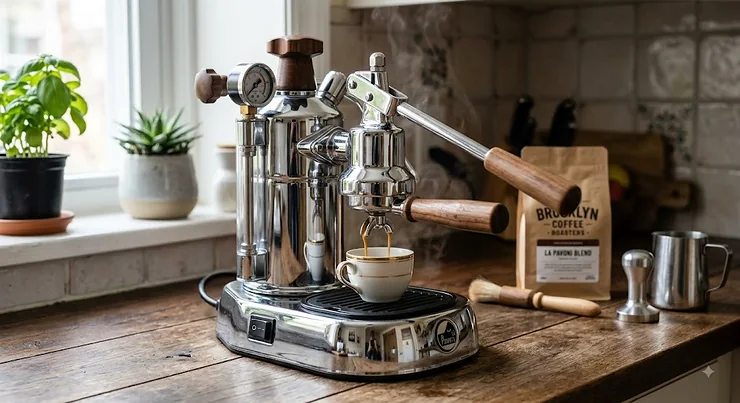
The la pavoni europiccola is a chrome-and-brass, direct-lever espresso machine that has been hand-built in Italy since the early 1960s, and it’s still one of the most recognizable pieces of coffee equipment a person can put on a kitchen counter. It’s the espresso machine that shows up in movies as set dressing, the one your barista friend points at in a vintage shop window, and — underneath all that nostalgia — a genuinely capable manual machine that rewards the people willing to learn it. If you’ve been circling this purchase for months, torn between the romance of a lever machine and the practical question of whether you’ll actually use it, you’re in good company.\
What is the la pavoni europiccola? It’s a home espresso machine that uses a hand-pulled lever and piston, rather than an electric pump, to force hot water through the coffee puck, giving the user direct control over brewing pressure throughout the shot.
This guide breaks down seven real lever espresso machines — from a $200 entry point to a nearly $2,000 Italian classic — so you can see exactly where the Europiccola sits in the wider lever-machine landscape. We’ll dig into specs that actually matter, aggregate what real owners report in reviews, and walk through the learning curve, the maintenance reality, and the buying mistakes that trip up first-time lever owners. La Pavoni’s own company history traces back to 1905 in Milan, and that lineage matters when you’re deciding whether to trust a century-old mechanical design over a modern pump machine — La Pavoni’s origins and product lineage are documented on Wikipedia, including its 2005 inclusion in a MoMA design exhibition.
Quick Comparison Table
| Machine | Type | Price Range | Best For |
|---|---|---|---|
| La Pavoni Europiccola (EPC-8) | Electric direct-lever | Around $750–$950 | The classic Italian experience, first lever machine |
| La Pavoni Professional (PC-16) | Electric direct-lever | Around $1,050–$1,300 | Entertaining guests, back-to-back shots |
| La Pavoni Stradivari Europiccola | Electric direct-lever | Around $1,200–$1,350 | Showpiece counters, cooler wood handles |
| Elektra Microcasa a Leva | Electric spring-piston lever | Around $1,300–$1,800 | Enthusiasts who want a built-in pressure gauge |
| Flair 58 Pro 2 | Fully manual, no electricity | Around $300–$500 | Pressure-profiling nerds, small kitchens |
| Cafelat Robot | Fully manual, no electricity | Around $300–$400 | Fast shot-to-shot workflow on a budget |
| ROK Espresso GC | Fully manual, no electricity | Around $200–$260 | Cheapest real entry into lever espresso |
Looking at this table, the split isn’t really “cheap vs. expensive” — it’s electric-boiler machines that also steam milk versus fully manual devices that need an outside kettle and skip milk drinks entirely. The La Pavoni Europiccola sits in the middle of that first group: pricier than a pump machine at the same tier, but it’s the only one here that pairs the lever experience with an onboard boiler and steam wand at a sub-$1,000 price. If milk drinks matter to you daily, that alone should narrow your shortlist before you even look at aesthetics.
💬 Just one click — help others make better buying decisions too!😊
Top 7 Italian Lever Espresso Machines: Expert Analysis
Coverage here spans true budget entry points, the mid-range Europiccola family, and premium Italian-built machines — including electric direct-lever, spring-piston, and fully manual designs, so you can compare apples to actual apples rather than just price tags.
1. La Pavoni Europiccola — the icon that started the home-lever category
The La Pavoni Europiccola is the machine that put manual lever espresso into American and European kitchens back in the early 1960s, and the current EPC-8 model still runs on the same basic recipe. It packs a 20-ounce (0.8L), nickel-plated solid brass boiler good for roughly eight 2-ounce shots per fill, a 1000-watt heating element, and the newer “Millennium” brew group with heat diffusers designed to cut down on the temperature spikes that plague older units. In practice, that brass boiler retains heat impressively well for something this compact — you’re not fighting the wild swings you’d get from a thin aluminum tank — but the small reservoir also means you’re realistically pulling two or three drinks before a refill and steam recovery pause becomes necessary. This is a direct-lever machine, meaning there’s no spring assisting you; you are the pressure profile, for better or worse. That makes it best suited to buyers who actually want to learn the craft, not people hoping for espresso-on-autopilot. Retailer review sections for the EPC-8 skew positive, with repeat buyers describing it as high-quality and capable of “a professional shot” — though it’s worth noting these are unverified retailer-hosted testimonials rather than an independently audited review panel, so weight them as directional rather than scientific.
Pros:
- ✅ Genuine Italian-made brass boiler with a 30-plus facility repair network
- ✅ Compact 12″H x 7″W x 11″D footprint fits small kitchens
- ✅ Full manual pressure control once you learn the lever
Cons:
- ❌ Small boiler limits you to a couple of drinks per fill
- ❌ Steep learning curve compared to pump machines
Expect to pay in the $750–$950 range for a standard chrome EPC-8; specialty finishes and gauge editions run noticeably higher. For the money, it’s the cheapest path into a genuinely Italian-made, boiler-equipped lever machine — the value verdict here is strong specifically because nothing else on this list matches that combination at this price.
2. La Pavoni Professional — biggest boiler for entertaining
Think of the La Pavoni Professional as the Europiccola’s bigger sibling: same direct-lever mechanism and chromed-brass construction, but built around a substantially larger boiler — listings put it anywhere from roughly 32 to 38 ounces depending on the retailer — which translates to about sixteen 2-ounce servings per fill instead of eight. That extra capacity is the entire pitch. If you’re making espresso for a partner, guests, or back-to-back cappuccinos, the Professional’s boiler recovers steam pressure faster between drinks simply because there’s more thermal mass to draw from. It ships with dual frothing systems and, on most trims, a mounted pressure gauge that the base Europiccola lacks — a genuinely useful addition since it gives you a visual cue for when the boiler has built enough pressure to pull a clean shot rather than guessing by sound and steam. One reviewer covering the wider La Pavoni lineup called the standard Professional a legitimate “manual hero,” while cautioning that the far pricier Esperto Edotto trim (nearing $3,000) is overkill for anyone but committed hobbyists — a useful signal that La Pavoni’s lineup scales price well past what most home users need.
Pros:
- ✅ Roughly double the Europiccola’s shot capacity per fill
- ✅ Mounted pressure gauge on most trims aids timing
- ✅ Same trusted direct-lever mechanism as the Europiccola
Cons:
- ❌ Larger footprint and weight than the base Europiccola
- ❌ Meaningfully pricier for what’s mostly a boiler upgrade
Budget around $1,050–$1,300 for a standard chrome PC-16. It’s worth the jump over the Europiccola specifically if your household drinks more than two or three espressos in a sitting; otherwise you’re paying for boiler capacity you won’t use.
3. La Pavoni Stradivari Europiccola — wood-handled counter showpiece
The La Pavoni Stradivari Europiccola is mechanically the same 20-ounce-boiler machine as the standard EPC-8, dressed up with rosewood-style wood handles on the lever and portafilter and a chrome body finish under the “Stradivari” line name. The practical upside of the wood trim isn’t just cosmetic — wood conducts heat far more slowly than the bare metal handles on the base model, so during a long steaming session or a string of shots, the lever and portafilter handle stay noticeably cooler to the touch. That’s a real ergonomic upgrade, not just styling, for anyone planning to use the machine daily rather than as a display piece. Independent, long-term review coverage specific to this exact trim is thinner online than for the standard chrome EPC-8; most owner commentary simply refers to it generically as “the wood-handled Europiccola” scattered across enthusiast forum threads rather than dedicated reviews, so treat performance claims here as inherited from the base Europiccola’s track record rather than independently verified for this specific finish. Several retailers list it on back-order with multi-month lead times, which is worth factoring in if you’re buying for a specific date.
Pros:
- ✅ Wood handles stay cooler during long steaming sessions
- ✅ Same proven Millennium brew group as the base EPC-8
- ✅ Distinct showpiece aesthetic for open kitchens
Cons:
- ❌ Premium price mostly for cosmetic and handle upgrades
- ❌ Longer back-order lead times reported by multiple retailers
Expect around $1,200–$1,350. This is a “want,” not a “need,” upgrade over the base Europiccola — buy it if you’re drawn to the aesthetic and plan to use the machine often enough that the cooler handles genuinely matter.
4. Elektra Microcasa a Leva — spring-piston perfectionist’s classic
The Elektra Microcasa a Leva takes a different mechanical approach than either La Pavoni model: instead of a direct lever where you alone control the entire pressure curve, Elektra uses a spring-piston system, where pulling the lever compresses a spring that then pushes water through the coffee as it releases. In practice, that spring does some of the pressure-profiling work for you automatically, tapering off pressure toward the end of the shot in a way a direct-lever machine only achieves if the operator manually eases off. Built from copper and brass (or chrome-and-brass, depending on finish) with a mounted pressure gauge as standard, the Microcasa gives visual feedback that some direct-lever machines charge extra for or skip entirely. Long-running enthusiast forum threads — including years-old but still-cited posts on Home-Barista — describe the Microcasa as producing “an amazingly clear and clean cup,” a sentiment echoed by more recent reviewers who call it the choice for “the discerning, experienced espresso drinker.” That phrasing is a fair signal: this isn’t marketed or reviewed as a beginner’s first machine.
Pros:
- ✅ Spring-piston system assists with pressure tapering automatically
- ✅ Built-in pressure gauge standard on most trims
- ✅ Strong, long-standing reputation among lever enthusiasts
Cons:
- ❌ Highest price point in this roundup
- ❌ Reviewers note manual cleaning is more involved than pump machines
Pricing runs roughly $1,300–$1,800 depending on finish. If your budget stretches this far and you want a machine that partially automates pressure profiling while still being 100% manual in spirit, the Microcasa is the most defensible premium buy here — it’s just not a first lever machine for most people.
5. Flair 58 Pro 2 — 58mm pressure profiling without electricity
The Flair 58 Pro 2 throws out the boiler entirely. There’s no electricity involved at all — you heat water separately (kettle, stovetop, whatever you’ve got), pour it into the machine’s chamber, and generate all the brewing pressure yourself by pulling down on the lever. What sets it apart from cheaper manual devices is the 58mm portafilter, the same size used in commercial cafés, paired with a cast aluminum base, a stainless steel brew post, and an integrated pressure gauge that shows real-time extraction pressure as you pull. That gauge is the single biggest practical upgrade over machines without one: instead of guessing whether you’re overshooting or undershooting pressure, you can watch the needle and adjust your pull speed mid-shot. Real owner sentiment is genuinely split, which is worth reporting honestly rather than glossing over — one reviewer called it “the best manual lever espresso maker you can buy” for intermediate home baristas, while another, more critical long-term review described the full workflow (grind, distribute, tamp, preheat the brew head, pre-infuse, then pull) as more frustrating than rewarding once the novelty wore off. Both things can be true depending on how much you enjoy the process itself.
Pros:
- ✅ Commercial 58mm portafilter compatible with standard baskets
- ✅ Integrated pressure gauge for real pressure profiling
- ✅ No boiler or pump means nothing to descale
Cons:
- ❌ No milk-steaming capability at all
- ❌ Full manual workflow per shot demands real patience
Pricing generally lands around $300–$500 depending on retailer and bundle. It’s the strongest pick here for anyone who wants genuine pressure-profiling control at a fraction of what a PID-equipped pump machine costs, provided milk drinks aren’t a daily requirement.
6. Cafelat Robot — stovetop-powered pocket rocket
Designed by a longtime vintage-machine restorer, the Cafelat Robot uses dual push-levers rather than Flair’s single pull-lever, and testers who’ve used both machines back-to-back note a real workflow difference: CoffeeGeek’s first-look coverage found the Robot noticeably faster from shot to shot than the Flair, largely because there’s less reassembly required between pulls. Like the Flair, it skips the boiler entirely — you supply hot water from a kettle — and uses the same commercial 58mm stainless filter basket with a bottomless portafilter option. Its painted-steel body is compact (roughly 23cm x 23cm x 31cm) and light at 2.8kg, making it a genuinely reasonable travel companion. On the performance side, one reviewer who owns a commercial Conti Prestina lever machine said the Robot “can go head to head” with it, and another called the shots “on par with espresso makers three or four times the price” — strong claims worth taking with the usual grain of retailer-adjacent enthusiasm, but consistent across multiple independent write-ups. The honest downsides reviewers flag: it struggles with very light “filter-style” roasts that need an ultra-fine grind, and there’s no milk-steaming option at all.
Pros:
- ✅ Faster shot-to-shot workflow than most competing manual levers
- ✅ Commercial-grade 58mm basket and bottomless portafilter
- ✅ Compact, durable, travel-friendly build
Cons:
- ❌ No milk-steaming capability
- ❌ Reviewers report difficulty with very light roast profiles
Expect around $300–$400 for the standard or Barista (gauge) versions, with special colorways running closer to $500. It’s a strong budget pick specifically if workflow speed between shots matters more to you than milk drinks or having the biggest name-brand badge on the counter.
7. ROK Espresso GC — cheapest true lever entry point
The ROK Espresso GC is the most affordable genuine lever espresso machine in this comparison, and its recent “GC” (glass-composite) update addressed one of the biggest complaints about older ROK models: heat retention. The glass-composite brewing chamber holds heat better than the older plastic construction, which matters a lot on a device with zero boiler or heating element of its own — you’re entirely dependent on how hot your kettle water was and how well the chamber preserves that heat through the pull. At roughly 11 inches tall and 3.9 pounds, it’s the lightest and most compact machine here, and ROK backs the metal components with a genuinely long 10-year warranty (extendable to 15 years with registration), which is unusual for a device at this price. Reviewer sentiment is honestly mixed in a useful way: one detailed test scored the espresso quality 8.2 out of 10 and value 9 out of 10, while another reviewer bluntly noted that dedicated enthusiasts “always trying to brew the best coffee” will likely find it only somewhat satisfying compared to pricier levers — useful context if you already know you’re a coffee obsessive versus a casual daily drinker.
Pros:
- ✅ Lowest price of any real lever machine in this list
- ✅ Long 10-to-15-year warranty on metal components
- ✅ Extremely light and compact for travel or small kitchens
Cons:
- ❌ No pressure gauge on the standard configuration
- ❌ Enthusiast reviewers note a lower quality ceiling than pricier levers
Pricing generally runs $200–$260, making it the machine to buy if you want to find out whether you even like manual espresso before committing real money.
The La Pavoni Europiccola Learning Curve
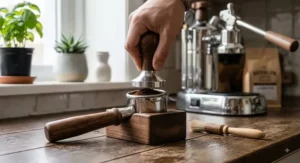
Here’s what the spec sheet won’t tell you: the la pavoni europiccola learning curve is real, and it’s mostly about temperature and pressure, not about strength. In your first week, expect inconsistent shots — some sour, some bitter — because you haven’t yet built a feel for how long to let the boiler come up to temperature before pulling the lever, or how fast to pull it. Start by dosing 14–16 grams into the double basket, distributing evenly (a cheap WDT tool helps more than a fancy tamper), and timing your first pulls to run 25–30 seconds. Don’t chase perfect crema in week one; chase consistency. Common early mistakes include yanking the lever down too fast (which channels water through the puck unevenly and produces sour, thin shots) and steaming milk immediately after pulling a shot without giving the boiler a moment to recover, which stalls your pressure. A basic maintenance routine — backflushing the group weekly, descaling monthly with citric acid depending on your water hardness, and wiping the boiler cap threads dry after each session — will keep the Europiccola running for decades; these machines are famously repairable rather than disposable.
✨ Ready to Start Pulling Real Shots?
🔍 Grab the machine that matches your commitment level from the comparison above, and check current pricing before it changes. A good grinder pairs perfectly with any of these picks!
Real-World Scenarios: Who Should Buy Which Machine
Picture a college student in a studio apartment who wants café-quality espresso without giving up desk space: the ROK Espresso GC or Flair 58 Pro 2 wins here, since both pack away small and need no dedicated outlet or descaling routine. Now picture a couple who host brunch monthly and want two cappuccinos pulled within a few minutes of each other: the La Pavoni Professional‘s bigger boiler is the better fit, since its steam recovery handles back-to-back drinks more gracefully than the smaller Europiccola. And picture a retired home barista with real budget flexibility who’s owned pump machines for years and wants the “purest” manual experience with visual pressure feedback: the Elektra Microcasa a Leva‘s spring-piston system and standard pressure gauge make it the natural upgrade path. If you’re simply curious about lever espresso and unsure you’ll stick with it, start at the bottom of this list — the ROK or Cafelat Robot — rather than committing to a $1,000-plus machine before you know if you enjoy the ritual.
La Pavoni Europiccola vs Professional: Which Should You Buy?
The la pavoni europiccola vs professional decision comes down to one honest question: how many drinks do you make in a single sitting? Mechanically, the two machines are near-identical — same direct-lever piston system, same brass-boiler construction, same Millennium brew group technology. The difference is capacity and, on most trims, instrumentation. The Europiccola’s 20-ounce boiler comfortably handles two to three drinks before you’re waiting on recovery; the Professional’s roughly 32-to-38-ounce boiler roughly doubles that runway and typically adds a mounted pressure gauge the base Europiccola skips. For a solo drinker or a couple who each have one espresso a day, the Europiccola is the better value — you’re not paying for boiler capacity that sits unused. For a household that regularly makes cappuccinos for guests, or where two people want espresso within minutes of each other, the Professional’s extra headroom removes a real point of friction. Price-wise, expect to pay roughly $250–$400 more for the Professional over a comparable Europiccola finish, which is a meaningful jump for what is, mechanically, an incremental capacity upgrade rather than a different brewing experience.
Is the La Pavoni Europiccola Good? Real-World Performance
Is la pavoni europiccola good in daily use, once the novelty wears off? Based on the spec comparison and aggregated owner sentiment, the honest answer is: yes, for the right buyer, but it demands more from you than a pump machine does. The brass boiler and Millennium brew group do their job — heat diffusion is genuinely better than on older Europiccola generations, and the machine holds temperature well between shots for its size. What the spec sheet won’t tell you is that shot quality on a direct-lever machine tracks your technique far more closely than it does on an automatic. A skilled operator can pull espresso on the Europiccola that rivals machines costing several times more, because a hand-controlled pressure curve is genuinely capable of excellent extraction. An inconsistent operator, meanwhile, will get inconsistent shots regardless of how good the hardware is underneath them. Reviewers who’ve spent real time with the model consistently push back against the “style over substance” reputation the machine picked up from decades of movie-prop cameos, and describe it instead as a legitimately capable home espresso machine once you’ve put in the practice hours.
Mastering La Pavoni Temperature Surfing
La pavoni temperature surfing is the technique experienced owners use to compensate for something every single-boiler lever machine shares: a simple thermostat that lets water temperature swing several degrees above and below your target rather than holding a razor-precise setpoint the way a PID-controlled pump machine does. The idea, borrowed from the wider single-boiler espresso community, is to time your lever pull to catch the water at the sweet spot in its heating cycle rather than pulling the moment the machine feels “ready.” In practice, that means running a short flush through the group before pulling, feeling or listening for the boiler’s heating cycle, and building a consistent personal rhythm — pull at the same point in the cycle every time rather than guessing fresh each session. The Specialty Coffee Association’s brewing research puts ideal espresso extraction temperature in the 195–205°F (90–96°C) window, and on a direct-lever machine without electronic temperature control, the SCA’s published brewing and equipment standards are a useful benchmark to aim for even though you’re hitting them by feel rather than a digital display. Owners who master this technique report a real, repeatable improvement in shot sweetness and a reduction in the sour or harsh notes that plague early attempts.
How to Choose an Italian Lever Espresso Machine
This Italian lever espresso machine iconic reputation didn’t happen by accident — but iconic doesn’t automatically mean “right for you.” Work through these criteria in order before you buy:
- Decide how hands-on you actually want to be. Direct-lever machines like the Europiccola ask more of you than spring-piston or fully manual devices; be honest about whether that sounds fun or tedious.
- Set a total budget that includes a grinder. A quality burr grinder is non-negotiable for lever espresso and often gets forgotten in the machine-only budget.
- Decide if you need milk drinks daily. Electric boiler machines (Europiccola, Professional, Microcasa) steam milk; fully manual machines (Flair, Robot, ROK) do not.
- Match boiler size to your household’s drink volume. One or two drinks per sitting favors the Europiccola; three-plus favors the Professional.
- Weigh countertop space and portability. Manual lever devices pack smaller and travel; electric boiler machines are countertop-permanent.
- Check the repair and parts network before buying. La Pavoni’s decades-long repair infrastructure is a real advantage over newer, smaller manufacturers.
- Read reviews for realistic expectations, not marketing copy. Look specifically for mentions of the learning curve, not just finished-shot photos.
Vintage Style Espresso Machines: Design, Aesthetics, and Counter Presence
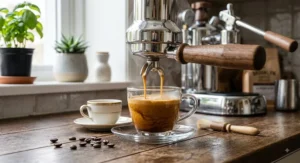
A vintage style espresso machine earns its keep two ways: how it performs, and how it looks doing it, and the chrome-and-brass lever category is where those two goals overlap most successfully. The Europiccola‘s mirror-polished chrome body and exposed brass boiler cap aren’t retro cosplay — that’s genuinely how the machine looked in the 1960s, largely unchanged. What most buyers overlook is that this aesthetic comes with real trade-offs: exposed metal surfaces show fingerprints and water spots quickly, and chrome requires occasional polishing to keep its shine, unlike the brushed stainless or matte plastic finishes on modern pump machines that hide smudges by design. If you want the look without the upkeep, the wood-handled Stradivari trim reduces at least the handle-touching fingerprint problem. Fully manual machines like the Flair and ROK take a more modern industrial-design approach — anodized aluminum, exposed engineering — which reads as “gadget” rather than “heirloom,” a distinction worth considering if the countertop-showpiece factor matters to your buying decision as much as the coffee does.
Common Mistakes When Buying a Lever Espresso Machine
The single biggest mistake buyers make is underestimating the grinder budget — a $150 blade grinder will sabotage even the best lever machine on this list, because consistent, fine, even grounds are the actual foundation of good extraction, not the machine itself. The second mistake is buying a boiler-equipped premium model like the Professional or Microcasa as a first machine, then discovering the learning curve is steeper than expected and the investment feels heavier because of it — starting with a $200–$400 fully manual option lets you find out if you enjoy the process before committing serious money. Third, buyers frequently skip researching parts availability, which matters enormously on mechanical lever machines that are meant to last decades; La Pavoni’s extensive North American repair network is a genuine competitive advantage worth factoring into the purchase price. Finally, don’t assume “electric” means “easier” — the Europiccola’s boiler heats water for you, but it does nothing to control your lever technique, so the hands-on learning curve is nearly identical to a fully manual machine.
Long-Term Cost & Maintenance
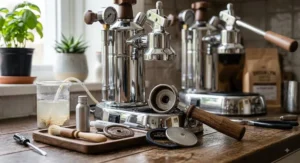
Total cost of ownership on a lever machine looks different than a pump machine’s, and it’s worth running the numbers honestly. An electric boiler machine like the Europiccola needs periodic descaling (frequency depends on your local water hardness), occasional gasket replacement — a wearable part that typically costs under $10 and takes minutes to swap — and, rarely, a heating element repair, which is where La Pavoni’s nationwide repair network pays for itself. A fully manual machine like the Flair or ROK has essentially no boiler to maintain at all, since there isn’t one; your ongoing costs are limited to portafilter gaskets and the odd replacement basket. Peer-reviewed research on espresso extraction confirms that the biggest variable in cup quality over the long run isn’t the machine’s age but grind consistency and puck preparation — a cross-cultural study on espresso protocol repeatability published via PubMed Central found that grind size, dose, and preparation technique swing extraction results more than most equipment differences do. Practically, that means your recurring “maintenance” dollars are often better spent on a quality burr grinder upgrade than on chasing a pricier machine.
Lever Espresso vs Pump-Driven Machines: What Actually Changes in the Cup
| Factor | Lever Machines (this roundup) | Standard Pump Machines |
|---|---|---|
| Pressure control | Fully manual, hand-controlled curve | Fixed or electronically profiled |
| Learning curve | Steep — technique-dependent | Moderate — largely automated |
| Noise | Silent to near-silent | Audible pump whirring |
| Maintenance | Simple mechanically, some boilers need descaling | Pump/solenoid wear parts, regular descaling |
| Milk steaming | Only on boiler-equipped models | Standard on most models |
The core difference is where control lives. A pump machine — even a good one — applies pressure according to a fixed curve or a preset profile; a lever machine puts that curve entirely in your hand, shot to shot. That’s a genuine trade: pump machines are more forgiving and consistent for a beginner, while lever machines have a higher skill ceiling that rewards practice with a level of nuance automated pressure simply can’t replicate. Noise is an underrated factor too — a lever machine’s silence at 6 a.m. is a real quality-of-life upgrade that spec sheets never mention.
📌 Not sure which type fits your morning routine? Compare the full lineup above before you decide.
Safety, Regulations & Compliance for Home Espresso Equipment
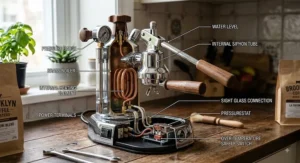
Electric lever machines like the Europiccola and Professional carry ETL listing, the North American safety certification confirming the unit meets recognized electrical safety standards for home appliances — always confirm this listing before buying from a non-major retailer, since counterfeit or grey-market units sometimes lack it. Pressurized boilers, even small 20-ounce ones, include a safety valve and internal thermostat with a reset fuse specifically to prevent the kind of “dry-fire” meltdown that can happen if the boiler runs low on water; never operate one of these machines without confirming the water level first. Fully manual machines like the Flair, Robot, and ROK sidestep electrical certification questions entirely since there’s no boiler or heating element on board, but they do require you to handle boiling water from an external kettle, which carries its own basic scald-risk precautions. La Pavoni’s 2019 acquisition by appliance manufacturer Smeg brought additional manufacturing oversight to the line — Daily Coffee News covered the acquisition and its implications for the brand’s future production standards — which is a reasonable data point if you’re weighing long-term parts and quality consistency on a purchase this size.
Frequently Asked Questions
❓ How long does the La Pavoni Europiccola take to heat up?
❓ Can you steam milk on a Cafelat Robot or Flair Pro 2?
❓ Is the La Pavoni Europiccola hard to use for beginners?
❓ What's the difference between a direct lever and a spring lever machine?
❓ Do lever espresso machines need a special grinder?
Conclusion
Across this comparison, the la pavoni espresso machine review verdict really comes down to matching mechanism and capacity to how you actually plan to drink coffee, not chasing the prettiest chrome on the shelf. The Europiccola remains the best all-around entry into genuine Italian lever espresso if you want an onboard boiler and steam wand without spending Professional or Microcasa money. The Professional earns its higher price tag specifically for households pulling multiple drinks per sitting, and the Stradivari trim is a legitimate upgrade if the cooler wood handles and showpiece looks matter to your daily use. On the fully manual side, the Flair 58 Pro 2 and Cafelat Robot deliver genuine pressure-profiling control without a boiler to maintain, while the ROK Espresso GC remains the cheapest honest way to find out if lever espresso is for you before spending real money. Whichever you choose, budget properly for a decent grinder, expect a real learning curve in the first few weeks, and lean on the temperature-surfing and maintenance habits covered above — they matter more to your final cup than which chrome machine sits on the counter.
✨ Don’t Miss These Exclusive Deals!
🔍 Take your home espresso setup to the next level with the machines compared above. Click through to check current pricing and availability before you commit — these picks will help you pull authentic, café-quality shots your whole household will actually enjoy!
Recommended for You
- 7 Best Spring Lever Espresso Machines to Buy in 2026
- Lever vs Semi Automatic Espresso Machine: 7 Real Picks (2026)
- Manual Lever Espresso Machine: 7 Best Picks for 2026
Disclaimer: This article contains affiliate links. As an Amazon Associate, I earn from qualifying purchases. If you purchase products through these links, we may earn a small commission at no additional cost to you.
✨ Found this helpful? Share it with your friends! 💬🤗
