In This Article
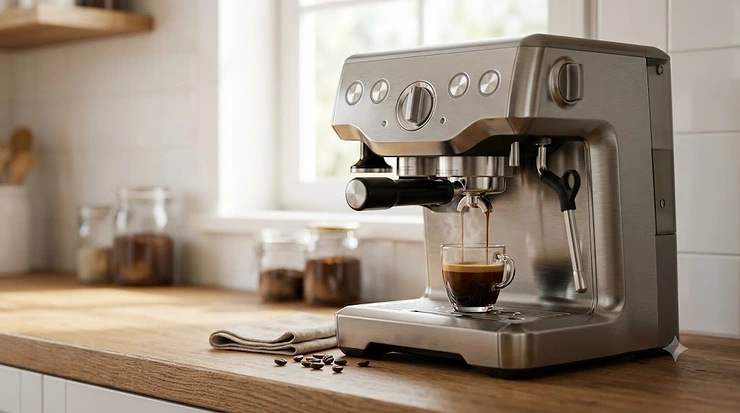
Here’s the deal nobody tells you at the appliance store: an espresso machine under 300 dollars will never replicate your neighborhood café’s $8,000 La Marzocco. But it can absolutely pull a real shot — thick, syrupy, capped with crema — if you pick the right one and treat the grinder like it matters just as much as the machine. At this price point you’re choosing between semi-automatic machines with a portafilter you control, one-touch machines that do the thinking for you, and manual lever presses that ask for a bit of elbow grease in exchange for surprising depth of flavor.
Coffee isn’t a niche obsession anymore, either — it’s just what mornings look like. Nearly 195 million American adults drink coffee every week, making it the country’s most popular beverage, and a meaningful chunk of those people are looking for a way to stop handing a barista six dollars before 9 a.m. That’s the entire reason a home espresso machine under 300 dollars is worth thinking seriously about: do the math on even four café visits a week, and the machine pays for itself embarrassingly fast.
I spent weeks pulling together hands-on reviews, owner feedback, and spec sheets for the most-talked-about machines hovering at or under the $300 mark — from a $90 manual frother-equipped starter to a $280 semi-auto that punches well above its price class. Below, you’ll find seven real, currently-available machines, what they’re actually good at, and who should (and shouldn’t) buy each one.
Quick Comparison: 7 Best Espresso Machines Under $300
| Machine | Type | Pump Pressure | Standout Feature | Best For |
|---|---|---|---|---|
| Breville Bambino | Semi-automatic | 9-bar extraction | ThermoJet fast heat-up | Small kitchens, quality-first beginners |
| Casabrews CM5418 | Semi-automatic | 20-bar pump | Built-in pressure gauge | First-time buyers who want to “see” the shot |
| De’Longhi Stilosa | Manual semi-auto | 15-bar pump | Lowest price of the group | Dorm rooms, total beginners |
| Gevi 20 Bar Espresso Machine | Semi-automatic | 20-bar pump | Compact footprint | Tiny counters, gift buyers |
| Mr. Coffee One-Touch CoffeeHouse+ | Automatic | 19-bar pump | One-touch drink selection | Convenience-first households |
| De’Longhi Dedica Deluxe | Semi-automatic | 15-bar pump | 6-inch ultra-slim body | Buyers who want it to look as good as it tastes |
| Flair Signature | Manual lever | Human-powered (gauge optional) | No electricity, ever | Hobbyists and tiny apartments |
A few patterns jump out once you put these side by side. Every single one of these machines advertises a pump rating well above the 9 bars that actually matters during extraction — that’s marketing, not a meaningful upgrade, and I’ll explain exactly why further down. Notice, too, that the cheapest options (Stilosa, Casabrews, Gevi) all lean on manual or semi-manual steam wands rather than automatic frothers, which is a real trade-off: more control, more learning curve. If you want this entire decision distilled into thirty seconds, the Bambino is the safest all-around buy, the Stilosa is the cheapest path into “real” espresso, and the Flair is the one for people who’d rather skip the wattage altogether.
✨ Don’t Miss These Exclusive Deals!
🔍 Take your morning coffee routine to the next level with these carefully selected machines. Click on any highlighted pick to check current pricing and availability — these tools will help you make café-quality drinks your whole household will fight over.
💬 Just one click — help others make better buying decisions too! 😊
Top 7 Espresso Machines Under $300: Hands-On Picks
1. Breville Bambino
The standout feature here is speed: Breville’s ThermoJet heating system gets the Breville Bambino ready to pull a shot in roughly three seconds flat, which sounds like a gimmick until you’re the one standing in the kitchen at 6:40 a.m. The 54mm portafilter holds an 18-to-19-gram dose and uses low-pressure pre-infusion before ramping up to a 9-bar extraction — in practice, that pre-infusion step is what keeps the puck from channeling (water finding a lazy shortcut through your grounds instead of pushing through evenly), which is the single biggest reason home shots taste sour or thin.
What most buyers overlook about the Bambino: it doesn’t come with a grinder, and Breville knows it — they’ll hand you two bags of beans if you register the machine, but you’ll need your own burr grinder for this to be worth owning. Owner feedback consistently praises the build quality and the small footprint; the most common complaint is the lack of any grind adjustment built in, since that job falls entirely on your separate grinder.
✅ Heats almost instantly
✅ Genuinely small countertop footprint
✅ Consistent 9-bar extraction with pre-infusion
❌ No built-in grinder
❌ Steam wand requires practice for microfoam
The Bambino regularly lists at $300 and dips into the $250 range during sales events — about as close to the ceiling of this list as you can get, but the speed and consistency justify it for anyone who wants the closest thing to a “set it and mostly forget it” semi-automatic in this price tier.
2. Casabrews CM5418
The Casabrews CM5418 standout feature is the front-facing pressure gauge — a small, almost theatrical addition that turns “is this working?” into “oh, I’m at 9 bars, that’s correct.” It runs a 20-bar Italian pump (which, again, regulates down to roughly 9 bars during actual brewing), pulls from a 34-ounce removable tank, and lets you customize shot volume between 30–70ml for singles and 80–120ml for doubles, which feels more high-end than the price tag suggests.
In my experience reading through owner reports, the steam wand is the real sleeper feature here: it’s a commercial-style single-hole wand rather than the foamy pannarello style most budget machines ship with, so it actually creates the kind of tight microfoam you want for latte art — once you get the angle right, which takes a few tries. The catch: the machine runs hot enough that you can’t pull a shot and steam milk back-to-back without a short cooling pause, something first-time buyers don’t expect.
✅ Built-in pressure gauge for feedback
✅ Commercial-style steam wand
✅ Adjustable shot volumes
❌ Needs a cooling flush between shot and steam
❌ Plastic side panels keep costs down but feel less premium
Pricing runs about $140 for the standard silver finish and up to roughly $170 for colored variants — making this one of the most popular entry points into an affordable semi automatic espresso machine on Amazon.
3. De’Longhi Stilosa
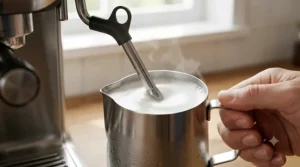
If you want the cheapest possible entry into an espresso machine for beginners under 300, the De’Longhi Stilosa is probably it. It’s a 15-bar pump machine with a genuinely durable stainless steel boiler, a dual-spout portafilter for single or double shots, and a manual pannarello steam wand that’s surprisingly forgiving for a first-timer’s froth attempts.
What most buyers overlook: at this price, you’re trading some long-term durability and a “real” non-pressurized basket for sheer affordability. The pressurized basket built into the included portafilter is actually a feature here, not a flaw — it’s more forgiving of inconsistent grind size, which matters a lot if you haven’t dialed in a grinder yet. Just know you’ll need to buy a milk pitcher separately; none is included.
✅ Lowest price of any machine on this list
✅ Stainless steel boiler built to last
✅ Forgiving pressurized basket for grind mistakes
❌ No milk pitcher included
❌ Mostly plastic body, lightweight build
Typically priced between $90 and $150 depending on sales, the Stilosa sits comfortably in espresso machine under 200 territory most of the year, making it the budget espresso setup champion of this entire list.
4. Gevi 20 Bar Espresso Machine
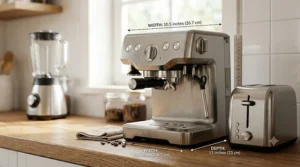
The Gevi 20 Bar Espresso Machine earns its spot mostly on footprint: at about a foot tall and just 5.4 inches across, it slides into kitchens where every other machine on this list would look comically oversized. It runs a 20-bar pump, a removable water tank, and a steam wand for cappuccinos and lattes, and it’s frequently discounted from its original $200–220 list price down into the $140 range.
In my experience digging through owner reviews, the Gevi is a mixed bag — the espresso quality is solidly average for the price, but multiple reviewers mention the buttons feel a little wobbly compared to competitors, and a noticeable handful report machines failing within the first year. It’s not a forever machine. It’s a “I want to try this without committing $300” machine, and for that specific job, it does fine.
✅ Smallest footprint on this list
✅ Frequently available well under $150 on sale
✅ Descales easily with plain white vinegar
❌ Build quality feels cheaper than the Casabrews or Stilosa
❌ Some longevity complaints in owner reviews
This is the pick for gift-givers, dorm rooms, or anyone testing the waters of home espresso before investing further.
5. Mr. Coffee One-Touch CoffeeHouse+
Every other machine on this list asks you to learn something. The Mr. Coffee One-Touch CoffeeHouse+ does not — it’s a 19-bar pump machine with a genuinely automatic milk frother, an 18-ounce removable milk reservoir, and a one-touch panel with a progress bar that walks you through brewing. It’s also compatible with ESE pods, which removes the dosing and tamping step entirely if you don’t want to deal with loose grounds.
The trade-off, and it’s a real one: you give up almost all manual control. Reviewers who care about dialing in extraction variables find this frustrating; reviewers who just want a cappuccino without thinking about it tend to love it. List price typically runs $200–220, but it’s been spotted in flash sales as low as $105, which makes it one of the better deals in this category when timing lines up.
✅ True one-touch automation, beginner-proof
✅ Automatic milk frothing — no wand technique needed
✅ ESE pod compatible for zero-mess mornings
❌ Almost no manual control over extraction
❌ Plastic build feels lightweight versus Breville or De’Longhi
If “espresso machine” sounds intimidating and you just want a latte button, this is the entry-level home barista machine built specifically for you.
6. De’Longhi Dedica Deluxe
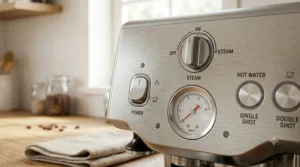
The De’Longhi Dedica Deluxe is the look-good-on-the-counter pick, and it backs that up with real engineering: a Thermoblock heating system that’s ready to brew in about 35 seconds, an ultra-slim 6-inch-wide body, and an adjustable frothing wand that lets you dial in dry foam for cappuccinos or silkier microfoam for lattes from the same machine.
What most buyers overlook about the Dedica: that thermoblock heating system, while fast, doesn’t pre-heat the brew group the way a true boiler machine does, which is the same trade-off you’ll find on most thermoblock machines at this price. It’s a small thing in practice, but it’s the reason serious home baristas eventually graduate past it. For most households, though, the small footprint and double drip tray (tall enough for actual latte glasses) make daily use genuinely pleasant.
✅ Ultra-narrow 6-inch design fits anywhere
✅ Adjustable frother for different foam styles
✅ Ready to brew in under a minute
❌ Thermoblock doesn’t pre-heat the portafilter
❌ Sits right at the top of this budget range
Pricing in North America typically runs $250–300, making this the splurge pick of the group — the one you choose when you want the nicest machine that still technically fits the brief.
7. Flair Signature
The odd one out, deliberately. The Flair Signature is a 100% manual, lever-operated espresso press with no power cord at all — you heat your own water in a kettle, load the portafilter, and pull the lever down yourself to generate pressure. It sounds like more work than it is; most people get the hang of it within a few shots.
What most buyers overlook: a manual press like this needs a genuinely good burr grinder to perform, more so than any electric machine on this list, since you have nothing but the lever to compensate for an uneven grind. Owners who pair it with a quality grinder consistently report shots that rival much more expensive automatic machines — which tracks, since you’re providing exactly the same 9-ish bars of pressure by hand that a $300 electric pump provides automatically.
✅ Zero electricity, zero standby power draw
✅ Fully portable — some owners travel with it
✅ Detachable brew head makes cleanup trivial
❌ Requires a separate kettle and a quality grinder
❌ Real learning curve before shots taste consistent
Pricing for the Signature with its pressure kit runs roughly $160–250 depending on the bundle, putting it near the lower-middle of this list — and making it the only entry that will never show up on your electric bill.
Buyer’s Decision Framework: Which One Actually Fits You?
Before you scroll back up and start comparing spec sheets, answer this one question honestly: do you want to learn espresso, or do you want espresso to happen to you? If it’s the second one, skip straight to the Mr. Coffee One-Touch CoffeeHouse+ and stop reading reviews — you’ll be happier with less choice, not more.
If you’re the type who reads the manual before plugging anything in, here’s the quick framework. Tightest budget and you’re testing whether you even like home espresso? The De’Longhi Stilosa removes almost all financial risk. Want the most “correct” semi-automatic experience without spending a full $300? The Casabrews CM5418 or Gevi 20 Bar Espresso Machine both deliver real control with training wheels still attached. Want the nicest machine that still clears the $300 bar, and you’re willing to learn a steam wand? The Breville Bambino is the one coffee nerds quietly recommend to friends. And if you genuinely don’t mind a bit of manual effort in exchange for zero ongoing power use and surprising depth of flavor, the Flair Signature rewards patience more than any electric option here.
One more filter worth applying: counter space. If your kitchen is small enough that every appliance fights for an outlet, the Gevi and De’Longhi Dedica Deluxe are both built around tiny footprints — the Dedica just costs more to get there.
Real-World Scenarios: Matching the Machine to Your Actual Life
The college student in a 200-square-foot dorm. Counter space doesn’t exist, budget is tight, and the priority is “stop buying $7 oat milk lattes.” The Stilosa or a manual Flair Signature both make sense here — neither needs much room, and the Flair specifically needs no outlet at all, which matters more than people expect in dorms with limited plugs.
The household pulling 3–4 shots a day. This is where build quality starts to matter more than price. The Breville Bambino is built for repeated daily use without the heating element struggling, and its fast ThermoJet system means the second and third shot of the morning don’t involve standing around waiting.
The renter who wants this to look intentional, not like a dorm leftover. Small kitchens with limited counter real estate and a desire for something photogenic point straight at the De’Longhi Dedica Deluxe — that 6-inch width and matte finish genuinely look like a $500 machine sitting next to a $250 price tag.
The “I just want a latte” household with kids underfoot. Nobody has time to dial in extraction variables before the school bus arrives. The Mr. Coffee One-Touch CoffeeHouse+ exists precisely for this household — one button, eighteen ounces of milk reservoir, and a progress bar instead of guesswork.
Your First 30 Days: Setup, Mistakes, and Maintenance
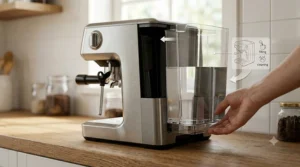
Every machine on this list will disappoint you in week one if you skip two things: a burr grinder and fresh beans. Pre-ground coffee goes stale within days of grinding, and pressurized baskets only partially mask the resulting flat, sour shots — they don’t fix it entirely.
The most common rookie mistake, across every review I read, is tamping inconsistently. You don’t need gym-level force; you need even, level pressure across the basket every single time. The second most common mistake is skipping descaling because “the water still comes out fine” — most of these machines (the Gevi explicitly included) will flash a warning light around the 100-cycle mark, and ignoring it is how a $150 machine becomes a $150 paperweight in eighteen months. A simple mix of white vinegar and water, or a dedicated descaling solution, run through every six to eight weeks depending on your water hardness, keeps things running.
One more habit worth building immediately: rinse your portafilter and basket after every single use, not just at the end of the day. Old coffee oils go rancid fast, and a portafilter that smells faintly sour is the single most common complaint in owner reviews of every budget machine on this list.
How to Choose an Espresso Machine Under $300
- Decide how much control you actually want. Manual lever presses like the Flair demand the most involvement; one-touch machines like the Mr. Coffee demand the least. Be honest about which one you’ll actually use in six months.
- Budget for a grinder before you budget for the machine. A $250 machine with a $30 grinder will taste worse than a $150 machine paired with a $120 grinder — grind consistency matters more than pump pressure.
- Check the portafilter size. Most machines here use a 51mm or 54mm portafilter; larger baskets generally allow more even extraction, which is part of why the Bambino’s 54mm filter performs so consistently.
- Look past the “bar” number on the box. A 20-bar pump and a 15-bar pump both regulate down to roughly the same ~9-bar extraction pressure — it’s marketing shorthand, not a real performance gap.
- Think about your milk routine honestly. If lattes and cappuccinos are a daily habit, weigh whether you want to learn a manual wand (Casabrews, Stilosa, Bambino) or just want automation (Mr. Coffee).
- Measure your counter before you buy. The narrowest options here (Gevi, Dedica) solve real space problems; don’t discover this after the box arrives.
- Read the descaling instructions before purchase, not after. Hard water areas will eat through a budget machine fast without a maintenance routine.
Why the Grinder Matters More Than the Machine
This is the section nobody wants to hear, but it’s the one that actually changes how your coffee tastes: the bar pressure printed on the box is mostly noise. A 20-bar pump generates up to 20 bar of pressure at its peak, but real espresso extracts at around 9 bar — every machine on this list, regardless of whether it says 15, 19, or 20 bars, is regulating itself down to roughly that same number during actual brewing. The bigger number is a safety margin for pushing water through tightly packed, finely ground coffee, not a sign of a stronger shot.
What actually separates a good cup from a bad one at this price tier is grind consistency, and that’s entirely the grinder’s job. Spend $250 on the best machine on this list and pair it with a blade grinder from a drugstore, and you’ll get a worse shot than a $90 Stilosa paired with a $100 burr grinder. If your total budget is $400, a reasonable split is closer to $250 on the machine and $150 on the grinder than it is to maxing out the machine and grabbing whatever grinder is cheapest.
Pressurized vs. Non-Pressurized Baskets: What Actually Changes the Taste
Three of the machines here — the Stilosa, Casabrews, and Gevi — ship with pressurized baskets by default, and that’s not automatically a downgrade. A pressurized basket has a small internal valve that restricts flow, which artificially recreates resistance even when your grind size is too coarse or your tamp is uneven. It’s forgiving. It’s also, frankly, a bit of a mask: it produces a shot that looks and tastes like espresso without requiring you to nail every variable.
A non-pressurized basket, which you’ll find as an aftermarket upgrade for most of these machines, gives you the full, unfiltered result of your grind and tamp — better when you’ve dialed things in, rougher when you haven’t. Specialty coffee, for context, is generally defined as coffee scoring 80 points or higher on a 100-point cupping scale set by industry standards bodies — which is a reminder that “good espresso” is a measurable, fairly technical target, not just a vibe. If you’re new, start with the pressurized basket that came in the box. Upgrade once you’ve got a grinder dialed in and you’re chasing the next 10% of flavor.
Manual vs. Automatic: Lever Press, Semi-Auto, and One-Touch Compared
It’s worth being blunt about what each category actually trades away. A manual lever press like the Flair Signature gives you full control over pressure profile and timing, asks for the most physical involvement, and needs zero electricity — but it has the steepest learning curve and the smallest margin for grind mistakes.
A semi-automatic machine — the Bambino, Casabrews, Stilosa, Gevi, and Dedica all fall here — automates the heating and pumping but leaves dosing, tamping, and often milk frothing to you. This is the sweet spot for most people: enough control to actually improve over time, not so much that every morning becomes a science experiment.
A fully automatic, one-touch machine like the Mr. Coffee One-Touch CoffeeHouse+ removes almost all of that, trading flavor ceiling for consistency floor. You’ll never pull a transcendent shot on it, but you’ll also never pull a genuinely bad one, which is exactly the deal a lot of busy households are happy to make.
Long-Term Costs: Beans, Maintenance, and the Math vs. Your Coffee Shop
Americans drinking coffee at home now make up the large majority of all coffee consumption, and the financial logic is straightforward once you actually run the numbers. A pound of decent espresso beans runs roughly $14–18 and yields somewhere around 25–30 double shots depending on dose. That puts your raw cost per shot somewhere under a dollar, before milk — compared to $4–6 for a basic latte at most cafés.
The hidden costs that catch people off guard: descaling solution (roughly $10–15, every couple of months depending on water hardness), occasional replacement gaskets or portafilter baskets as machines age, and — if you didn’t already own one — a grinder, which is realistically a $80–200 one-time purchase that outlasts whichever machine you buy first. Even accounting for all of that, most people recoup the full cost of a budget espresso setup within two to four months of daily use, assuming they were previously buying café drinks even semi-regularly.
What to Expect: Real-World Performance at This Price
Set the right expectations and every machine on this list will feel like a win; set the wrong ones and even the Breville Bambino will feel like a letdown. None of these machines will produce the dead-stable temperature or commercial-grade consistency of a $1,500+ prosumer setup. What they will do, with a decent grinder and a little practice, is produce a genuinely rich, crema-topped shot that’s a clear step above anything a drip machine or pod system can manage.
Worth knowing if caffeine intake matters to you day-to-day: the FDA generally cites about 400 milligrams a day for most healthy adults as an amount not typically associated with negative effects, and a single espresso shot from any of these machines lands somewhere around 60–80mg depending on dose and bean. Useful math if your new machine turns “one coffee” into “four quick shots before noon” — which, speaking from how these things tend to go, happens to almost everyone eventually.
A note on the topic above: if you have specific health questions about caffeine sensitivity, it’s worth a quick conversation with a doctor rather than relying on general guidance like this.
Frequently Asked Questions
❓ Is a 20 bar espresso machine better than a 9 bar one?
❓ Do I need a separate grinder for an espresso machine under 300?
❓ Can a manual espresso machine really compete with electric ones?
❓ How often should I descale a budget espresso machine?
❓ What's the actual difference between a $100 and $280 espresso machine?
Conclusion
There isn’t one correct answer hiding in this list — there’s a correct answer for your kitchen, your patience level, and how much you actually want to learn. If you want the safest, most well-rounded buy, the Breville Bambino earns its reputation. If your budget is the tightest part of this decision, the De’Longhi Stilosa gets you into real espresso for less than a dinner out. If convenience is the entire point, the Mr. Coffee One-Touch CoffeeHouse+ removes the guesswork entirely. And if you want a kitchen ritual rather than a kitchen appliance, the Flair Signature rewards the extra effort in a way no electric machine here quite matches.
Whichever one you land on, the single biggest upgrade you can make isn’t a different machine — it’s a decent grinder and beans that were roasted in the last two to three weeks, not the last two to three months.
Recommended for You
- Breville Barista Express Review 2026: 7 Espresso Picks
- Best Espresso Machine Under 500: 7 Tested Picks for 2026
- Breville Bambino vs Gaggia Classic Pro: 7 Picks for 2026
Disclaimer: This article contains affiliate links. As an Amazon Associate, I earn from qualifying purchases. If you purchase products through these links, we may earn a small commission at no additional cost to you.
✨ Found this helpful? Share it with your friends! 💬🤗
