
In This Article
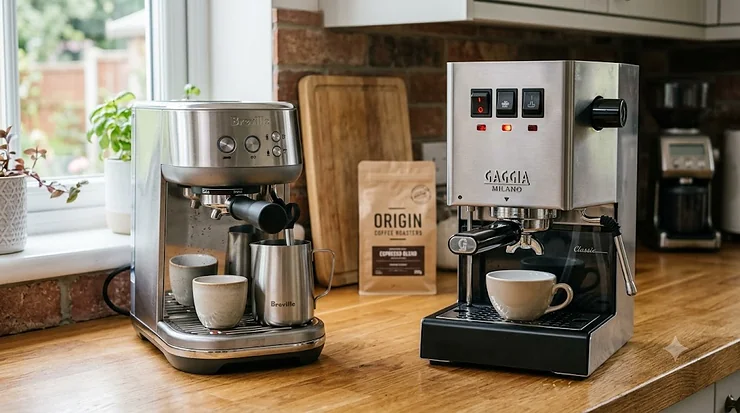
If you’ve spent any time down the home-espresso rabbit hole, you’ve probably landed on the same fork in the road as everyone else: breville bambino vs gaggia classic pro. They sit in a similar price neighborhood, they both fit on a normal kitchen counter, and they both have passionate fan bases who will defend their choice like it’s a sports team. But they’re built on almost opposite philosophies, and that difference matters more than any spec sheet lets on.
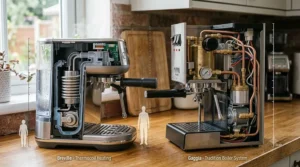
In short, the Bambino is a small, digitally-controlled machine that gets you to a decent shot fast with very little fuss, while the Classic Pro is a manual, commercial-component machine that asks more of you upfront but rewards that effort with more control. Neither is “better” in a vacuum — they’re built for different kinds of mornings.
I’ve spent time researching both machines closely, alongside five other real, currently-available alternatives that come up constantly in the same conversation: a couple of step-up Brevilles, a budget De’Longhi, a built-in-grinder all-rounder, and the prosumer machine that Gaggia owners eventually graduate to or compare against. This isn’t a copy-paste spec sheet. It’s a buyer’s breakdown — what each machine actually feels like to live with, who it suits, and where the marketing oversells things a little.
By the end, you’ll know exactly which of these seven machines fits your coffee habits, your counter space, and your patience for fiddling with a machine before 7 a.m.
Quick Comparison: Breville Bambino vs Gaggia Classic Pro
| Feature | Breville Bambino | Gaggia Classic Pro |
|---|---|---|
| Heating system | ThermoJet — ready in about 3 seconds | Single boiler — roughly 5 minutes to brew temp |
| Portafilter | 54mm, accepts pressurized or standard baskets | 58mm commercial-style, fits industry-standard precision baskets |
| Built-in grinder | None | None |
| Control style | Digital PID with automated milk texturing | Fully manual — 3 rocker switches, no display |
| Modding/upgrade community | Limited | Extensive (PID kits, OPV mods, naked portafilters) |
| Best for | Beginners who want a fast, guided shot | Hands-on learners who want commercial-grade parts |
| Price range | Around $250–$300 | Around $400–$500 |
🔍 Looking at this side by side, the price gap tells only half the story. The Bambino’s ThermoJet system is genuinely the fastest heat-up of any machine in this article, which matters if you’re making espresso before work and don’t want to stand around waiting. The Classic Pro’s slower single boiler is the trade-off for its bigger advantage: a 58mm portafilter that opens the door to the same precision baskets and accessories used on $1,000+ machines. If counter-to-cup speed is your priority, the Bambino wins outright. If you want a machine you can upgrade and modify for the next decade, the Classic Pro has the better bones.
💬 Just one click — help others make better buying decisions too!😊
✨ Don’t Miss These Exclusive Deals!
💬 Take your home coffee setup to the next level — click through on any highlighted machine below to check current pricing and availability before they sell out of your color. 😊
Top 7 Compact & Single-Boiler Espresso Machines: Expert Analysis
These seven are the ones that consistently show up when people are weighing the Bambino-vs-Classic-Pro decision — either as direct contenders or as the upgrade path one of these two machines eventually leads to.
1. Breville Bambino (BES450BSS)
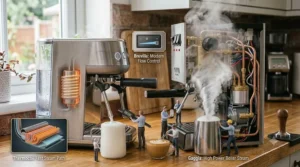
The standout feature here is speed: this is the fastest machine on this list to go from “off” to “pulling a shot.” Its ThermoJet heating system hits brew temperature in about 3 seconds, compared to the 5+ minutes a traditional boiler needs — what most buyers overlook is that this isn’t just a convenience feature, it also means more consistent shot-to-shot temperature since the machine never has time to drift while you’re grinding and dosing. The 54mm portafilter holds about 18g of grounds, and digital PID temperature control keeps water steady through the extraction.
Expert take: this is the right machine for someone who wants café-style espresso without becoming a hobbyist about it. It’s not for someone who wants to tinker — there’s no PID to tune, no community of mod parts, and the automated milk steaming, while solid, doesn’t give the same hands-on control a commercial wand does.
Customer feedback consistently highlights two things: the speed and the compact footprint, with most complaints centered on the learning curve for dialing in grind size on darker or oilier beans.
✅ Pros: Near-instant heat-up, compact size, simple controls
❌ Cons: No included grinder, steam wand power is modest for latte art
Bambino sits around $250–$300, and at that price, it’s hard to beat for a no-fuss daily driver — the value verdict is strongly positive if speed and simplicity matter more to you than modding potential.
2. Gaggia Classic Pro (RI9380 Series / Classic Evo Pro)
The standout feature is the 58mm commercial-style portafilter — the same diameter used on actual café equipment, not a scaled-down home version. In my experience, this single spec is what separates this machine from nearly everything else under $500: it accepts precision baskets from brands like VST and IMS, plus bottomless (“naked”) portafilters, which is something the 51mm and 54mm machines on this list simply can’t do.
What the spec sheet won’t tell you is that the brass boiler (on the Evo Pro update) adds real thermal stability, and the 3-way solenoid valve gives you a dry, clean puck after every shot — a detail that matters a lot once you start dialing in technique. This is a fully manual machine: three rocker switches, no display, no guidance.
Customer feedback frequently praises the build quality and the steam power relative to size, while some newer users mention a real learning curve around “temperature surfing” before shots taste consistent.
✅ Pros: Commercial 58mm portafilter, strong steam output, huge mod/upgrade ecosystem
❌ Cons: No grinder included, single boiler means you wait between brewing and steaming
Gaggia Classic Pro runs around $400–$500. Budget an additional $100–$150 for a quality burr grinder if you don’t already own one — factor that into your total cost before comparing it to all-in-one machines.
3. Breville Bambino Plus (BES500BSS)
The standout feature is the automated milk system: where the standard Bambino gives you a manual steam wand, the Plus adds Auto MilQ, which calibrates air injection and temperature based on the type of milk you select. Same 54mm portafilter, same fast ThermoJet heat-up, but the auto-purge function flushes the heating system after steaming so your next shot extracts at the correct temperature — a small detail that fixes a common annoyance on machines that only steam and brew off one heating element.
Who this is for: someone who already decided the standard Bambino’s manual wand is more effort than they want, but who isn’t ready to commit to a machine with a built-in grinder.
Customer feedback is largely positive on the auto-frothing consistency, though more experienced milk-steamers sometimes find the automation slightly limits fine control compared to a manual wand.
✅ Pros: Auto milk texturing, fast heat-up, 2-year warranty (longer than the base Bambino)
❌ Cons: No grinder, the automated milk feature removes some manual control
Bambino Plus lands around $400–$500 — directly overlapping the Classic Pro’s price range, which makes the choice between them mostly about automation versus manual control rather than budget.
4. De’Longhi Dedica (EC680M)
The standout feature is the footprint: at just 6 inches wide, this is the slimmest machine on this list by a wide margin, designed specifically for kitchens where counter space is the limiting factor, not budget. It runs on a thermoblock rather than a boiler, hitting brew temperature in under a minute, with a manual frother for milk.
What most buyers overlook: the included plastic portafilter basket inserts are genuinely the weak point of this machine, and most reviewers who stick with it long-term upgrade to a proper single-wall basket fairly quickly. Out of the box, it’s designed to be forgiving rather than precise.
Customer feedback skews toward first-time espresso buyers who are happy with the size and price, with the most common critique being that the stock baskets limit shot quality until upgraded.
✅ Pros: Extremely compact, fast heat-up, lowest price on this list
❌ Cons: Plastic portafilter components, limited steam power for milk-heavy drinks
Dedica sits around $130–$180, making it the clear budget-tier alternative if neither the Bambino nor the Classic Pro fits your price range.
5. Breville Barista Express (BES870XL)
The standout feature is the built-in conical burr grinder — this is the first machine on this list that takes you from whole bean to espresso without a separate appliance. The dose-control grinder delivers ground coffee directly into the portafilter, and the same low-pressure pre-infusion found on the Bambino line is here too, on a 54mm portafilter.
Expert take: this is the machine for someone who doesn’t yet own a grinder and doesn’t want to buy two appliances. The trade-off most buyers don’t anticipate is consistency — built-in grinders on all-in-one machines tend to produce slightly more shot-to-shot variation than a quality standalone grinder paired with the Bambino or Classic Pro.
Customer feedback is overwhelmingly positive on convenience and the “everything in one box” appeal, with some reviewers noting that dialing in grind size takes practice and isn’t perfectly repeatable every time.
✅ Pros: Built-in grinder, manual steam wand, strong reputation as a long-running bestseller
❌ Cons: Larger footprint, grind consistency slightly behind a dedicated grinder setup
Barista Express typically runs around $500–$650, though it has sold close to Bambino Plus pricing during sales — worth checking current promotions, since the value gap to the grinder-less machines narrows considerably when it’s discounted.
6. De’Longhi La Specialista Prestigio
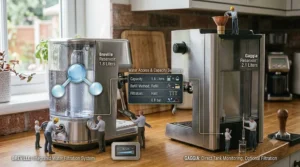
The standout feature is the Smart Tamping Station — a built-in lever-tamper that takes one variable (tamping pressure) almost entirely out of your hands, which is unusual at this price point. It also includes a built-in grinder and a 51mm portafilter with single-wall baskets rather than the pressurized baskets often found on entry machines.
What the spec sheet undersells: the grinder and brewer are notably quiet compared to similarly-priced all-in-ones, which matters more than people expect if you’re brewing before everyone else in the house is awake.
Customer feedback leans toward praise for the quiet operation and the tamping assist, with some long-term reviewers wishing for a 58mm portafilter to access the wider accessory ecosystem the Gaggia and Rancilio machines support.
✅ Pros: Built-in grinder, assisted tamping, quiet operation
❌ Cons: 51mm portafilter limits aftermarket accessories, higher price than grinder-less options
La Specialista Prestigio generally falls in the $550–$700 range — positioning it as a premium, do-everything alternative for buyers who’d rather not manage a separate grinder.
7. Rancilio Silvia
The standout feature is the boiler itself: at roughly 12 ounces, it’s the largest single boiler of any home machine in its class, which translates directly into steam power that punches well above its price tier. Like the Classic Pro, it uses a 58mm portafilter and ships with a 3-way solenoid valve for clean, dry pucks.
Expert take: this is where Classic Pro owners often look next. In my experience comparing the two, the Silvia feels noticeably more substantial — solid steel-and-iron construction versus the Classic Pro’s lighter build — but it doesn’t include the brass boiler upgrades the Evo Pro added, so thermal stability is comparable rather than dramatically better.
Customer feedback consistently calls out the steam power and the machine’s two-decades-plus track record as a “lasts forever” purchase, with most criticism aimed at the higher price relative to the Classic Pro for a similar overall experience.
✅ Pros: Commercial 58mm portafilter, exceptional steam output, decades-long reliability reputation
❌ Cons: Noticeably higher price than the Classic Pro, no grinder included
Rancilio Silvia sits around $700–$900, positioning it as the step-up choice once you’ve outgrown the Classic Pro or want sturdier build quality from day one.
Top 7 Comparison Table
| Machine | Portafilter | Grinder | Price Range | Best For |
|---|---|---|---|---|
| Breville Bambino | 54mm | No | $250–$300 | Fast, simple daily shots |
| Gaggia Classic Pro | 58mm | No | $400–$500 | Hands-on learners, modders |
| Breville Bambino Plus | 54mm | No | $400–$500 | Automated milk, low effort |
| De’Longhi Dedica | 51mm | No | $130–$180 | Tight budgets, small kitchens |
| Breville Barista Express | 54mm | Yes | $500–$650 | One-box, bean-to-cup convenience |
| De’Longhi La Specialista Prestigio | 51mm | Yes | $550–$700 | Quiet, assisted, all-in-one |
| Rancilio Silvia | 58mm | No | $700–$900 | Long-term durability, steam power |
📊 The clearest pattern in this table is that portafilter size and “built-in grinder” pull in opposite directions: the two 58mm machines (Classic Pro and Silvia) skip the grinder entirely and lean on the upgrade ecosystem instead, while the grinder-equipped machines (Barista Express, La Specialista) use the smaller 51–54mm format. If you want both a big-format portafilter and a built-in grinder, none of these seven machines offer that combination — you’d need to step up to something like a Breville Barista Touch or De’Longhi La Specialista Maestro, both well above $700.
Practical Usage Guide: Getting Good Shots From Day One
Whichever machine you land on, the first 30 days set the tone for whether you stick with manual espresso or get discouraged. A few things that make a real difference:
Grind size is 80% of your results. If you’re pairing a Bambino or Classic Pro with a separate grinder, expect your first week to be mostly grind-size adjustments, not machine problems. A shot that runs too fast (under 20 seconds) usually needs a finer grind; one that crawls past 35 seconds usually needs coarser.
Temperature surfing matters more on the Classic Pro and Silvia. Because they’re single-boiler machines, pulling a couple of short “flush” shots through the group head before brewing helps stabilize temperature — skip this step and your first shot of the day will likely taste off.
Descale on a schedule, not when it breaks. Mineral buildup is the single biggest cause of early machine failure across every model on this list. If your tap water is on the harder side, the U.S. Geological Survey’s water hardness overview is a useful reference for understanding why — harder water means more frequent descaling, full stop.
Don’t skip the purge/back-flush routine. On the Gaggia and Silvia, regularly back-flushing through the solenoid valve keeps the group head clean and extends gasket life significantly.
Real-World Scenarios: Which Machine Fits Your Coffee Life?
The apartment-dweller upgrading from a pod machine. Counter space is tight, mornings are rushed, and you don’t want a learning curve. The Bambino or Dedica fits this life — fast heat-up, small footprint, and a forgiving margin for error while you learn.
The home barista who wants to actually learn the craft. You’re willing to buy a separate grinder, you like the idea of upgrading parts over time, and you want commercial components now rather than later. This is the Classic Pro’s audience, and it’s also worth a look at the Silvia if your budget stretches further.
The family that wants café drinks without managing two appliances. If grinding beans separately feels like one chore too many, the Barista Express or La Specialista Prestigio solves that directly — you trade a small amount of grind consistency for genuine one-box convenience.
How to Choose Between the Breville Bambino and Gaggia Classic Pro
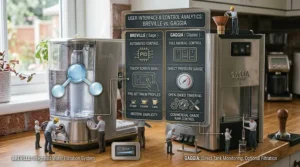
- Decide how much you want to learn, versus how much you want automated. The Bambino is built to get out of your way; the Classic Pro expects you to learn its rhythm.
- Check your patience for wait time. ThermoJet (Bambino) is ready in seconds; a single boiler (Classic Pro) needs roughly five minutes.
- Think about future upgrades. If you can picture yourself buying precision baskets or a PID kit in a year, the Classic Pro’s 58mm format supports that. The Bambino doesn’t have the same aftermarket ecosystem.
- Factor in the grinder cost for both. Neither machine includes one — add $100–$150 minimum to either total before comparing against all-in-one machines.
- Match the steam wand to your drink habits. If lattes and microfoam matter daily, the Classic Pro’s commercial wand edges out the Bambino’s automated system for hands-on control.
- Consider your counter and kitchen aesthetic. Both are genuinely compact, but the Classic Pro’s heavier steel build and retro look reads differently than the Bambino’s modern brushed-steel design.
Breville Bambino vs Gaggia Classic Pro: The Real Differences That Matter
On paper, these machines look closer in capability than they actually feel in daily use. The Bambino’s entire design philosophy is removing friction: PID-controlled water temperature, an automated or semi-automated milk system (depending on model), and a heating system that means you’re never standing around waiting. It’s the machine equivalent of a well-tuned car with good defaults — you don’t need to know much to get a good result.
The Classic Pro takes the opposite approach. There’s no display, no automation beyond the pump and solenoid doing their jobs — it hands you commercial-grade components and lets you figure out the rest. The reward for that effort is real: a 58mm portafilter that opens up an entire aftermarket of precision baskets, naked portafilters, and PID retrofit kits that the Bambino’s ecosystem simply doesn’t have.
Where this actually plays out day to day: if you’re making one or two drinks before work and want consistency without thinking about it, the Bambino’s speed and automation win. If you’re the kind of person who enjoys understanding why a shot tastes the way it does — adjusting temperature, dialing grind by feel, eventually adding mods — the Classic Pro rewards that curiosity in a way the Bambino’s more sealed-off system doesn’t.
Common Mistakes When Buying a Compact Espresso Machine
- Skipping the grinder budget. Both the Bambino and Classic Pro look cheaper than they are once you add a proper burr grinder — budget the full system, not just the machine.
- Ignoring portafilter size when planning upgrades. If aftermarket baskets and accessories matter to you, 54mm and 51mm machines have a noticeably smaller selection than 58mm machines.
- Underestimating water quality. Skipping filtered water or a regular descaling routine is the most common cause of early failure on every entry-level and prosumer machine, regardless of brand.
- Assuming “15-bar pump” means better espresso. This spec, common on budget thermoblock machines, refers to maximum pump output, not actual brewing pressure — the Specialty Coffee Association recommends roughly 9 bars at the portafilter for proper extraction, which all seven machines here are engineered around regardless of the marketing number.
- Buying based on looks alone. The Classic Pro and Silvia’s retro design is a draw for some buyers, but it’s worth weighing manual operation against your actual patience level before the aesthetic sways the decision.
Long-Term Cost & Maintenance
None of these machines are “buy once and forget it” purchases — ongoing costs matter more than the sticker price over a few years. Across the board, expect to budget for: a separate grinder if your machine doesn’t include one ($100–$150 minimum for something usable), a descaling solution every 1–3 months depending on water hardness, and occasional gasket or seal replacement after a couple of years of daily use — typically $10–$30 in parts.
Where the machines diverge is repairability. The Classic Pro and Silvia both benefit from large, established repair and mod communities — replacement parts are easy to find and largely standardized. The Bambino and Bambino Plus, being more electronically integrated, are less commonly user-serviced; most owners rely on Breville’s warranty service rather than DIY fixes. If long-term tinkering and lower repair costs matter to your decision, that favors the manual machines even though their upfront price is higher.
Features That Actually Matter (And Those That Don’t)
Actually matters: Portafilter size (54mm vs 58mm) if you plan to upgrade accessories. Boiler/heating type, since it determines your wait time and steam recovery between drinks. Steam wand power if milk drinks are a daily habit.
Doesn’t matter as much as marketing suggests: Maximum bar-pressure ratings above 9–10 bars — extraction quality depends on the regulated pressure at the group head, not the pump’s peak number. Touchscreens and displays on entry machines, which add cost without meaningfully changing shot quality on machines in this price tier. According to general industry consensus from groups like the National Coffee Association, brew consistency and fresh, properly stored beans influence flavor far more than any single spec on the box.
FAQ
❓ Is the Gaggia Classic Pro better than the Breville Bambino?
❓ Does the Breville Bambino have a 58mm portafilter?
❓ Can you get a good espresso machine under 500 dollars?
❓ Do I need a separate grinder for the Gaggia Classic Pro?
❓ What's the difference between a single boiler and a thermoblock machine?
Conclusion
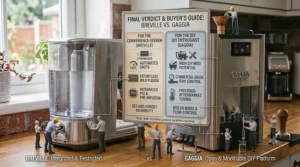
The breville bambino vs gaggia classic pro decision really comes down to one question: do you want a machine that handles the thinking for you, or one that hands you the controls? The Bambino is the better fit if mornings are rushed and you want consistent, fast results without much technique. The Classic Pro is the better fit if you’re genuinely curious about espresso as a craft and don’t mind a slower, more hands-on routine in exchange for commercial-grade parts and room to grow.
If neither quite fits, the other five machines here cover the gaps: the Dedica for tighter budgets, the Bambino Plus for automated milk without a grinder commitment, the Barista Express and La Specialista Prestigio for true one-box convenience, and the Rancilio Silvia for buyers who want the Classic Pro’s philosophy with a sturdier build and bigger boiler. Whichever you choose, the real difference-maker over the next few years won’t be the machine alone — it’ll be fresh beans, a decent grinder, and a consistent descaling habit. For more on the role brewing pressure and extraction play in espresso generally, Wikipedia’s espresso overview is a solid starting point if you want the deeper technical background.
✨ Don’t Miss These Exclusive Deals!
🔍 Ready to upgrade your mornings? Click through on any highlighted machine above to check current pricing before this week’s stock changes. ☕
Recommended for You
- Breville Bambino Review 2026: Is It Worth It? 7 Picks Compared
- Best Beginner Espresso Machine: 7 Honest Picks for 2026
- 7 Best Espresso Machines Under $300 in 2026 (Honest Picks)
Disclaimer: This article contains affiliate links. As an Amazon Associate, I earn from qualifying purchases. If you purchase products through these links, we may earn a small commission at no additional cost to you.
✨ Found this helpful? Share it with your friends! 💬🤗
