In This Article
Three thousand dollars is a strange amount of money to spend on something that also makes toast-adjacent noises at 6 a.m. And yet here you are, reading a jura z10 review because some part of you is already halfway convinced. Good instinct, actually. The Z10 is not a hype machine — it is Jura’s answer to a genuinely annoying problem: hot coffee machines are great at hot coffee and terrible at cold coffee, so households that like both end up owning two appliances, or one appliance and a lot of regret over watery iced lattes made from melted ice cubes.
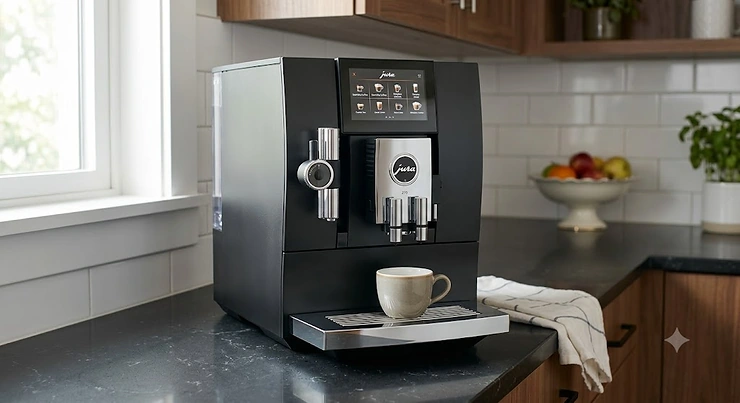
A super-automatic espresso machine is a countertop appliance that grinds beans, brews espresso-based drinks, and often froths milk automatically at the touch of one button — no separate grinder, portafilter, or tamping required. That’s the category the Z10 sits at the top of, and it’s worth understanding before you compare seven-hundred-dollar machines to four-thousand-dollar ones, because they are not really competing for the same buyer. This brief history of espresso machines is a useful primer if you want to understand why “automatic” machines like the Z10 exist at all — they’re descendants of a century of trying to make consistent extraction less dependent on a skilled barista’s hands.
This jura z10 review pulls together real specifications, aggregated review sentiment from verified buyers, and honest side-by-side analysis against six other real machines — three from Jura’s own lineup, one from a completely different manufacturer, and two that represent the value end of the spectrum. We’re not going to pretend we’ve personally owned all seven for a decade; instead, we’re doing the comparison work you’d otherwise spend a weekend doing yourself, using the same spec sheets, retailer listings, and customer feedback you could dig up on your own. By the end, you’ll know exactly where the Z10 earns its price tag, where it doesn’t, and which of the other six machines might actually suit your kitchen better.
Quick Comparison Table
Before the deep dive, here’s the shape of the decision in one glance. Prices below are typical US ranges at the time of research and will shift with promotions, so always check current listings before buying.
| Machine | Price Range | Standout Feature | Best For |
|---|---|---|---|
| Jura Z10 | ~$3,300–$4,000 | Cold Extraction Process, 32 drinks | Households that drink hot AND cold coffee daily |
| Jura GIGA 10 | ~$5,200 | Dual grinders, dual hoppers | Large households, small offices |
| Jura S8 | ~$3,200–$3,300 | 4.3″ touchscreen, sweet foam | Buyers who want Z10-style UX, hot-only |
| Jura E8 | ~$1,400–$1,600 | Aroma G3 grinder, HP3 milk system | Best all-around value in the Jura lineup |
| Jura ENA 8 | ~$1,900–$2,000 | Compact footprint | Small kitchens, simpler menus |
| Jura Z6 (legacy) | ~$1,500+ resale | P.R.G. grinder, discontinued | Bargain hunters willing to buy used |
| De’Longhi Magnifica Evo | ~$550–$900 | Over-ice button, LatteCrema | Budget buyers who mainly want lattes |
Looking at the table, the gap between the Jura E8 and the Jura Z10 is the real decision point for most shoppers — everything above the E8 is paying for touchscreen polish, cold brewing, or dual-hopper convenience rather than a fundamentally better cup. The De’Longhi Magnifica Evo sits in an entirely different tier, useful mainly as a reality check on what “good enough” actually costs. Notice, too, that the legacy Jura Z6 occupies an odd spot: it’s not cheaper on paper, just harder to justify new.
💬 Bookmark this comparison — you’ll want to scroll back to it once you’ve read the full breakdown below.
Top 7 Jura Super-Automatics: Expert Analysis
Real machines, real specs, real trade-offs. Budget, mid-range, and premium options are all represented here, including one non-Jura pick, so you can see exactly how the flagship stacks up against the field.
1. Jura Z10 — first super-automatic with true cold brew
The headline feature is right there in the name of the technology: the Cold Extraction Process pulses high-pressure cold water through a coarser grind to make an actual cold-brew concentrate in about two minutes, not a hot shot poured over ice.
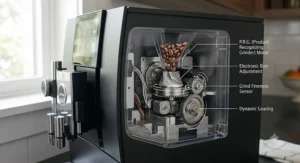
Specs-wise, the Z10 runs Jura’s eighth-generation brewing unit with 3D brewing technology, which routes water through the coffee puck at multiple angles rather than a single downward stream — in practice, that means more even extraction and less of the sour, under-extracted taste you get from cheaper single-pass systems. The Product Recognizing Grinder (P.R.G.) automatically shifts grind coarseness depending on which of the 32 programmable drinks you select, so cold brew gets a coarse grind and ristretto gets a fine one without you touching a dial. Based on the spec comparison with everything else in this roundup, the Z10 is the only machine here doing genuinely different mechanical work for hot versus cold drinks, rather than just chilling a hot shot.
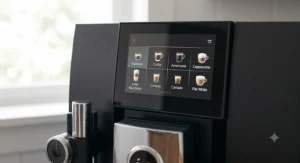
Reviewers consistently report that the espresso comes out noticeably hotter than on competing super-automatics, and several verified buyers single out the cold brew setting specifically as tasting close to a café pour-over — high praise for a button push. What most buyers overlook is that this consistency comes from the 4.3-inch touchscreen and app pairing working together: you’re not just picking a drink, you’re picking a whole extraction profile.
Pros:
- ✅ Only super-automatic here with real cold-water extraction
- ✅ 8th-gen 3D brewing unit improves both hot and cold consistency
- ✅ P.R.G. grinder auto-adjusts without manual switching
Cons:
- ❌ Among the most expensive machines in its category
- ❌ Larger footprint may crowd smaller kitchens
At around $3,300–$4,000 depending on finish and retailer, the Z10 is a strong value only if you actually drink both hot and cold coffee regularly — otherwise you’re paying flagship money for features you won’t use.
2. Jura GIGA 10 — dual grinders for two-bean households
The standout here is blunt: two separate ceramic flat burr grinders means two different bean types loaded at once, so a decaf drinker and a regular drinker never have to negotiate.
At this price tier, Jura throws in nearly every feature it has ever built — a large touchscreen display, dual bean hoppers, and a beverage menu that rivals a small café’s. Here’s what to weigh: the GIGA 10 can’t be plumbed into a permanent water line despite its commercial-leaning design, which is a genuine limitation if you were hoping to skip refilling a tank in an office setting. Based on the spec comparison, this machine is really built for households or small offices juggling multiple coffee preferences simultaneously, not for a single enthusiast chasing the best possible single-origin shot.
Aggregated reviewer sentiment frames the GIGA 10 as a genuine style statement as much as a functional tool — buyers who choose it tend to mention wanting a visual centerpiece for a kitchen or shared office space rather than pure performance-per-dollar.
Pros:
- ✅ Dual grinders support two bean types without swapping
- ✅ Largest, most detailed touchscreen in the lineup
- ✅ Suits shared spaces with mixed coffee preferences
Cons:
- ❌ Cannot be plumbed to a water line
- ❌ Priced well above even the Z10
Around $5,200, the GIGA 10 only makes financial sense if the dual-hopper convenience solves a real household conflict — for a single coffee drinker, it’s overkill even next to the Z10.
3. Jura S8 — the touchscreen twin without cold brew
The standout feature is the 4.3-inch full-color touchscreen, matched in this lineup only by the Z10 and GIGA 10, at a noticeably lower price than either.
Under the hood, the S8 shares its grinder and fine-foam milk technology with the E8, but adds a “sweet foam” function that pre-sweetens milk drinks and a larger water reservoir. On paper this means you’re paying the roughly $500–$700 premium over the E8 almost entirely for interface polish and finish quality, not fundamentally different coffee output. What the spec sheet won’t tell you, but reviewers note, is that the fine-adjustment wheel on the milk system lets you dial in foam texture in real time — a small but genuinely useful touch for households that argue about foam thickness.
Reviewers who upgraded from the E8 tend to describe the difference as “nice to have” rather than “essential,” which lines up with Jura’s own positioning of the S8 as a design upgrade layered onto proven E8 mechanics.
Pros:
- ✅ Same premium grinder and milk system as the E8
- ✅ Large touchscreen at a lower price than the Z10
- ✅ Real-time milk foam adjustment wheel
Cons:
- ❌ No cold brew — hot-drinks only despite Z10-like styling
- ❌ Bluetooth only, no built-in WiFi on most units
At roughly $3,200–$3,300, the S8 is the better buy than the Z10 for anyone who never touches cold coffee and just wants the nicer screen.
4. Jura E8 — the value benchmark of the whole lineup
The standout advantage is simple math: you get the same Aroma G3 grinder and Pulse Extraction Process technology found in pricier Jura machines for roughly a thousand dollars less.
The E8 runs 17 programmable specialty drinks (some newer production runs expand this further), ten strength levels, and Jura’s HP3 one-touch milk system, which handles cappuccino, flat white, and latte macchiato without a separate steam wand. Based on the spec comparison, the main things you’re giving up versus the S8 or Z10 are the large touchscreen — the E8 uses a smaller 2.8-inch display — and any cold-extraction capability. For buyers who mainly want excellent hot espresso and milk drinks without flagship pricing, that’s an easy trade.
Aggregated customer sentiment across multiple retailers is unusually consistent: buyers repeatedly describe the espresso quality as indistinguishable from the pricier machines in daily use, with complaints clustering around milk-line cleaning effort rather than coffee quality itself.
Pros:
- ✅ Same core grinder and extraction tech as pricier models
- ✅ HP3 milk system covers most popular drinks one-touch
- ✅ Roughly $1,000–$2,000 cheaper than the Z10
Cons:
- ❌ Smaller 2.8″ display, no touchscreen
- ❌ No cold-brew extraction mode
Priced around $1,400–$1,600 typically, the E8 is the machine most people comparing Jura options should actually buy — the Z10 has to justify a real premium over this baseline, not just look nicer doing it.
5. Jura 8ENA — the compact option for smaller kitchens
The standout feature here is footprint: this is the most space-conscious machine in the roundup that still carries genuine Jura engineering rather than a stripped-down budget line.
Compared to the E8 and S8, the ENA 8 trims the drink menu and skips some of the sensor-driven extras like advanced cup sensors, but keeps core Jura brewing quality intact. Here’s what to weigh: if counter space is your binding constraint rather than drink variety, this is a smarter buy than squeezing a Z10 or S8 onto a narrow counter. What most buyers overlook is that a smaller machine doesn’t necessarily mean a smaller water tank or bean hopper — check those specs individually rather than assuming size scales evenly with every component.
Reviewer sentiment on the ENA 8 tends to emphasize “good enough for daily espresso, doesn’t need to do everything,” which is really a compliment for a machine positioned below the flagship tier.
Pros:
- ✅ Smallest footprint of any full Jura machine here
- ✅ Genuine Jura brewing quality at a lower price
- ✅ Simpler menu reduces the learning curve
Cons:
- ❌ Fewer specialty drinks than the E8 or S8
- ❌ Lacks the sweet foam and advanced sensor features
At around $1,900–$2,000, the ENA 8 is best for buyers who value counter space over menu depth — not a Z10 substitute, but a legitimate machine in its own right.
6. Jura Z6 — the discontinued flagship worth a careful look
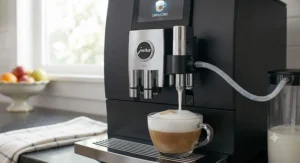
The standout, ironically, is availability risk: this was once Jura’s P.R.G.-equipped flagship, and it’s now a legacy machine you can only buy new-old-stock or refurbished.
Reviewers consistently note the Z6 offered strong milk customization — ten separate foam and temperature levels — and a Thermoblock heating system rather than a full boiler, which heats water on demand instead of maintaining a standing reservoir. Based on the spec comparison, its six grind settings are noticeably fewer than most machines at its original price point, and its single-boiler design means you can’t brew and steam simultaneously the way you can on dual-boiler machines. If you cannot verify the seller’s return policy and warranty status, that uncertainty should factor heavily into any Z6 purchase decision — this isn’t a current-production machine with active parts support.
Buyer sentiment on remaining Z6 units is mixed specifically because condition varies so much by seller; the coffee-quality feedback itself is generally positive, but concerns cluster around long-term parts availability rather than daily performance.
Pros:
- ✅ Ten-level milk foam and temperature customization
- ✅ Genuine P.R.G. grinder technology at a lower resale price
- ✅ Thermoblock heating for reasonable energy efficiency
Cons:
- ❌ Discontinued — no new-unit warranty or guaranteed parts
- ❌ Only six grind settings versus more granular rivals
Typically priced above $1,500 on the resale market, the Z6 only makes sense with a trustworthy seller and clear return terms — for most buyers, the currently-produced E8 is the cleaner decision.
7. De’Longhi Magnifica Evo — the budget reality check
The standout feature is the dedicated over-ice button, which automatically adjusts dose and brew strength for a cold drink — a far cheaper (if less sophisticated) answer to the same problem the Z10 solves with true cold extraction.
Specs are modest by design: a steel conical grinder with 13 grind settings, seven one-touch recipes, and the LatteCrema milk system that works with both dairy and plant-based milk. On paper this means you’re trading Jura’s brewing sophistication and touchscreen refinement for a fraction of the price, and reviewers are candid about that trade — feedback frequently praises the value and cappuccino quality while noting the espresso itself doesn’t quite match dedicated espresso machines under pressure. What the spec sheet won’t tell you, but reviewers note, is that this machine responds well to fresh beans and a fine grind setting, closing much of the quality gap with pricier machines for anyone willing to experiment with dial-in settings.
Aggregated reviews across major retailers skew strongly positive on value, taste for the price point, and ease of cleaning, with the most common complaint being that the milk carafe requires more frequent attention than Jura’s automatic systems.
Pros:
- ✅ Over-ice button covers cold coffee at a fraction of Z10 cost
- ✅ LatteCrema system works with dairy and plant milk
- ✅ Genuinely strong reviewer sentiment for the price tier
Cons:
- ❌ Espresso quality trails dedicated machines under pressure
- ❌ Milk carafe needs more frequent manual cleaning
Usually available in the $550–$900 range depending on promotions, the Magnifica Evo is the honest budget pick here — not a Z10 rival, but proof you don’t need $3,000 to drink decent coffee at home.
Top 7 Products at a Glance
| Machine | Grinder | Milk System | Screen | Price Range | Best For |
|---|---|---|---|---|---|
| Jura Z10 | P.R.G. (auto-adjusting) | Dual auto, hot + cold | 4.3″ touchscreen | ~$3,300–$4,000 | Hot & cold coffee households |
| Jura GIGA 10 | Dual ceramic flat burr | Dual auto | Large touchscreen | ~$5,200 | Multi-bean households/offices |
| Jura S8 | Fine Foam Technology | HP3, sweet foam | 4.3″ touchscreen | ~$3,200–$3,300 | Touchscreen fans, hot-only |
| Jura E8 | Aroma G3 | HP3 one-touch | 2.8″ display | ~$1,400–$1,600 | Best all-around value |
| Jura ENA 8 | Standard Jura burr | One-touch | Small display | ~$1,900–$2,000 | Compact kitchens |
| Jura Z6 | P.R.G. (legacy) | 10-level foam | Basic LCD | ~$1,500+ resale | Bargain, risk-tolerant buyers |
| De’Longhi Magnifica Evo | Steel conical | LatteCrema | Basic LCD | ~$550–$900 | Tight budgets |
Scanning across the row, the price-to-feature curve isn’t linear — the jump from the Jura E8 to the Jura S8 buys you mostly screen size and sweet foam, while the jump from the Jura S8 to the Jura Z10 buys you an entirely new brewing capability in cold extraction. That’s the clearest signal in this whole comparison: pick your upgrade based on which specific feature you’ll use weekly, not on price tier alone.
✨ Don’t Miss These Exclusive Deals!
🔍 Take your morning routine to the next level with these carefully selected machines. Click on any highlighted model to check current pricing and availability before deciding. A little research now saves a lot of second-guessing later. ☕
Practical Usage Guide: Living With the Z10 Day to Day
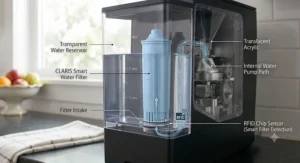
Getting a Z10 set up correctly in the first week matters more than most buyers expect, and it’s the kind of guidance you won’t find on a retail listing. Start with the water hardness test strip included in the box — the machine calibrates its descaling schedule based on this, and skipping it means either premature scale buildup or unnecessary early descaling cycles. Install the Intelligent Water System filter cartridge before your first brew; it’s what protects the brewing unit and extends the interval between deep cleanings.
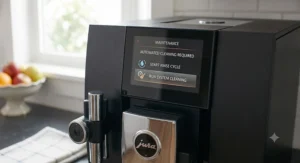
For the first 30 days, resist the urge to max out every strength and temperature setting to “test” the machine — instead, brew each drink type once at default settings so you have a real baseline before customizing. A common early mistake is loading the bean hopper too full, which can affect how consistently the P.R.G. grinder doses; Jura recommends keeping beans below the fill line and using them within a few weeks of opening the bag for freshness. Weekly maintenance is light — rinse the milk system after each session (the Z10 prompts this automatically) and empty the drip tray before it overflows, which the touchscreen also flags. Monthly, run the automatic cleaning program when prompted rather than delaying it, since delayed cleaning cycles are the single most common cause of milk-system complaints in aggregated reviews.
Real-World Scenarios: Who Actually Needs a Jura Z10
Picture three different buyers weighing this same machine. First, a dual-income household where one partner drinks iced lattes every afternoon and the other lives on hot cortados before 8 a.m. — this is the textbook Z10 buyer, because the cold extraction genuinely replaces a separate cold-brew setup and justifies the premium over the E8 or S8. Second, a remote worker who drinks three or four hot espresso drinks daily but almost never touches iced coffee — for this person, the Jura E8 delivers nearly identical hot-drink quality for roughly half the price, and the Z10’s marquee feature would simply go unused. Third, a small office of six to eight people with mixed preferences and occasional decaf drinkers — here, the dual-hopper Jura GIGA 10 solves a coordination problem the Z10 can’t, even though it costs more.
The pattern across all three: match the machine to the specific behavior you already have, not the behavior you imagine you might develop. Buying flagship cold-brew capability you’ll use twice a summer is the single most common regret purchase in this category, according to recurring themes in aggregated buyer feedback.
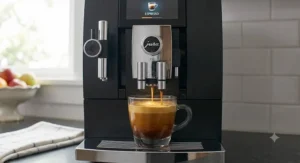
Cold Brew Over Ice with the Jura Z10: What to Expect
Cold brew over ice on the Jura Z10 isn’t the same process as steeping grounds in cold water for twelve hours in your fridge — that’s traditional cold brew, and it relies on time rather than pressure. The Z10’s Cold Extraction Process instead uses pulsed high-pressure cold water through a coarser grind to extract flavor in about two minutes, which is closer in spirit to a rapid, mechanized version of the same chemistry. If you want the deeper science of why cold water extraction produces a different flavor profile than hot extraction, this overview of cold brew coffee covers the acidity and bitterness differences well.
In practice, what most buyers overlook is that cold brew over ice on the Z10 pulls from the same bean hopper as your hot drinks, and the P.R.G. grinder automatically switches to a coarser setting for the cold program — no manual grind adjustment needed. Reviewers consistently describe the resulting drink as smoother and less acidic than a hot shot simply poured over ice, which tracks with the underlying extraction chemistry. One practical tip that doesn’t show up in the manual: pre-chilling your glass and using slightly less ice than you’d expect keeps the drink from getting watered down before you finish it, since the Z10’s cold extraction produces a more concentrated base than a diluted iced Americano.
How to Choose a Jura Super-Automatic
- Identify your hot-vs-cold ratio. If cold coffee is a rare treat rather than a daily habit, cold extraction shouldn’t be your deciding factor.
- Check your counter depth before your budget. The Z10 and GIGA 10 are both larger machines; measure first.
- Decide if touchscreen size actually matters to you. The E8’s smaller display runs identical extraction technology to pricier siblings.
- Factor in household bean diversity. Multiple regular bean types strongly favor the dual-hopper GIGA 10 over anything single-hopper.
- Price out the Intelligent Water System filters and cleaning tablets. These recurring costs matter more over five years than the sticker price.
- Read aggregated reviews for your specific finish and generation. Jura updates components across production runs, and sentiment can shift accordingly.
- Confirm warranty terms if buying a legacy model. Discontinued machines like the Z6 carry real risk that current-production models don’t.
Jura Z10 vs Jura Z6: Flagship Versus Outgoing Value Champion
The jura z10 vs z6 question comes up constantly because both machines wear the Z badge, but they’re not really peers anymore — the Z6 is a legacy model with no active new-unit warranty, while the Z10 is Jura’s current flagship. Based on the spec comparison, the Z10’s biggest advantages are its 8th-generation 3D brewing unit, its full cold-extraction capability, and an active parts and warranty pipeline. The Z6’s real advantage is price: units on the resale market typically run well under half the Z10’s cost, and the P.R.G. grinder technology it introduced years ago is still genuinely capable.
Here’s what to weigh: if you find a Z6 from a reputable refurbisher with a real return window, and you don’t care about cold brew, you’re getting a meaningfully cheaper machine with similar core espresso quality. If you want a machine you can expect to service and get parts for a decade from now, the Z10 is the only responsible choice between the two. Reviewers who’ve owned both note the Z10’s touchscreen and app integration feel like a full generation ahead, which they are — several years and multiple firmware cycles separate these two machines despite the shared naming scheme.
Jura Z10 vs Jura S8: Touchscreen Twins, Different Ambitions
The jura z10 vs s8 comparison is closer than the Z6 matchup, because these two machines actually share more DNA — a similarly sized 4.3-inch touchscreen, a related fine-foam milk system, and comparable build quality. The single biggest differentiator is cold extraction: the S8 doesn’t have it, full stop, and no software update will add it. Beyond that, the Z10 also edges out the S8 on total drink count, offering roughly double the S8’s 15 specialty programs.
What most buyers overlook is that the roughly $500–$700 price gap between these two doesn’t necessarily buy you a better hot espresso — reviewer sentiment on hot-drink quality is nearly identical between them. The S8 is arguably the smarter buy for anyone whose household simply doesn’t drink cold coffee, since you’d be paying full Z10 premium for a feature that would sit unused. On paper, this means the decision really comes down to a single yes-or-no question: do you want cold brew badly enough to pay roughly $500-plus more for it?
Is the Jura Z10 Worth 3000 Dollars? Long-Term Cost & Maintenance
Answering is jura z10 worth 3000 dollars honestly requires doing the math most retail listings skip. Assume a household making three specialty drinks daily, seven days a week — that’s roughly 1,095 drinks a year. Spread a $3,500 purchase price (mid-range of the typical window) across five years of ownership, and you’re looking at roughly $700 a year in machine cost before beans, filters, or cleaning supplies, or well under $1 per drink at that usage rate. Add in Intelligent Water System filter replacements (roughly every two months) and periodic descaling tablets, and total annual consumables likely land in the low hundreds of dollars.
| Cost Factor | Jura Z10 (approx.) | Jura E8 (approx.) |
|---|---|---|
| Purchase price | $3,300–$4,000 | $1,400–$1,600 |
| Annual filters/tablets | ~$100–$150 | ~$100–$150 |
| Cost per drink (3/day, 5 yrs) | Under $1.00 | Under $0.50 |
| Cold brew capability | Yes | No |
The table makes the real trade-off obvious: on pure cost-per-cup math, the Jura E8 wins comfortably, and the Jura Z10‘s extra spend is buying cold-extraction capability and touchscreen polish rather than a cheaper daily cup. For households that would otherwise buy café cold brew several times a week at $5–$7 a pop, though, the Z10’s premium can pay for itself faster than the raw numbers above suggest — the honest answer to whether it’s worth $3,000 depends entirely on how much cold coffee you’re currently buying elsewhere. According to recent National Coffee Association data, cold coffee categories have been growing faster than hot coffee in the US, which is worth factoring in if your own habits are shifting that direction too.
Jura Intelligent Water System & App Control Explained
The jura intelligent water system is a filter cartridge with an embedded RFID chip that the machine reads automatically, tracking exactly how much water has passed through and prompting a replacement at the right interval rather than a generic calendar guess. What most buyers overlook is that this isn’t just a convenience feature — using an unfiltered or expired filter accelerates scale buildup in the brewing unit, which is one of the more common causes of expensive repairs on any super-automatic, not just Jura’s.
Jura app control espresso works through the J.O.E. (Jura Operating Experience) app, which pairs via Bluetooth or WiFi depending on the model and lets you start a saved drink profile from your phone, adjust strength and temperature remotely, and monitor water and bean levels without walking to the machine. On the Z10 and S8, this extends to Apple Watch support for a short list of favorite drinks — genuinely useful for a household member who wants coffee started before they’ve even reached the kitchen. Reviewers note the app occasionally has minor Bluetooth connection quirks, so treat it as a convenience layer rather than the sole way you’ll ever interact with the machine.
Common Mistakes When Buying a Super-Automatic Espresso Machine
The most common mistake is buying for the feature list rather than the weekly habit — as covered above, plenty of Z10 buyers would have been equally happy with an E8 if they’d honestly audited how often they actually drink cold coffee. A close second is skipping the water hardness test during setup, which throws off the automatic descaling schedule from day one. Buyers also frequently underestimate footprint: the Z10 and GIGA 10 both need real counter depth, and a rushed measurement leads to returns. Another recurring issue is ignoring recurring costs — filters, cleaning tablets, and occasional milk-system parts add up over years of ownership and should factor into any “is it worth it” calculation. Finally, buyers considering legacy or refurbished models like the Z6 sometimes skip verifying seller return policies, which matters enormously more on a discontinued machine than a current-production one.
Features That Actually Matter (And Those That Don’t)
Genuinely useful: automatic grind adjustment by drink type (P.R.G.), RFID-tracked water filtration, and one-touch milk systems that actually clean themselves on a schedule rather than requiring manual disassembly. These solve real daily friction. Less essential for most households: dual grinders unless you regularly switch bean types, Apple Watch drink control (nice, rarely load-bearing), and touchscreen size beyond roughly four inches, which mostly affects aesthetics rather than coffee quality. According to the Specialty Coffee Association’s latest consumption data, specialty drinks including espresso-based beverages and cold brew now make up a growing share of what Americans actually drink day to day — which is a reasonable argument for prioritizing versatility (like the Z10’s hot-and-cold range) over pure novelty features.
Jura Z10 Aluminum Review: Finish, Build Quality, and Kitchen Fit
A proper jura z10 aluminum review has to start with the fact that the Z10 ships in genuinely different finishes rather than just different colors of the same shell — Aluminum White and Diamond Black share the same curved aluminum front panel construction, while the finish affects both how fingerprints show and how the machine reads visually in different kitchen styles. The Aluminum White option in particular pairs well with lighter cabinetry and modern kitchens, and several retailers note it’s the brightest, cleanest-looking option in the lineup. Based on the spec comparison with the darker Diamond Black finish, the practical difference is mostly aesthetic and fingerprint visibility rather than any functional change to brewing performance.
Build quality itself draws consistent praise in aggregated reviews — the convex-concave aluminum panel is described as feeling substantial rather than like painted plastic, which matters at this price point where buyers are comparing tactile quality against furniture-grade appliances, not just other coffee machines. What most buyers overlook is that aluminum finishes generally show water spots more readily than matte plastic housings, so a quick wipe-down after descaling or filling the tank keeps the machine looking as good as it did on day one.
✨ See Current Jura Z10 Pricing and Finishes
🔍 Compare the Aluminum White and Diamond Black finishes side by side before you decide. Stock and pricing shift by color variant, so check availability before committing to one look over the other. 🖤🤍
Frequently Asked Questions
❓ How many drinks can the Jura Z10 make?
❓ Does the Jura Z10 actually make real cold brew, not just iced coffee?
❓ Is the Jura Z10 worth 3000 dollars compared to the Jura E8?
❓ What's the real difference between the Jura Z10 and Jura S8?
❓ How often does the Jura Z10 need filter replacements?
Conclusion
After lining up seven real machines side by side, the honest takeaway is that the Jura Z10 earns its price tag for a specific kind of household — one that genuinely drinks both hot and cold specialty coffee often enough that a separate cold-brew setup would otherwise be sitting on the counter anyway. For everyone else, the Jura E8 delivers nearly identical hot-drink quality using the same core brewing philosophy for close to half the price, and the Jura S8 splits the difference if screen size matters more than cold extraction. The GIGA 10 solves a coordination problem for larger households rather than being a “better” Z10, the ENA 8 and legacy Z6 serve smaller budgets and smaller kitchens respectively, and the De’Longhi Magnifica Evo proves you don’t need four figures to drink something genuinely decent every morning.
This jura z10 review keeps coming back to the same core question, because it’s the only one that actually matters: audit your real weekly coffee habits before your budget, not after. The Z10 isn’t overpriced for what it does — it’s simply engineered for a narrower use case than its marketing suggests, and knowing whether you fall inside that use case is worth more than any spec sheet comparison.
✨ Ready to Upgrade Your Morning Coffee?
🔍 Check current pricing on the Jura Z10 and its six rivals from this guide before you decide. Prices and stock shift often, so a quick check now beats a surprise later. Your future self, mid-cortado, will thank you. ☕✨
Recommended for You
- 7 Premium Super Automatic Espresso Machines Worth the Splurge (2026)
- Jura vs Delonghi Super Automatic: 7 Machines Ranked for 2026
- Jura E8 Review 2026: Is the Price Tag Actually Worth It?
Disclaimer: This article contains affiliate links. As an Amazon Associate, I earn from qualifying purchases. If you purchase products through these links, we may earn a small commission at no additional cost to you.
✨ Found this helpful? Share it with your friends! 💬🤗
