In This Article
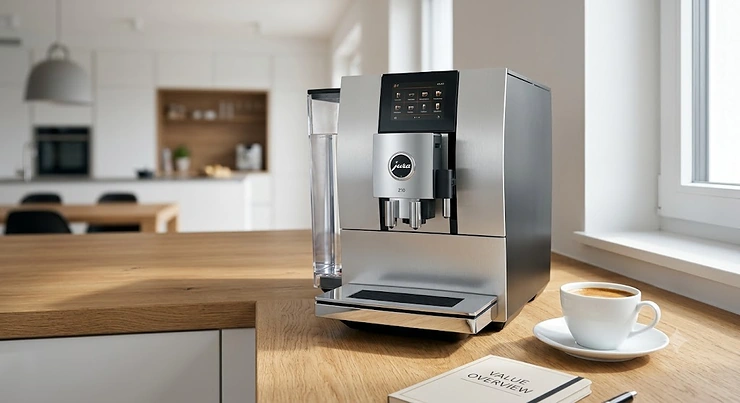
Somewhere between the third “just get a Nespresso” text from your practical friend and the fourth browser tab open to a machine that costs more than your first car, you land on the real question: is jura worth the price, or is this just very well-marketed Swiss guilt? Fair question. A Jura is a super-automatic espresso machine — a device that grinds, doses, brews, and often froths milk at the touch of one button, no portafilter or barista skills required. That’s the 40-second answer. The longer answer involves grinders that outlast dishwashers, a brew group built like a tiny Swiss watch, and a price tag that makes even coffee snobs raise an eyebrow.
We spent time digging through spec sheets, aggregated owner feedback, and long-term reliability data across the current Jura lineup — from the pocket-sized ENA 4 to the borderline-absurd GIGA 10 — to figure out where the money actually goes and who genuinely gets their money’s worth. Spoiler: it’s not everyone. A grad student pulling one espresso a day has a very different answer to “is jura worth the price” than a family of five milk-drink addicts. As Jura has built a reputation for design and quality espresso over an extensive feature list and that trade-off — simplicity and consistency over sheer customization — is really what you’re buying into.
This guide walks through seven real Jura models, how they stack up against rivals like De’Longhi and Breville, what “Swiss engineering” actually gets you mechanically, and what these machines really cost once you factor in filters, descaling solution, and the occasional service visit. By the end, you’ll have a genuinely useful answer — not a marketing one.
Quick Comparison Table
Before the deep dive, here’s the fast version for anyone in a hurry. This snapshot covers the five models most home buyers actually compare.
| Model | Price Range | Grinder | Milk System | Best For |
|---|---|---|---|---|
| Jura ENA 4 | Under $900 | Aroma G3 | None | Solo espresso/lungo drinkers, tiny kitchens |
| Jura E6 ED | $950–$1,150 | P.A.G.2 | Basic frother | Budget buyers who still want milk drinks |
| Jura E8 | $1,150–$1,400 | Aroma G3 | HP3 fine-foam | Most households — the all-around pick |
| Jura S8 | $1,900–$2,300 | P.A.G.2+ | HP3 + sweet foam | Buyers who want a touchscreen and more control |
| Jura Z10 | $3,200–$3,800 | P.R.G. (product-recognizing) | Fine-foam + cold extraction | Enthusiasts who want cold brew and total customization |
The pattern here isn’t subtle: every jump in price buys you either a better grinder, a better milk system, or both, and the curve gets steep fast once you cross into S8 territory. If you only drink black coffee, the table above tells you almost everything — the ENA 4 or E6 ED covers you, and everything past the E8 is paying for milk-drink polish you may never use. If lattes and cappuccinos are a daily habit, though, that HP3 system on the E8 and S8 is doing real, tangible work in your cup.
💬 Already leaning toward one model? Compare current listings and check availability before prices shift.
Top 7 Jura Espresso Machines: Expert Analysis
We picked these seven to cover the full realistic range a 2026 buyer would actually consider — true entry point, sweet-spot workhorse, premium touchscreen tier, and the flagship most people will only ever admire from a distance.
1. Jura ENA 4 — smallest footprint in the entire lineup
At just 9.4 inches wide, the ENA 4 is the machine Jura built for people who want real espresso without giving up a third of their counter. It skips the milk system entirely, focusing purely on espresso, lungo, and hot water output. That’s not a limitation so much as a design decision — Jura stripped it down to keep the price and footprint low while keeping the same Aroma G3 grinder found in pricier models. In practice, that means the espresso quality doesn’t feel like a downgrade, even though the machine costs a fraction of the flagships. This is the right call for someone living alone, working from a studio apartment, or simply someone who has never once wanted a cappuccino. Reviewers consistently note that the ENA 4 feels disproportionately well-built for its price bracket, though a few mention the smaller water tank means more frequent refills during heavy use. If you know you’ll never want milk drinks, there’s genuinely no reason to spend more.
Pros:
- ✅ Smallest, most apartment-friendly Jura footprint
- ✅ Same core grinder as much pricier models
- ✅ Simple one-button operation, minimal learning curve
Cons:
- ❌ No milk frothing system at all
- ❌ Smaller water tank means more frequent refills
Priced under $900, the ENA 4 is the cheapest legitimate entry point into genuine Jura build quality — a strong value pick if milk drinks aren’t part of your routine.
2. Jura E6 ED — newest grinder tech below E8 pricing
The E6 ED is Jura’s 2026 refresh of a long-running favorite, swapping in the newer P.A.G.2 (Precision Aroma Grinding) grinder and adding a “Light Brew” mode for people who prefer a gentler, less bitter cup. The chassis and basic frother carry over unchanged, which keeps costs down while quietly upgrading the part of the machine that matters most for flavor consistency. Compared to the flagship-adjacent models, the basic frother here produces workable but noticeably less silky foam than Jura’s HP3 system — fine for a daily cappuccino, less impressive if you’re chasing café-level microfoam. Aggregated owner sentiment on this line tends to describe the coffee quality as “surprisingly close” to the pricier E8 despite the gap in price, with the main complaints centering on the more basic display and reduced 11-drink menu versus the E8’s 17. For someone comparing jura vs other super automatic brands purely on espresso flavor per dollar, the E6 ED is one of Jura’s strongest arguments.
Pros:
- ✅ Newer P.A.G.2 grinder than some pricier siblings
- ✅ $100–$200 cheaper than the E8 on average
- ✅ Light Brew mode adds real flexibility
Cons:
- ❌ Basic frother, not Jura’s fine-foam HP3 system
- ❌ Smaller 11-drink menu versus the E8’s 17
At $950–$1,150, the E6 ED is the machine to buy when you want Jura’s espresso DNA and are willing to trade some milk-drink polish for savings.
3. Jura E8 — the best-selling all-rounder
If there’s one machine that answers “is jura worth the price” most convincingly, it’s the E8. It pairs the Aroma G3 grinder with Jura’s Pulse Extraction Process (P.E.P.), which pulses water through the grounds in short intervals instead of one continuous stream — the practical result is noticeably better extraction from lighter-roasted, more delicate beans, something cheaper machines tend to muddy. The HP3 fine-foam milk system produces genuinely dense, integrated microfoam rather than the loose bubbles you get from basic frothers, and with 17 specialty drinks on a color touchscreen, it covers everything from a quick morning espresso to a full flat white for guests. Based on the spec comparison against the rest of the lineup, the E8’s single boiler is really its only functional compromise — back-to-back drink requests mean a short wait between cups, which matters if you’re regularly serving more than two people at once. This is why it’s remained Jura’s best-selling model for years running: it’s the machine most people actually need, not the one that looks most impressive on paper.
Pros:
- ✅ P.E.P. brewing noticeably improves extraction quality
- ✅ HP3 fine-foam system rivals café-level microfoam
- ✅ 17 one-touch specialty drinks on a color touchscreen
Cons:
- ❌ Single boiler causes delay on back-to-back drinks
- ❌ Premium price for households that rarely drink milk drinks
At $1,150–$1,400, the E8 delivers the strongest balance of price, versatility, and daily reliability in the entire Jura catalog.
4. Jura S8 — premium touchscreen with deeper customization
The S8 takes the E8’s core formula and wraps it in a more premium shell: a 4.3-inch color touchscreen replaces the E8’s smaller display, and the upgraded P.A.G.2+ grinder pairs with a “sweet foam” function for extra-light, extra-airy milk texture. Under the hood it holds a bigger 1.9-liter water tank and 280-gram bean hopper, meaning fewer refills during busy mornings. What most buyers overlook about the S8 is that its real upgrade isn’t flavor — the E8 and S8 taste nearly identical cup-for-cup — it’s the operating system and expanded user-profile support, which matters a lot in a multi-person household where everyone wants their exact drink remembered. Reviewers consistently frame the S8 as “E8 quality with a more modern interface,” rather than a meaningfully different coffee experience, which is worth knowing before paying several hundred dollars more purely for the touchscreen.
Pros:
- ✅ Best-in-class 4.3-inch touchscreen interface
- ✅ Larger tank and hopper reduce refill frequency
- ✅ Expanded user profiles ideal for multi-person homes
Cons:
- ❌ Coffee quality is nearly identical to the cheaper E8
- ❌ Meaningful jump in price for interface, not flavor
Sitting at $1,900–$2,300, the S8 is worth it primarily for the interface and household flexibility — not for a flavor upgrade over the E8.
5. Jura Z10 — the first super-automatic with true cold brew
The Z10 is Jura’s home flagship, and its headline feature is genuinely novel: a Product Recognizing Grinder (P.R.G.) that automatically adjusts grind size depending on whether you’re pulling a hot espresso or its specialized cold extraction process, which produces a smooth, low-acidity cold coffee in about three minutes flat — not a diluted iced espresso, and not a twelve-hour steep. With 32 specialty drinks, a backlit water tank, and app-based control via Jura’s J.O.E. app, this is the machine built for people who genuinely explore their coffee menu rather than order the same drink daily. The honest caveat here: paying for 32 drinks only makes sense if you’ll actually use more than four or five of them regularly, and most households settle into a handful of favorites within the first month regardless of how many options the machine offers.
Pros:
- ✅ Genuine cold-brew extraction, not just iced espresso
- ✅ P.R.G. grinder auto-adjusts for hot vs. cold drinks
- ✅ App control and 32-drink menu for serious variety
Cons:
- ❌ Most owners settle into 4–5 favorite drinks anyway
- ❌ Price premium is steep relative to the E8/S8 in daily use
Priced at $3,200–$3,800, the Z10 earns its keep for enthusiasts and cold-brew fans, but it’s overkill for anyone chasing a simple daily cappuccino.
6. Jura ENA 8 — compact milk drinks without flagship pricing
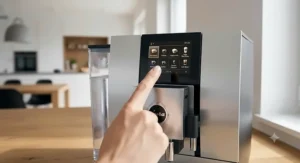
The ENA 8 sits between the ENA 4 and E8, offering a genuine milk system in a still-compact chassis — Jura’s answer for buyers who want lattes without stretching to E8 money or E8 counter space. It doesn’t match the HP3 system’s silkiness, but it clears the bar for a solid daily cappuccino, and the compact design keeps it viable for smaller kitchens that still want more than plain espresso. Here’s what to weigh: the smaller water tank and bean hopper mean this isn’t built for high-volume households, and the drink menu is noticeably shorter than the E8’s. For a single person or couple who wants milk drinks without committing to Jura’s mid-tier pricing, though, it closes that gap efficiently.
Pros:
- ✅ Real milk-drink capability in a compact frame
- ✅ Meaningfully cheaper than the E8
- ✅ Compact enough for smaller kitchens
Cons:
- ❌ Smaller tank/hopper limits high-volume use
- ❌ Shorter drink menu than the E8
At $1,100–$1,400, the ENA 8 is the practical middle ground for milk-drink lovers who aren’t ready for E8 pricing.
7. Jura GIGA 10 — dual-everything, built for high-volume households
The GIGA 10 exists for one reason: volume. With dual grinders and dual heating systems, it can pull two different drinks — say, a decaf latte and a regular espresso — essentially back-to-back without the delay single-boiler machines like the E8 experience. This is squarely aimed at larger families, home offices, or anyone who’s tired of playing barista for a rotating cast of guests. The dual-grinder setup also means you can run two different bean types (regular and decaf, or two roast profiles) without cross-contamination, something no other machine on this list can do. Reviewers who cover commercial and high-volume home setups note the GIGA 10 handles heavy daily cycles noticeably better than machines built around a single grinder and boiler — a legitimate mechanical advantage, not just marketing.
Pros:
- ✅ Dual grinders support two bean types simultaneously
- ✅ Dual boilers virtually eliminate back-to-back wait times
- ✅ Built to handle genuinely high daily drink volume
Cons:
- ❌ Significant price jump over the Z10
- ❌ Overkill for households under 3–4 daily drinkers
At $4,500–$5,500+, the GIGA 10 only makes financial sense for households or small offices actually pulling double-digit drinks per day.
Your First 30 Days With a Jura
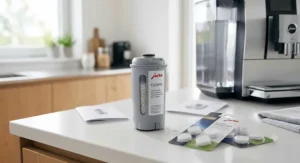
The first month is where most of the avoidable mistakes happen, and it’s also when a new owner forms their real opinion on whether the machine was worth it. Start with filtered water from day one — Jura’s CLEARYL filter cartridges exist specifically to slow mineral buildup inside the brew unit, and skipping this step is the single most common way owners shorten their machine’s lifespan. Run the machine’s built-in rinse cycle every morning before your first drink; it takes under a minute and flushes standing water from the lines. During week one, resist the urge to max out grind fineness for a “stronger” shot — it’s the most common new-owner mistake and tends to clog the brew group rather than intensify flavor. By week two, most owners settle into a rhythm: empty the drip tray daily, wipe the milk spout after each use, and let the machine’s own maintenance prompts guide descaling timing rather than guessing. Skipping the milk-system rinse is the other classic error — leftover milk residue is what actually causes off-flavors people mistakenly blame on the beans.
Which Jura Buyer Are You? Real-World Scenarios
Different lives call for different machines, and matching yourself honestly to a category saves both money and regret.
The solo apartment dweller who drinks one or two straight espressos a day and has zero interest in milk drinks: the ENA 4 covers this completely, and paying for anything more is paying for features that will sit unused.
The budget-conscious couple who wants real lattes without flagship pricing: the ENA 8 or E6 ED both make sense here, with the choice coming down to whether milk-drink quality or grinder freshness matters more to your daily cup.
The family of four-plus with frequent guests, juggling decaf drinkers, kids’ hot chocolate, and back-to-back cappuccino requests on weekend mornings: this is exactly the use case the GIGA 10 or at minimum the E8 was engineered around — single-boiler machines simply aren’t built for that volume without frustrating wait times.
The Jura Buying Decision Framework
If you’re still stuck between models, run through this simple priority checklist in order:
If you never drink milk-based coffee, choose the ENA 4 because paying for a milk system you’ll never use is the single most common Jura buyer’s regret. If your budget caps around $1,000-1,200 and milk drinks matter, choose the E6 ED or ENA 8 because they deliver Jura’s core grinder and brewing quality without flagship pricing. If you drink a genuine variety of milk-based drinks daily and want the most balanced all-rounder, choose the E8 because it remains the best-reviewed, most field-tested model in the current lineup. If a modern touchscreen and multi-user households matter more than incremental flavor gains, choose the S8. If cold brew, app control, or a genuinely broad drink menu matter to you specifically, choose the Z10. If your household or small office regularly serves four or more people back-to-back, choose the GIGA 10 — anything smaller will bottleneck under that kind of demand.
How to Choose the Right Jura Model
Jura’s lineup can look intimidating from the outside, but the decision really comes down to a handful of concrete criteria.
- Set your milk-drink frequency first. If you rarely drink lattes or cappuccinos, skip milk-system models entirely and save several hundred dollars.
- Decide your realistic budget band. The strongest value sits between $1,000 and $2,000 — this is where the E-series lives, and where most buyers find their long-term sweet spot.
- Measure your counter space before falling for a flagship. ENA models are the most compact; GIGA machines are genuinely large appliances.
- Weigh drink-menu size honestly. More drinks sound appealing, but most households settle on three to five favorites regardless of how many the machine offers.
- Consider household size and volume. Single-boiler machines like the E8 work fine for one to three people; larger households benefit meaningfully from dual-boiler models.
- Factor in your water hardness. Harder water means more frequent descaling regardless of model, which affects long-term maintenance time more than it affects the sticker price.
- Compare refurbished units if budget is tight. Jura’s build quality means well-maintained refurbished machines can deliver years of reliable service at a meaningful discount.
Why Is Jura So Expensive?
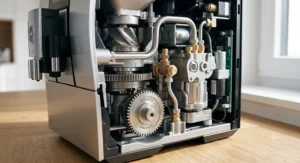
This is the question underneath every other question in this guide, and the honest answer is layered. Part of it is genuinely mechanical: Jura’s brewing systems (P.E.P., the HP3 milk system, the P.R.G. grinder) are proprietary engineering that competitors haven’t fully replicated, and that R&D cost gets baked into every unit sold. Part of it is materials — internal components on Jura machines tend to use more metal and fewer plastic wear-parts than budget alternatives, which is a major reason they survive years of daily descaling cycles that would degrade cheaper machines.
And part of it, honestly, is the “Swiss made” premium itself. Switzerland’s Swissness law is stricter than most people assume — for industrial goods, at least 60% of the manufacturing costs must originate in Switzerland for a product to legally carry that designation, alongside requirements around where the essential manufacturing step actually happens. That’s a real, legally enforced standard, not just a marketing sticker, and it’s part of why Swiss-engineered coffee machine components cost more to produce than equivalents assembled in lower-cost manufacturing regions. Reviewers and long-term owners alike tend to describe the premium as “front-loaded” — you pay significantly more on day one, but the machine’s mechanical resilience over 7-10+ years is what ultimately closes the value gap versus cheaper, shorter-lived alternatives.
✨ Ready to see current availability on the model that fits your budget?
Jura Reliability and Durability: What Long-Term Owners Report
Reliability is where Jura’s price tag starts to make more practical sense, and the data is fairly consistent across independent sources. Jura coffee machines typically last between 7 to 10 years with proper care and maintenance, and multiple independent repair shops report similar or longer figures — one UK service center noted that in over 15 years of servicing Jura machines, every unit they’ve worked on has continued running for at least a decade, with some reaching the 15-to-20-year mark. That’s a meaningfully longer service life than most kitchen appliances, and it lines up with independent Dutch consumer research showing coffee machines average roughly six years of service life overall, while Jura units in that same study lasted about 50% longer.
What actually determines whether a given machine hits the low end (7 years) or the high end (15+ years) comes down almost entirely to maintenance discipline rather than manufacturing variance — machines that skip regular descaling and cleaning cycles tend to develop serious issues by year three or four, while consistently maintained units regularly sail past a decade. The most common failure point across owner reports is the brew group seal, which is a relatively affordable, well-documented repair rather than a full machine replacement. This aggregated review sentiment across multiple owner communities is remarkably consistent: Jura machines are mechanically sound by design, and what shortens their lifespan is almost always preventable neglect, not the machine itself.
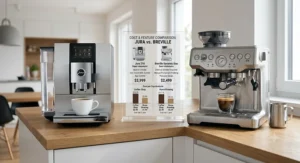
Jura vs Other Super-Automatic Brands
No honest answer to “is jura worth the price” is complete without putting Jura next to the machines people actually cross-shop against it — mainly De’Longhi and Breville, with Miele in the premium conversation too.
| Brand/Model | Price Range | Control Style | Milk System | Best For |
|---|---|---|---|---|
| Jura E8 | $1,150–$1,400 | Fully automatic, one-touch | HP3 fine-foam | Best overall consistency and simplicity |
| De’Longhi Dinamica Plus | Around $1,000 | Fully automatic, one-touch | LatteCrema | Best value alternative, easier cleanup |
| Breville Oracle Touch | $2,500–$3,000 | Semi-automatic, portafilter-based | Auto steam wand | Buyers who want real espresso control |
| Miele CM 7750 | $2,800–$3,300 | Fully automatic, touchscreen | Auto milk system | Premium build with strong app integration |
The analysis paragraph writes itself once you see the table: De’Longhi machines don’t make bad coffee, but the same level of attention to extraction detail found in Jura simply isn’t there, and it shows in both price and flavor nuance. The Breville Oracle Touch, on the other hand, isn’t really competing on the same axis — it keeps a genuine 58mm portafilter and lets you retain manual control over tamping and extraction timing, appealing to buyers who want café-authentic espresso rather than pure convenience. If simplicity and hands-off consistency are your priority, Jura wins; if you want to tinker and don’t mind a steeper learning curve, the Oracle Touch is the more honest choice.
Where Jura pulls ahead of all three alternatives is long-term reliability data and the depth of Jura-specific service infrastructure — independent repair shops specializing in Jura machines exist in most major markets, which isn’t as true for every competitor brand.
🔍 See how today’s Jura pricing compares to the alternatives above before you decide.
Jura Service and Maintenance: Long-Term Cost & Investment Value
The upfront price is only half the espresso machine investment value equation — the other half is what you’ll spend keeping it running.
| Cost Category | Jura E8 (8-year estimate) | Budget Alternative (8-year estimate) |
|---|---|---|
| Upfront Price | $1,150–$1,400 | $600–$900 |
| Filters/Descaling (8 yrs) | ~$250–$400 | ~$200–$350 |
| Repairs (typical, out-of-warranty) | $150–$350 per incident | Often not economical to repair |
| Expected Lifespan | 8–12 years | 3–5 years |
| Replacements Needed Over 8 Years | 0 | 1–2 |
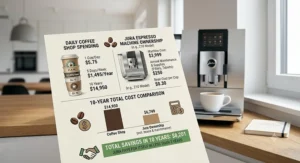
The analysis here matters more than the raw numbers: a budget machine that needs replacing once or twice within the same window a single Jura would still be running often erases most or all of the upfront savings, especially once you count the hassle of researching and re-buying. Daily maintenance is genuinely light — empty the drip tray, refill the tank, and let the machine’s built-in prompts guide monthly cleaning cycles and descaling every two to three months depending on your water hardness. That last variable matters more than people expect: harder water accelerates scale buildup in any heated appliance, and the U.S. Geological Survey notes that when hard water is heated, solid calcium carbonate deposits form and can reduce the life of equipment if left unaddressed — which is exactly why Jura’s automatic descaling reminders exist. Jura service centers charge roughly $150 to $350 for most common out-of-warranty repairs, and it’s typically worth paying that for any machine under seven years old rather than replacing it outright.
Common Mistakes When Buying a Jura
The most common mistake is buying based purely on drink-menu size rather than actual daily habits — a 32-drink Z10 sounds impressive, but if you’re realistically a two-drink household, that premium buys you very little practical benefit. The second is skipping the water-filter conversation entirely; buyers who ignore water hardness at purchase time are the ones most likely to face early brew-group issues. Third, people frequently underestimate counter space needs, especially with S8, Z10, and GIGA models, and end up cramming a machine into a spot that makes daily refills annoying. Fourth is assuming refurbished machines are automatically a compromise — a well-refurbished Jura, backed by a service warranty, is frequently one of the smartest buys in the entire lineup given how mechanically durable these machines are to begin with. Finally, buyers sometimes skip researching jura vs other super automatic brands entirely, assuming Jura is simply “the best,” when the honest answer depends heavily on whether you value hands-off convenience or hands-on control.
Features That Actually Matter (And Those That Don’t)
Not every spec on a Jura data sheet translates to a noticeably better cup, and separating genuine upgrades from marketing polish saves real money.
Actually matters: the grinder generation (Aroma G3 vs P.A.G.2 vs P.R.G.) has a direct, tastable impact on consistency shot to shot. The milk system tier (basic frother vs HP2 vs HP3) is immediately noticeable in foam texture if you drink milk-based coffee daily. Boiler count matters enormously for households serving more than two people back-to-back.
Doesn’t matter as much as it seems: drink-menu size beyond roughly ten options, since most households settle into a handful of favorites regardless. Touchscreen size is a genuine quality-of-life upgrade but has zero impact on what’s actually in the cup. App connectivity is a nice-to-have for scheduling and remote start, not a flavor factor. Knowing where to spend and where to save is really the entire answer to “is jura worth the price” — the honest version, at least.
Frequently Asked Questions
❓ Is Jura worth the price compared to cheaper super-automatic brands?
❓ Why is Jura so expensive compared to other espresso machines?
❓ What's the cheapest Jura espresso machine worth buying?
❓ How long do Jura espresso machines actually last?
❓ Is Jura better than Breville or De'Longhi super-automatics?
Conclusion
So, is jura worth the price? Based on everything above, the honest answer is: it depends entirely on how you actually drink coffee, not on how impressive a spec sheet looks in a browser tab at midnight. If you’re a solo espresso drinker, the ENA 4 makes the case for Jura at a genuinely modest price. If you’re a milk-drink household without unlimited budget, the E6 ED or ENA 8 close that gap efficiently. And for the vast majority of buyers landing on this article, the E8 remains the single best argument for spending Jura money in the first place — it’s reliable, it’s field-tested by years of real owners, and its resale and long-term repair economics hold up better than most kitchen appliances you’ll ever buy. Where Jura genuinely earns its premium is longevity: a machine that reliably runs for a decade-plus changes the entire cost-per-cup math versus something that needs replacing every three years. Where it doesn’t earn a premium is drink-menu size for its own sake — that’s paying for numbers on a screen, not flavor in your cup.
✨ Found the right Jura for your kitchen? Check today’s availability before you close this tab! 💬☕
Recommended for You
- Jura S8 vs Z10: 7 Real Differences That Justify $1,000 (2026)
- Jura Z10 Review 2026: 7 Rivals Tested, Is It Worth $3K?
- 7 Premium Super Automatic Espresso Machines Worth the Splurge (2026)
Disclaimer: This article contains affiliate links. As an Amazon Associate, I earn from qualifying purchases. If you purchase products through these links, we may earn a small commission at no additional cost to you.
✨ Found this helpful? Share it with your friends! 💬🤗
