
In This Article
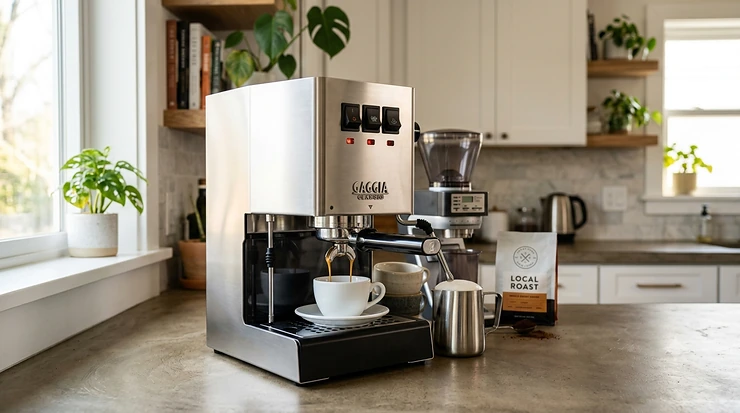
Here’s the short version, because you’re probably standing in your kitchen right now wondering if this is the machine that finally gets you off instant coffee: the Gaggia Classic Pro is a $449-ish hunk of stainless steel and brass that borrows parts from machines costing three times as much, and it has been doing that trick, more or less unchanged, since the original 1991 Classic launched under Gaggia’s decades-long Italian heritage. That’s not marketing copy. That’s just how long this particular Italian workhorse has been stubbornly refusing to become obsolete. This gaggia classic pro review exists because the machine keeps showing up on every “best espresso machine” shortlist year after year, and yet nobody ever seems to explain why in a way that actually helps you decide whether it’s right for your counter, your budget, and your patience level.
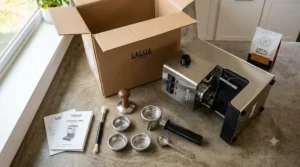
So here’s a working definition before we go further: the Gaggia Classic Pro is a semi-automatic, single-boiler home espresso machine with a commercial-grade 58mm portafilter, a three-way solenoid valve, and a manual steam wand — features you’d normally only find on machines twice its price. It’s the machine coffee nerds recommend to other coffee nerds, and also, somewhat confusingly, the machine that frustrates people who just wanted a button to press.
We’re not going to pretend every espresso machine under $500 is secretly the Gaggia in disguise, either. Over the next few thousand words we’ll walk through seven real machines — Gaggia’s own lineup plus its fiercest rivals — with honest analysis pulled from spec sheets, manufacturer documentation, and the mountain of aggregated review sentiment floating around the internet. No invented taste tests, no fabricated five-star raves. Just what the machine actually does, who it actually suits, and where your money is better spent elsewhere.
Affiliate Disclosure: This article contains affiliate links. As an Amazon Associate, I earn from qualifying purchases at no additional cost to you.
Quick Comparison Table: Gaggia Classic Pro at a Glance
| Machine | Portafilter | Boiler Type | Price Range | Best For |
|---|---|---|---|---|
| Gaggia Classic Pro | 58mm commercial | Single, brass (E24) | Around $449 | Learners who want to grow |
| Breville Bambino Plus | 54mm | ThermoJet | Around $400-$500 | Speed and simplicity |
| Rancilio Silvia V6 | 58mm commercial | Single, brass | $700-$750 range | Steam-power enthusiasts |
| Gaggia Classic Up | 58mm commercial | Single, brass, dual-PID | Mid-$600s to low-$700s | Classic fans who want factory PID |
Look at that spread and one thing jumps out immediately: the Gaggia Classic Pro is the only machine on this shortlist offering a genuine commercial portafilter under $500, and that single spec is why it keeps punching above its price class. The Bambino Plus wins on convenience — you’ll have a shot pulled before the Gaggia’s ready light even settles down. Meanwhile the Silvia and Classic Up occupy a different budget tier entirely, trading affordability for either legendary steam power or built-in temperature control that the base Gaggia simply doesn’t offer.
💬 Already leaning toward one? Tap the price link above to check current availability before it changes.
💬 Just one click — help others make better buying decisions too!😊
Top 7 Espresso Machines Compared: Expert Analysis
1. Gaggia Classic Pro — commercial parts at a hobbyist price
The standout feature here is simple: nothing else near $449 gives you a 58mm commercial group head. That’s the same portafilter diameter used on La Marzocco and Nuova Simonelli machines pulling shots in actual cafés, and it changes how forgiving your puck prep needs to be. A wider, shallower coffee bed distributes water more evenly than the tighter 51mm or 54mm baskets found on most home machines, which means channeling — that dreaded moment where water finds a weak spot and blasts through it, ruining your shot — is somewhat less likely, though not impossible. The current E24 version runs a brass boiler (an upgrade from the older aluminum design), dual heating elements that get you brewing in about five minutes, and a three-way solenoid valve that dumps residual pressure from the puck the instant you cut off brewing, so your grounds come out as a dry, tidy disc instead of a soggy mess stuck to the basket.
Here’s what most buyers overlook about this machine: it ships with a factory OPV set to roughly 12 bar, well above the 9-bar standard most specialty coffee sources consider ideal, and it has no PID controller, meaning you’ll be “temperature surfing” — timing your shot pull to the ready light’s on-off cycle — until you either learn the technique or buy an aftermarket PID kit. This isn’t a design flaw so much as a deliberate trade-off: Gaggia kept the price down by leaving out conveniences that hobbyists tend to want to configure themselves anyway.
Aggregated review sentiment across major coffee-review sites consistently flags two things: durability (owners report machines still running strong after a decade or more of daily use) and a genuine learning curve around dialing in grind and dose. Reviewers repeatedly note that once you’re past the first few weeks, shot quality climbs noticeably.
Pros:
- ✅ Commercial 58mm portafilter compatible with cafe-grade baskets
- ✅ Fully serviceable — parts are cheap and widely available for decades
- ✅ Three-way solenoid valve keeps puck removal clean
Cons:
- ❌ No PID — requires learning temperature surfing technique
- ❌ Steam wand underpowered compared to Rancilio’s
At around $449 (check current price, as it does fluctuate), the value proposition is hard to beat if you’re willing to put in the technique. Pair it with a proper burr grinder and this becomes a genuine long-term investment rather than a stepping-stone appliance.
2. Breville Bambino Plus — fastest heat-up in its class
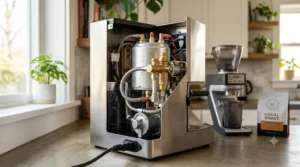
The Bambino Plus wins on a single, brutally practical metric: its ThermoJet heating system reaches brewing temperature in about three seconds, compared to the roughly five minutes a boiler-based machine like the Gaggia needs. If your mornings are a scramble, that difference isn’t trivial — it’s the whole ballgame.
Specs-wise, you’re looking at a 54mm portafilter (smaller than the Gaggia’s commercial standard, though still larger than budget 51mm units), an automatic milk-texturing wand driven by a built-in temperature sensor, and a compact footprint that suits small kitchens. What that automatic steam wand means in practice: you don’t need to learn manual frothing technique to get usable microfoam, which flattens the single steepest part of the espresso learning curve for most beginners.
Based on the spec comparison, the Bambino Plus is clearly engineered for a different buyer than the Gaggia — someone who wants café-adjacent coffee without treating it as a hobby. Reviewers consistently report that shot quality out of the box is very good for the price, though enthusiasts who’ve spent six-plus months developing manual technique often say the machine starts to feel limiting, since the smaller portafilter ecosystem and auto-steam wand cap how much control you can exert.
Pros:
- ✅ Heats to brew temperature in about 3 seconds
- ✅ Automatic milk texturing — no manual steaming skill required
- ✅ Compact footprint fits tight kitchen counters
Cons:
- ❌ Smaller 54mm portafilter limits aftermarket accessories
- ❌ Ceiling for manual technique development is lower
Priced in the $400-$500 range, this is the easy recommendation for someone who wants good coffee fast and isn’t chasing a hobby.
3. Breville Barista Express — the all-in-one convenience play
What stands out about the Barista Express is that it solves the “I also need a grinder” problem in one box, integrating a conical burr grinder directly into the machine. That single-appliance approach is exactly why some Classic Pro shoppers cross-shop this instead: it trades ultimate espresso ceiling for a simpler shopping list and setup process.
The built-in grinder handles grind-size dialing right on the machine, a PID-adjacent thermocoil heating system keeps temperature more consistent than a traditional single boiler without PID, and a 54mm portafilter rounds out the package. In practice, this means less counter clutter and a shorter path from unboxing to first shot — genuinely useful if you don’t want to research grinders separately. On the other hand, integrated grinders are harder to service or upgrade independently, and enthusiasts often note the stock grinder becomes the bottleneck for shot quality well before the machine itself does.
Reviewers frequently mention that the all-in-one convenience comes with a maintenance trade-off: when the grinder needs attention, you can’t simply swap it out the way you would a standalone unit.
Pros:
- ✅ Built-in grinder simplifies the buying decision
- ✅ Thermocoil heating improves consistency over basic single boilers
- ✅ One-box setup — minimal additional shopping required
Cons:
- ❌ Integrated grinder can’t be upgraded independently
- ❌ Total cost often lands near or above a Gaggia-plus-standalone-grinder setup
Typically found in the $600-$700 range, it’s worth comparing total cost of ownership against a Gaggia Classic Pro paired with a $150-$250 standalone grinder before deciding.
4. De’Longhi Dedica EC685 — the compact budget entry point
The Dedica’s standout feature is its slim, roughly 6-inch-wide footprint — genuinely useful if counter space is your limiting factor rather than budget or ambition. It’s the machine most frequently recommended as the absolute floor for “real” espresso, below which pressure stability and thermal consistency reportedly become unpredictable regardless of technique.
Specs include a thermoblock heating system rather than a boiler (faster heat-up, but generally less thermal mass and stability under sustained use), a proprietary portafilter, and a manual steam wand. What that thermoblock design means in daily use: quick warm-up for a single shot, but potentially less consistency across back-to-back drinks compared to boiler-based machines.
Honest take: this is a genuinely good option for someone testing whether they even like making espresso at home before committing real money, or for anyone whose kitchen simply cannot fit a full-size machine. It’s not the machine for someone who already knows they want to grow into the hobby — you’ll likely outgrow it within a year or two if that’s the direction you’re heading.
Pros:
- ✅ Slim footprint — fits the tightest kitchen counters
- ✅ Fast thermoblock heat-up for single shots
- ✅ Genuinely low entry price for real espresso
Cons:
- ❌ Proprietary portafilter limits upgrade paths
- ❌ Less thermal stability across consecutive drinks
Priced around $180-$230, it’s the honest budget pick — just go in knowing its ceiling is lower than everything else on this list.
5. Rancilio Silvia V6 — the steam-power icon
The Rancilio Silvia has been in continuous production, with incremental updates, since 1997 — and the standout feature that’s kept it relevant this long is raw steam power from its brass boiler. If milk drinks are your daily habit rather than an occasional treat, this is the machine enthusiasts point to first.
The V6 iteration adds PID-ready wiring (meaning you can retrofit a PID controller relatively cleanly) and an updated steam valve, alongside the same commercial 58mm portafilter as the Gaggia. Per manufacturer specifications, the brass boiler holds water temperature within about 2°C across consecutive shots, a meaningful benchmark given how much flavor swings with even small temperature drift. What that steam power means practically: microfoam that’s noticeably easier to texture well, particularly once you’ve logged some hours with manual steaming.
Here’s the honest trade-off, though — like the base Gaggia, the standard Silvia V6 ships without a PID, so you’re still temperature surfing unless you add one yourself. Reviewers and community sources consistently describe it as a machine that rewards a real time investment rather than delivering good shots from day one.
Pros:
- ✅ Best-in-class manual steam power for milk drinks
- ✅ Commercial 58mm portafilter, same ecosystem as the Gaggia
- ✅ PID-ready wiring simplifies future upgrades
Cons:
- ❌ No PID stock — still requires temperature surfing
- ❌ Costs roughly $250-$300 more than the Classic Pro
At $700-$750, it’s a serious step up in price for a serious step up in steaming performance — worth it only if milk drinks are a daily habit, not an occasional one.
6. Lelit Anna PID — the lesser-known middle ground
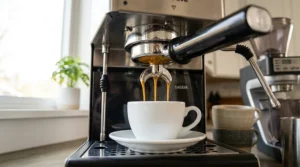
The Anna’s standout feature, and the one that separates it from both the Gaggia and the Silvia, is that it actually includes a factory PID controller at a price point where neither of those legendary machines does. Made by an Italian manufacturer now owned by the same parent company as Breville, it’s often described as sitting conceptually between the Gaggia Classic and the Rancilio Silvia — sharing DNA with both.
Specs: a brass boiler roughly 2.5 times larger than the Gaggia’s but slightly smaller than the Silvia’s, a factory PID for genuine out-of-box temperature stability, and — a real weak point — a flimsy plastic stock tamper that most owners replace within their first week. What the PID means in practice: no temperature surfing required, so a beginner can get consistent results faster than on either the Gaggia or Silvia.
Based on the spec comparison, the Anna performs better than a stock, unmodified Gaggia Classic Pro on temperature stability straight out of the box, though most sources rank its overall fit and finish slightly behind both the Gaggia and Silvia — a minor concession for the temperature-control advantage it offers.
Pros:
- ✅ Factory PID — no temperature surfing needed
- ✅ Brass boiler comparable in size to enthusiast-tier machines
- ✅ Genuinely strong value for a PID-equipped machine
Cons:
- ❌ Stock plastic tamper is a known weak point
- ❌ Overall fit and finish trails the Gaggia and Silvia slightly
Generally landing in the $500-$600 range, this is the machine to consider if you want PID stability without jumping all the way to Silvia Pro X or Classic Up pricing.
7. Gaggia Classic Up — the factory-modded flagship
The Classic Up’s standout feature is that it’s essentially the aftermarket mod community’s wish list, built at the factory: dual PID controllers (one for brew temperature, one for steam), a built-in analog manometer for real-time pressure feedback, and three-level automatic pre-infusion — all features Classic Pro owners have spent years bolting on themselves.
Per manufacturer specifications, it retains the same 58mm commercial portafilter and lead-free brass boiler as the Classic Pro lineup, but adds a fixed 9-bar OPV (no adjustment needed — it ships at the target pressure most enthusiasts chase manually on the base model), a TFT color display showing live brew temperature and shot timer, and a fully articulating steam wand. What the dual-PID system means day to day: you get the Classic experience without ever needing to temperature surf, and the manometer lets you actually see whether you’re extracting anywhere near that 9-bar target instead of guessing.
Honest analysis: this machine essentially closes the gap between “buy a Classic Pro and mod it yourself” and “buy something turnkey,” at a real cost premium. For Classic loyalists who want the heritage and portafilter ecosystem but not the DIY project, it’s a compelling case. For newcomers with no Classic Pro nostalgia, it competes directly with the Lelit Anna and Rancilio Silvia Pro X on features.
Pros:
- ✅ Dual PID controllers — zero temperature surfing required
- ✅ Built-in manometer shows real extraction pressure
- ✅ Fixed 9-bar OPV — no manual adjustment needed
Cons:
- ❌ Meaningful price premium over the base Classic Pro
- ❌ Rocker switches feel less satisfying than the Pro’s toggles
Sitting in the mid-$600s to low-$700s range, it’s the machine for Classic Pro fans who want the factory to have done the modding for them.
Practical Usage Guide: Getting the Most Out of Your Gaggia Classic Pro
The first 30 days with a Gaggia Classic Pro are where most people either fall in love with the hobby or quietly regret the purchase, and the difference usually comes down to a handful of habits rather than the machine itself. Start by giving the machine a full 10-15 minutes to warm through before your first shot — the ready light comes on well before the group head has actually stabilized, and pulling too early is the single most common cause of “why does my first shot taste sour” complaints.
Temperature surfing is the technique you’ll need to learn: watch the boiler light’s on-off cycle, and time your shot pull for shortly after it clicks off, when the group head is at its hottest without being scalding. It sounds fussy for the first week and becomes second nature by the third. Alongside that, invest in proper puck prep — a decent tamper and a WDT (weiss distribution technique) tool, since the Gaggia’s shallower learning curve tolerances mean sloppy distribution shows up in your cup more obviously than on a pressurized-basket beginner machine.
Descale every two to three months depending on your water hardness, using a simple citric acid solution — the removable shower screen makes deep cleaning genuinely easy, no special tools required. Common first-month mistakes include grinding too coarse (chasing a faster shot time instead of adjusting technique) and skipping backflushing, which leaves oily residue building up in the group over time.
🔍 Ready to start building your setup? Check current pricing on the machines above before availability shifts.
Real-World Scenarios: Who Actually Buys the Gaggia Classic Pro
Picture three different people walking into this decision. First, the college student commuting eight miles daily who wants two solid espressos before an 8 a.m. class and has maybe $600 total to spend on machine plus grinder — for them, the Bambino Plus paired with an entry burr grinder solves the actual problem (speed, simplicity, small budget) better than the Gaggia would, even though the Gaggia has the better ceiling.
Second, the remote worker who’s already three months into a coffee obsession, has read every r/espresso thread twice, and wants a machine that will still feel interesting in year three — this is the Gaggia Classic Pro’s exact target buyer. They have the patience for temperature surfing, the budget for a $150-$250 grinder alongside it, and genuine curiosity about upgrades like OPV adjustment down the line.
Third, the household that hosts frequent brunches and wants four cappuccinos back-to-back without a 10-minute wait between each — for them, the Rancilio Silvia’s superior steam power or the Classic Up’s dual-PID stability solves a real logistical problem the base Gaggia can’t: consistent milk texturing under sustained, repeated use.
Gaggia Classic Pro vs Classic: What Actually Changed
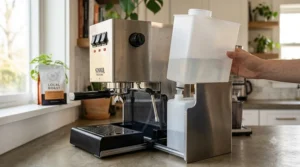
The plain “Classic” name gets thrown around loosely, but it typically refers to earlier iterations of the lineup — including the less-loved 2015 revision that temporarily dropped the three-way solenoid valve and introduced some cost-cutting plastic components that longtime fans didn’t love. The 2019 relaunch, which forms the basis of today’s Classic Pro, restored the solenoid valve, moved production back to Italy, and reintroduced the more traditional feel the earlier “Classic” name had built its reputation on.
What most buyers overlook is that “Gaggia Classic Pro” today isn’t even one static machine — there’s the original 2019 aluminum-boiler version, the 2023 Evo update (which briefly used a Teflon-coated boiler before some units were flagged for a coating durability concern), and the current E24 with a solid brass boiler and stainless portafilter. If you’re buying new in 2026, you’re very likely getting the E24 brass-boiler configuration, which resolved the earlier coating concerns entirely. The practical takeaway: when you see “Gaggia Classic” without “Pro” attached, assume it’s either an older unit or a different regional SKU, and confirm the boiler material and solenoid valve presence before buying secondhand.
Is the Gaggia Classic Pro Good for Beginners?
Here’s the honest answer: it depends entirely on what kind of beginner you are. If “beginner” means you’ve never used an espresso machine and want push-button simplicity, the Classic Pro is not the gentle on-ramp — it’s a semi-automatic machine requiring you to manually start and stop brewing, manage temperature surfing, and learn steam wand technique with a wand reviewers describe as underpowered compared to Rancilio’s. Reviewers consistently note its tendency to channel more than similarly priced competitors if puck prep is sloppy, which makes the learning curve steeper than a Bambino Plus or Barista Express.
But if “beginner” means someone who’s decided espresso is going to be a genuine hobby and simply hasn’t started yet, the calculus flips. The Classic Pro’s ceiling is high enough that you won’t outgrow it in year one or even year five, and the modding community means almost every limitation has a documented, affordable fix. The honest framing most experienced reviewers land on: buy the Classic Pro if you want to learn real espresso technique from day one; buy the Bambino Plus if you want good espresso today without the learning investment.
Gaggia Classic Pro Upgrades Worth It
Not every popular mod is worth your time, so let’s separate the genuinely valuable upgrades from the ones that just look impressive on a forum photo.
OPV Adjustment
The stock Gaggia Classic Pro’s over-pressure valve (OPV) ships set to roughly 12 bar, notably above the 9-bar-ish standard that specialty coffee sources generally point to as ideal for balanced extraction. Adjusting it down is a roughly 10-minute job requiring no special tools — just access to the OPV screw inside the machine’s top panel — and it’s widely considered the single highest-value first upgrade, particularly noticeable with lighter roasts that are more sensitive to over-extraction at higher pressure. This is a genuine improvement to a machine that already works, not a fix for something broken.
Understanding the Three-Way Solenoid Valve
The three-way solenoid valve is already built into every current Classic Pro, and understanding what it does helps explain why puck removal is so much cleaner than on solenoid-free budget machines. The moment you switch off brewing, this valve vents residual pressure and a small amount of water back out of the portafilter rather than leaving it trapped in the puck. Practically, that means your used grounds come out as a firm, dry disc you can knock out in one motion, instead of a wet, messy clump that sprays coffee grounds across your counter — a small detail that matters every single day you use the machine.
PID Kits, Steam Wands, and Other Mods
Beyond the OPV, the next most commonly recommended upgrades are an aftermarket PID kit (generally $80-$200 depending on features like pre-infusion control) to eliminate temperature surfing entirely, and — for owners chasing better milk texture — a Rancilio Silvia steam wand swap. Both are genuine quality-of-life improvements rather than fixes for a broken machine, and the honest advice from experienced owners is consistent: run the machine stock for a few months first, then modify only where you’ve personally identified a gap.
✨ Don’t Miss These Exclusive Deals!
🔍 Take your home espresso setup to the next level with the machines and upgrades covered above. Click through to check current pricing and availability — these picks help you build an authentic café-quality routine at home.
Gaggia Classic Pro Espresso Quality: What to Expect
Stock, straight out of the box, the Gaggia Classic Pro produces very good espresso — genuinely comparable to café output once you’ve matched grind and dose to the machine’s unpressurized basket. What separates “good” from “excellent” here is almost entirely technique and two cheap upgrades: the OPV adjustment mentioned above, and pairing the machine with a proper burr grinder rather than a blade grinder, since a blade grinder simply cannot produce the consistent particle size espresso extraction demands.
What the spec sheet won’t tell you, but aggregated owner reports consistently do, is that shot-to-shot consistency improves dramatically once you’ve logged real hours with the machine. Early shots often run inconsistent purely because dialing in grind size against a new machine’s exact thermal behavior takes trial and error — this isn’t a defect, it’s simply the reality of a manual machine without volumetric or PID assistance. According to the Specialty Coffee Association’s published brewing research, extraction quality depends heavily on stable pressure in the 9-bar range and consistent water temperature — both of which the Gaggia can hit reliably once the OPV is adjusted and temperature surfing technique is dialed in.
Commercial-Style Portafilter: Why 58mm Matters
The 58mm commercial portafilter is arguably the single detail enthusiasts cite most often when explaining why the Gaggia Classic Pro punches above its price class, and the reasoning goes beyond bragging rights. Most home machines in this price bracket use smaller diameters — Breville’s lineup sits at 54mm, and many budget semi-automatics drop to 51mm or even 49mm. The Gaggia matches the exact diameter used on commercial machines pulling shots in professional cafés.
Why does this matter practically? A wider, shallower coffee puck distributes water more evenly across its surface before channeling becomes a real risk, a relationship that’s consistent with how the National Coffee Association describes the broader mechanics of water-to-grounds contact in extraction. It also unlocks an entire aftermarket ecosystem — precision baskets, dispersion screens, bottomless portafilters, and professional tampers all exist in 58mm because that’s the size the wider cafe trade has stocked for decades. The difference between 51mm and 58mm isn’t dramatic shot-to-shot, but it’s real, measurable, and it compounds every time you want to upgrade a component down the line.
How to Choose an Espresso Machine Like the Gaggia Classic Pro
If you’re comparing machines in this category, work through these criteria in order:
- Decide your convenience-versus-control tolerance first. If you want a button-press experience, look toward the Bambino Plus or Barista Express; if you want to develop real technique, the Gaggia, Silvia, or Anna fit better.
- Check portafilter size before anything else. A 58mm commercial group head future-proofs your accessory choices in a way a 51mm or 54mm proprietary basket never will.
- Budget for a standalone grinder separately, at roughly 30-40% of your total setup spend — a mediocre grinder undermines even the best machine.
- Weigh boiler type against your milk habits. Single-boiler machines like the Gaggia can’t brew and steam simultaneously; if you make back-to-back cappuccinos daily, a dual-boiler or at minimum a strong single boiler like the Silvia matters more.
- Factor in serviceability, not just sticker price. Machines built from commercial-standard parts — gaskets, group heads, solenoids — tend to get 10-20 year lifespans versus 5-7 years for sealed, non-serviceable competitors.
- Confirm whether PID matters enough to pay for it. If temperature surfing sounds tedious rather than fun, machines like the Lelit Anna or Gaggia Classic Up justify their premium.
Common Mistakes When Buying the Gaggia Classic Pro
The single most common mistake is buying the machine without budgeting for a proper grinder, then blaming the Gaggia when shots taste inconsistent — a blade grinder simply can’t deliver the particle consistency this machine’s unpressurized basket demands. A close second is skipping the OPV adjustment entirely and assuming stock settings are optimal; they’re set conservatively at the factory, not for peak extraction.
Another frequent misstep is underestimating the steam wand’s learning curve — its commercial-style single-hole tip produces genuinely powerful, dry steam, but it requires more technique than a panarello-style wand, and buyers expecting instant café-quality microfoam are often disappointed in week one. Finally, many shoppers compare sticker price alone without factoring in the grinder cost, effectively comparing a $449 machine against a $600 all-in-one without noticing the true total cost is actually similar once a $150-$250 grinder is added to the Gaggia side of the ledger.
Long-Term Cost & Maintenance
Total cost of ownership tells a different story than sticker price alone. A Gaggia Classic Pro at roughly $449 plus a standalone grinder in the $150-$250 range puts your realistic entry cost around $600-$700 — genuinely comparable to a Breville Barista Express, but with a meaningfully higher quality ceiling and a repair path that a sealed all-in-one machine can’t match.
Ongoing costs stay low: a replacement group gasket runs a few dollars, a replacement pump around $30, and descaling solution is a few dollars every two to three months. Because virtually every internal part is a standard, replaceable commercial component rather than a proprietary sealed assembly, owners report machines still pulling good shots after 10-15+ years with nothing more than routine maintenance — a genuine cost advantage over machines with 5-7 year average lifespans, even when those machines carry a lower up-front price.
Safety, Regulations & Compliance Guide
Espresso machines in this category operate under standard household electrical safety certifications (UL in the U.S., CE in Europe), and the Gaggia Classic Pro’s dual heating elements and pressurized boiler mean a few practical safety habits matter more than with a simple drip brewer. Always allow the machine to depressurize fully before opening the portafilter after steaming, since residual steam pressure can cause hot water or steam to spit unexpectedly. Never attempt an OPV or PID modification while the machine is plugged in, and always let it cool completely before opening the top panel for any internal work.
Water quality also matters for both safety and longevity — hard water accelerates scale buildup inside the boiler, which can eventually strain heating elements and reduce efficiency, so a basic water filter or a routine descaling schedule genuinely functions as a safety-adjacent maintenance step, not just a performance one. General appliance-safety guidance from the Electrical Safety Foundation International echoes this: aging cords, worn seals, and appliances kept too close to water all deserve periodic attention, not just when something already seems wrong.
Frequently Asked Questions
❓ Is the Gaggia Classic Pro worth it in 2026?
❓ Does the Gaggia Classic Pro come with a grinder?
❓ How long does the Gaggia Classic Pro take to heat up?
❓ Is the Gaggia Classic Pro better than the Breville Barista Express?
❓ What is the first upgrade Gaggia Classic Pro owners should make?
Conclusion
If you’ve read this far, you already know the Gaggia Classic Pro isn’t the easy choice — it’s the deliberate one. It asks you to learn a technique, budget for a grinder you didn’t initially think you needed, and accept that greatness here comes from a handful of small, well-documented upgrades rather than out-of-the-box perfection. In exchange, it gives you commercial-grade components, a repair path measured in decades rather than years, and genuinely excellent espresso once you’ve put in the time.
The alternatives on this list aren’t lesser machines — they’re simply built for different people. The Bambino Plus and Barista Express solve for speed and simplicity. The Dedica solves for tight kitchens and tight budgets. The Silvia, Anna, and Classic Up solve for milk power, factory PID stability, and dual-PID convenience, respectively, each at a real price premium over the base Gaggia. Your job isn’t finding the “best” machine in some abstract sense — it’s matching your patience, budget, and daily coffee habits to the machine that actually fits them.
Whichever direction you land on, the honest advice holds across all seven options: budget properly for a grinder, learn the fundamentals before chasing mods, and remember that the machine is only ever half the equation. The other half is you, a bag of fresh beans, and a willingness to pull a few mediocre shots on the way to genuinely great ones.
Recommended for You
- Breville Barista Express vs Pro: 7 Machines Compared (2026)
- Breville Barista Express Review 2026: 7 Espresso Picks
- Best Espresso Machine Under 500: 7 Tested Picks for 2026
Disclaimer: This article contains affiliate links. As an Amazon Associate, I earn from qualifying purchases. If you purchase products through these links, we may earn a small commission at no additional cost to you.
✨ Found this helpful? Share it with your friends! 💬🤗
