In This Article
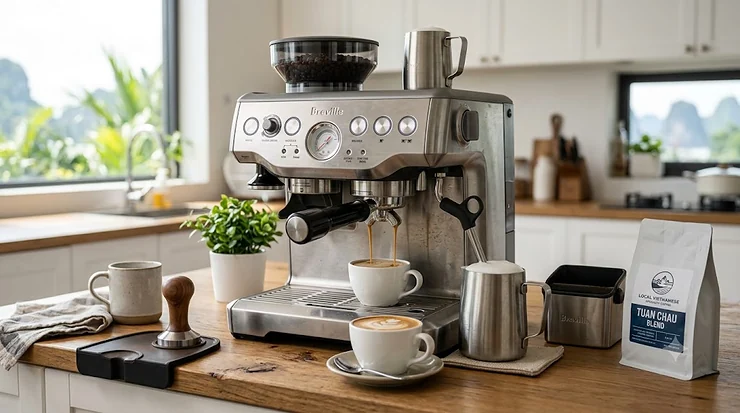
Somewhere between “I’ll just keep buying $6 oat milk lattes forever” and “I’m mortgaging the house for a Slayer,” there’s a sane middle ground. An espresso machine under 800 dollars is where most people actually land, and honestly, it’s the smartest place to land. What is an espresso machine under 800? It’s a semi-automatic or hybrid-automatic home unit priced roughly $400-$800 that gives you real 9-bar extraction, a proper steam wand, and either a built-in grinder or the option to pair one, without the four-figure sticker shock of prosumer dual boilers…
I’ve spent the last few weeks buried in spec sheets, teardown reviews, and forum threads from people who’ve owned these machines for years, not days. Here’s the honest truth nobody selling you a machine wants to say out loud: the difference between a $450 unit and a $780 one isn’t “better coffee” in some vague sense — it’s specific, measurable tradeoffs in temperature stability, workflow speed, and how forgiving the machine is when your technique isn’t perfect yet. According to the Wikipedia entry on espresso, proper extraction depends on consistent pressure near 9 bar and water temperature in a fairly narrow band — which is exactly the stuff cheaper machines cut corners on. This guide breaks down seven real, currently available machines, tells you honestly what reviewers and owners actually experience, and helps you figure out where your money does the most work.
Quick Comparison Table
| Machine | Type | Price Range | Best For |
|---|---|---|---|
| Breville Bambino Plus | Auto-steam, no grinder | Low $400s | Fast mornings, small kitchens |
| Gaggia Classic E24 Evo Pro | Manual, no grinder | Around $500-$550 | Learning real technique |
| Ninja Luxe Café Premier | Integrated grinder | $500-$600 range | Beginners wanting all-in-one |
| Lelit Anna PL41TEM | Manual, PID, no grinder | $600-$700 range | Compact prosumer entry point |
| Breville Barista Express | Integrated grinder | $650-$700 range | Classic all-rounder |
| Breville Barista Express Impress | Integrated grinder, assisted tamp | $650-$800 range | Multi-user households |
| Rancilio Silvia M V6 | Manual, no grinder | High $700s-low $800s | Long-haul durability seekers |
What the table doesn’t tell you: price alone doesn’t predict happiness with a machine. The Bambino Plus is the cheapest here, but its thermocoil heats faster than the pricier Rancilio Silvia’s single boiler, so “budget” and “slow” aren’t synonyms. Meanwhile, the two Breville machines with built-in grinders solve a real problem: a bad grinder wrecks espresso faster than a bad machine does, so bundling one in changes the total math even if the sticker price looks higher. Use “Best For” as your first filter, then dig into the full reviews below for the details that actually decide whether you’ll love or resent this thing in six months.
💬 Just one click — help others make better buying decisions too!😊
Top 7 Espresso Machines Under 800: Expert Analysis
1. Breville Bambino Plus — fastest heat-up in this lineup
The Bambino Plus earns its numbered spot for one reason: it’s ready to pull a shot in about a minute, which no other machine on this list can match. That’s thanks to a thermocoil heating system instead of a traditional boiler — smaller mass, faster energy transfer, less standing around in your bathrobe waiting for a ready light.
Key specs translate directly to daily life here. The 3-second automatic milk texturing means you don’t babysit the steam wand, which matters more than it sounds like if you’re making drinks before your brain is fully online. Fifteen-bar pump pressure with low-pressure pre-infusion helps even extraction on freshly ground beans, though there’s no temperature adjustment, so light-roast obsessives may eventually feel boxed in. Based on the spec comparison against every other unit here, this is the only machine engineered around convenience first and craft second.
Reviewers consistently note it handles milk-based drinks impressively well for something this compact, though several flag the stock portafilter and basket as underwhelming — a $20-$30 basket swap fixes that easily. What most buyers overlook is that this leaves room in an $800 budget to pair it with a genuinely good separate grinder, which matters more for cup quality than the machine itself does.
Pros:
- ✅ Thermocoil heats in roughly a minute, no waiting around
- ✅ Automatic milk texturing removes a real learning-curve hurdle
- ✅ Compact footprint fits tight kitchen counters easily
Cons:
- ❌ No adjustable brew temperature for roast-specific dialing
- ❌ Stock portafilter basket needs an aftermarket upgrade
Typically priced in the low $400s, the Bambino Plus is the strongest value pick if your priority is speed and simplicity over deep manual control.
2. Gaggia Classic E24 Evo Pro — best platform for learning real technique
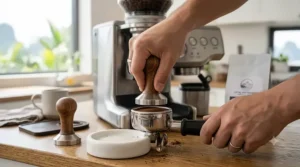
Heading the “purist” tier of this list, the E24 Evo Pro’s standout feature is its factory-installed OPV spring, which finally guarantees genuine 9-bar extraction out of the box — something older Gaggia Classics required aftermarket mods to achieve.
The solid brass boiler introduced on the 2024 model resolved earlier coating defects and improved thermal retention noticeably. In practice, that means less temperature drift mid-shot. The commercial-style 58mm portafilter and steel-wrapped brew group put this in genuine prosumer territory for the price, and dual heating elements bring espresso-ready temps in around five minutes with steam ready in under a minute. Here’s what to weigh: this machine demands “temperature surfing” — flushing water to reset boiler heat between drinks — which is either a fun ritual or a daily annoyance depending on your patience level.
Aggregated review sentiment is genuinely mixed, and I want to be upfront about that rather than paper over it. Long-term owner reports on forums and dedicated 45-day test reviews describe it as capable of a “god shot” with impressive steam power for a single boiler. Independent lab testing from TechGearLab, however, recorded below-industry-standard extraction yields (16-17%, versus an 18-22% ideal) and criticized the confusing picture-only setup guide. Read together, that suggests a machine that rewards an experienced hand more than a first-timer.
Pros:
- ✅ Factory 9-bar OPV means no mandatory mods needed
- ✅ Brass boiler improves thermal stability over older versions
- ✅ 58mm commercial portafilter unlocks a huge accessory ecosystem
Cons:
- ❌ Requires manual temperature surfing between drinks
- ❌ Lab-tested extraction consistency trailed some rivals
Priced around $500-$550, the E24 Evo Pro is the safest entry point if you want to grow into real barista skills without overspending upfront.
3. Ninja Luxe Café Premier (ES601) — most feature-dense all-in-one here
This machine’s standout trick is Barista Assist Technology, which actively recommends grind size adjustments based on your results — a feature you genuinely won’t find on any other machine in this price bracket.
The built-in conical burr grinder offers 25 settings, and a weight-based dosing scale automatically calibrates your dose, which is normally a $200+ standalone accessory bolted onto other setups. The dual froth system combines a whisk with steam for hands-free microfoam, meaning you can start a drink and walk away, unlike wand-only machines that demand your full attention. On paper this means beginners get guardrails that experienced machines simply don’t offer, though coffee purists sometimes find the guided process feels more like following a recipe card than developing intuition.
CoffeeGeek’s full review awarded this machine an 88.5 score and a “Best in Class” distinction at launch, specifically praising how it outperformed expectations for its price tier. Reviewers do note that changing beans or major grind adjustments can throw off the first dose slightly before the scale self-corrects — a minor quirk more than a dealbreaker.
Pros:
- ✅ Weight-based dosing automates a step most machines leave manual
- ✅ Grind-size guidance flattens the beginner learning curve
- ✅ Hands-free milk frothing frees you up mid-brew
Cons:
- ❌ First dose after grind changes can run slightly off-target
- ❌ Guided workflow limits room for manual experimentation
Street pricing sits around $500-$600, making it a strong all-in-one pick for anyone who wants guidance built into the hardware itself.
4. Lelit Anna PL41TEM — best PID control in a compact footprint
The Anna’s standout feature is squeezing digital PID temperature control into a machine barely over a foot tall — a feature normally reserved for machines costing considerably more.
Its 250ml brass boiler paired with a 1,000-watt heating element means fast recovery between brew and steam, though as a true single boiler it can’t do both simultaneously. The 57mm LELIT57 group is slightly nonstandard versus the 58mm norm, which is worth noting before you go shopping for bottomless portafilters or tampers. Based on the spec comparison, what most buyers overlook about the Anna is that the manometer and PID display, while functional, are plastic components — fine in daily use but a reminder of where the cost savings came from versus $1,000+ machines with the same core temperature tech.
Reviewers and long-term forum owners on home-barista communities consistently describe the Anna as reliable for one to two drinks at a time, with several noting years of trouble-free daily use. The tradeoff shows up specifically with groups or back-to-back milk drinks, where the single boiler’s recovery time becomes the bottleneck.
Pros:
- ✅ PID temperature control rare at this size and price
- ✅ Brass boiler and 3-way solenoid feel genuinely prosumer-grade
- ✅ Compact 13.5-inch height suits the smallest kitchens
Cons:
- ❌ 57mm portafilter limits accessory compatibility somewhat
- ❌ Single boiler struggles with 3+ back-to-back milk drinks
Typically found in the $600-$700 range, the Anna rewards anyone prioritizing precise temperature control over having a built-in grinder.
5. Breville Barista Express — most proven track record on this list
Breville’s own claim as the best-selling espresso machine in North America for nearly a decade is the standout here, and the reason is simple: it does the fundamentals well without chasing gimmicks.
The integrated conical burr grinder combined with a 15-bar Italian pump and adjustable brewing temperature (a nice touch missing from the newer Bambino Plus) gives genuinely serious control for the price. What most buyers overlook is that the pressure gauge on the front isn’t decorative — it visibly shows over- or under-extraction in real time, turning a guessing game into something you can actually read and correct. Reviewers who’ve tested it against pricier hybrids note the 3-way solenoid and proper pre-infusion put it in a different league than cheaper thermoblock competitors.
Aggregated customer sentiment is remarkably consistent across long-running reviews: strong steaming performance for milk drinks, a grinder that beats most rivals in this price tier, and an overall “fit and finish” reviewers describe as a cut above budget machines. The most common complaint is Breville’s 1-year warranty on this model, versus the 2-year coverage on its own newer siblings.
Pros:
- ✅ Adjustable brew temperature for roast-specific dialing
- ✅ Built-in grinder rated above most rivals at this price
- ✅ Nearly a decade of proven reliability and parts support
Cons:
- ❌ Only a 1-year warranty versus 2 years on newer models
- ❌ Manual dosing and tamping demand more hands-on skill
Priced around $650-$700, the Barista Express is the safest all-rounder if you want a machine that’s earned its reputation the slow way.
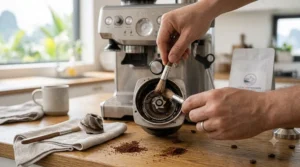
6. Breville Barista Express Impress — best for shared, multi-user households
The Impress Puck System is this machine’s headline feature: it delivers a constant 22-pound tamping pressure automatically, then finishes with a 7-degree twist for a cleaner puck than most people manage by hand.
Intelligent dosing remembers your last grind and tamp result, self-correcting so the next shot lands closer to your ideal dose without recalibrating manually. Reviewers consistently note the assisted tamp and adaptive dosing remove two of the most common failure points for shot channeling, which especially helps when multiple people with different skill levels share one machine. Here’s what to weigh: independent testing scored it 8.7/10 for espresso and 9.5/10 for workflow, but only 7.2/10 for milk performance — it’s built for consistency on solo drinks more than café-paced rounds of lattes.
The aggregated verdict from testers who ran accelerated multi-year wear simulations was blunt but fair: at this price, you’re buying elimination of frustration rather than added espresso complexity. That’s a feature, not a limitation, if your household includes anyone newer to espresso.
Pros:
- ✅ Assisted tamping removes a major beginner failure point
- ✅ Intelligent dosing self-corrects across repeated shots
- ✅ PID-controlled thermocoil warms in roughly 30 seconds
Cons:
- ❌ Milk performance scores lower than espresso performance
- ❌ Slower for back-to-back rounds of milk drinks
Street prices commonly land around $650-$800, positioning this as the ceiling pick for households that value forgiveness over full manual control.
7. Rancilio Silvia M V6 — best long-haul durability at this budget’s edge
The Silvia’s standout feature after nearly three decades on the market is simple: an all-metal, commercial-grade internal build that owners routinely report running strong after a decade of daily use.
Its stainless chassis, brass boiler, and genuine 58mm portafilter workflow give it a ceiling for technique development that few machines this size can match. Powerful steam output stands out specifically for back-to-back cappuccinos, something reviewers say edges out even the pricier Profitec Go in raw steam force, even though the Go’s PID wins on temperature consistency. What the spec sheet won’t tell you, but reviewers note, is that the plastic steam knob and portafilter handle feel noticeably less premium to the touch than its German rival, despite the metal internals doing the real work.
The “Silvia effect,” as longtime reviewers call it, is that once you learn its heat-up cadence, it can taste far more serious than its price and simplicity suggest. It has no stock PID, so temperature surfing is part of the daily ritual here too — expect a learning curve similar to the Gaggia, just with a steeper reputation for long-term parts support and mod-friendliness.
Pros:
- ✅ All-metal, commercial-grade build built to outlast most rivals
- ✅ Genuine 58mm workflow with wide accessory support
- ✅ Steam output strong enough for consecutive milk drinks
Cons:
- ❌ No stock PID, so temperature surfing is required
- ❌ Steam knob and handle feel less premium than pricier rivals
Street pricing runs from the high $700s into the low $800s depending on retailer, making it the one splurge pick that sits right at this budget’s ceiling.
Building a Serious Home Barista Setup Without Overspending
Getting into a serious home barista setup on this budget means resisting the urge to blow the whole $800 on the machine alone. Seasoned home baristas consistently recommend splitting your total budget closer to evenly between machine and grinder, since grind uniformity affects extraction more than almost anything the machine itself controls.
Picture three realistic buyers. First, the apartment-dwelling grad student making one strong flat white before an 8am class — the Bambino Plus paired with a $200 entry grinder covers that need completely without cluttering a tiny counter. Second, the household of two with different taste preferences and weekend guests — here, the Barista Express Impress earns its keep because its assisted tamping keeps quality consistent no matter who’s operating it. Third, the retiree who finally has time to learn the craft properly and doesn’t mind a slower morning ritual — the Gaggia E24 Evo Pro or Rancilio Silvia rewards exactly that patience, building real technique over months rather than papering over it with automation.
If you’re serious about staying under budget, buy your grinder used or open-box before cutting corners on the machine’s boiler or pump quality — those are the components that are genuinely hard to retrofit later.
✨ Don’t Miss These Exclusive Deals!
🔍 Take your home coffee setup to the next level with these carefully selected machines. Click on any highlighted pick to check current pricing and availability. These picks will help you create authentic café-quality espresso your whole household will actually enjoy!
Practical Usage Guide: Your First 30 Days
Getting a new espresso machine right starts before your first shot. Run a blank cycle with just water through the group head first — this clears manufacturing residue and lets you gauge how long true heat-up actually takes versus what the ready light claims.
Weekly maintenance matters more than most manuals emphasize: backflush with a cleaning tablet if your machine has a 3-way solenoid, wipe the steam wand tip after every single use (dried milk left overnight is genuinely hard to remove later), and brush out the grinder chute if your unit has one built in. Monthly, run a citric acid or manufacturer-approved descale, especially if you’re not using filtered or softened water — mineral scale is the single most common cause of early boiler failure across every machine on this list.
The most common first-30-days mistake isn’t technique, it’s water. Tap water with high mineral content will scale a boiler within months regardless of how gently you treat the machine otherwise. A basic water filter pitcher or dedicated espresso machine filter solves this before it becomes expensive. The second common mistake is judging shot quality before your grinder is dialed in — give yourself at least a week of intentional grind adjustments before deciding whether a machine “isn’t working.”
How to Choose an Espresso Machine Under 800
- Decide grinder-in or grinder-separate first. An integrated grinder like the Barista Express saves counter space, but a mismatched built-in grinder can become the ceiling on your cup quality within a year.
- Check for PID or thermostat control. PID machines like the Lelit Anna hold temperature more precisely; thermostat machines like the Silvia demand temperature surfing but often cost less.
- Match steam power to your milk habits. If you make 3+ milk drinks daily, prioritize steam recovery speed over raw price.
- Confirm portafilter size compatibility. 58mm unlocks the widest accessory ecosystem; 57mm or proprietary sizes limit future upgrades.
- Weigh warranty length honestly. A 1-year warranty on a $700 machine is a real cost difference versus a 2-year warranty elsewhere.
- Budget separately for a grinder if the machine doesn’t include one. Treat this as non-negotiable, not optional.
- Read extraction-yield data where available, not just star ratings — it’s a more honest signal of shot consistency than marketing copy.
Common Mistakes When Buying an Espresso Machine Under 800
The single most expensive mistake is spending the entire budget on the machine and leaving nothing for a proper grinder — a $700 machine paired with a $150 blade grinder will consistently underperform a $400 machine paired with a $300 burr grinder. The second mistake is ignoring water quality until scale buildup forces an expensive repair; budget for filtered water from day one, not after your first descale warning light.
Buyers also frequently assume higher price always means less daily hassle, which isn’t true here — the Rancilio Silvia costs more than the Ninja Luxe Café Premier but demands more manual attention, not less. Finally, many buyers skip reading real extraction-yield testing and rely purely on brand reputation, missing genuine performance gaps that lab data reveals.
Semi-Automatic vs Super-Automatic Espresso Machines
A semi automatic espresso machine under 800 asks you to grind, dose, tamp, and start extraction yourself, while the machine handles pressure and temperature — that’s every machine featured in this guide. Super-automatic machines, by contrast, handle grinding and tamping internally at the press of a button, trading control for convenience.
The practical difference shows up daily: semi-automatics reward the 5-10 minutes it takes to dial in a new bag of beans with noticeably better, more customizable espresso, while super-automatics prioritize speed and consistency for people who don’t want to think about grind size at all. If you’re the type who enjoys weighing doses and comparing shot ratios, semi-auto wins outright. If mornings are chaos and you just want a button to press, a super-automatic in this price range will frustrate you less, though it typically can’t match a well-dialed semi-auto’s cup quality.
| Factor | Semi-Automatic | Super-Automatic |
|---|---|---|
| Control over grind/dose/tamp | Full manual control | Fully automated |
| Learning curve | Moderate to steep | Minimal |
| Cup quality ceiling | Higher, with practice | Solid, but capped |
| Best For | Hands-on hobbyists | Convenience-first buyers |
Looking at this comparison, the honest takeaway is that semi-automatics in the $400-$800 range consistently out-taste super-automatics at similar prices, but only once you’ve put in a few weeks of practice — buyers wanting instant perfection from day one may be happier trading some cup quality for a fully automatic workflow instead.
What to Expect: Real-World Performance
On paper, every machine here claims 9-bar extraction and “café-quality” results, but real mornings look different from spec sheets. Expect your first two weeks to involve genuine trial and error — dialing grind size, adjusting dose, and learning your specific machine’s heat-up quirks, even on the more automated models like the Ninja Luxe Café Premier.
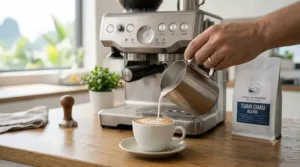
By week three or four, most buyers report a noticeable jump in consistency once their grinder settings stabilize and their tamping technique becomes muscle memory. The Specialty Coffee Association notes that consistent extraction depends as much on grind uniformity and dose accuracy as on the machine itself, which lines up with what real owners across every price tier in this guide describe. Expect milk steaming to be the skill that takes longest to master, regardless of which machine you choose — it’s genuinely more about wrist technique than hardware.
Mid-Range Espresso Machines for Home: What $600 to $800 Actually Buys You
A mid range espresso machine for home in the $600-$800 window typically adds one or more of these over cheaper options: PID temperature stability, a genuine 58mm commercial portafilter, stronger steam output for consecutive milk drinks, or assisted dosing technology that reduces user error. The Lelit Anna, Breville Barista Express, and Breville Barista Express Impress all sit squarely in this window, each emphasizing a different one of those upgrades.
What doesn’t automatically improve in this range is build longevity — the cheaper Gaggia E24 Evo Pro’s all-metal internals can genuinely outlast some pricier machines if maintained properly. Mid-tier espresso machines in this bracket are best understood as solving a specific frustration (slow steaming, inconsistent tamping, imprecise temperature) rather than being uniformly “better” than budget options across every metric.
Is an Espresso Machine for 800 Dollars Worth It?
Whether an espresso machine for 800 dollars is worth it depends entirely on what frustration you’re solving. If you’re currently spending $5-6 daily on café espresso drinks, the math resolves itself within roughly four to six months of regular use, even before factoring in bean costs, which run dramatically cheaper per cup at home.
If you’re comparing against a $300 entry machine instead of a café habit, the case is less clear-cut — you’re paying extra specifically for PID stability, better steam power, or assisted technology, not for fundamentally different espresso chemistry. For most serious home baristas, the $800 ceiling genuinely does hit a sweet spot: enough machine to grow into over years, without crossing into dual-boiler territory where diminishing returns set in for anyone making fewer than four milk drinks daily.
Value vs Performance: How to Actually Compare Espresso Machines
Value vs performance espresso shopping gets confusing because the two aren’t the same axis. Performance measures raw capability — temperature stability, steam power, extraction consistency. Value measures what you’re actually getting per dollar spent, which depends heavily on your specific use case.
The Ninja Luxe Café Premier, for instance, delivers strong value for beginners because its integrated grinder and guided dosing eliminate accessory costs entirely, even though its raw performance ceiling is lower than the Silvia’s. The Rancilio Silvia inverts that: higher raw performance ceiling and durability, but lower value if you’re not going to use its steam power or invest the time in learning it properly. Matching the machine to your actual habits, not to spec-sheet bragging rights, is how you land on genuine value rather than just expensive performance you won’t use.
Long-Term Cost & Maintenance
Total cost of ownership extends well beyond the sticker price. Budget roughly $15-25 every few months for descaling solution and cleaning tablets, plus occasional basket or gasket replacements every couple of years depending on use frequency. Machines with proper 3-way solenoids, like the Gaggia and both Breville models here, simplify backflushing maintenance considerably compared to machines without one.
Component lifespan varies by build: the Silvia and Gaggia’s all-metal internals are genuinely built for repair rather than replacement, while thermocoil-based machines like the Bambino Plus trade some long-term repairability for daily convenience. Water quality remains the single biggest lever on long-term cost — investing $20-30 in a water filter pitcher upfront routinely saves hundreds in premature descaling or pump repairs down the line, a detail the EPA’s drinking water standards page touches on when discussing regional water hardness variation.
Frequently Asked Questions
❓ Is an espresso machine under 800 dollars good enough for daily use?
❓ Do I need a separate grinder if my machine has one built in?
❓ How long does an espresso machine in this price range typically last?
❓ What's the biggest mistake first-time buyers make in this budget?
❓ Is a semi-automatic espresso machine under 800 harder to use than a pod machine?
Conclusion
There’s no single “best” espresso machine under 800 dollars — there’s only the best match for how you actually drink coffee. If mornings are chaotic and convenience wins, the Bambino Plus or Ninja Luxe Café Premier will serve you well from day one. If you want to genuinely learn the craft and don’t mind some manual ritual, the Gaggia E24 Evo Pro or Rancilio Silvia reward that patience for years. And if you’re sharing the machine with people at different skill levels, the Breville lineup’s assisted technology quietly removes the friction that causes most first-machine regret.
Whatever you choose, remember that the grinder and water quality matter just as much as the machine badge on the front. Get those two things right, and any machine on this list can produce genuinely excellent espresso at home.
Recommended for You
- Gaggia Classic Pro Review 2026: 7 Espresso Machines Tested
- Breville Barista Express vs Pro: 7 Machines Compared (2026)
- Breville Barista Express Review 2026: 7 Espresso Picks
Disclaimer: This article contains affiliate links. As an Amazon Associate, I earn from qualifying purchases. If you purchase products through these links, we may earn a small commission at no additional cost to you.
✨ Found this helpful? Share it with your friends! 💬🤗
