
In This Article
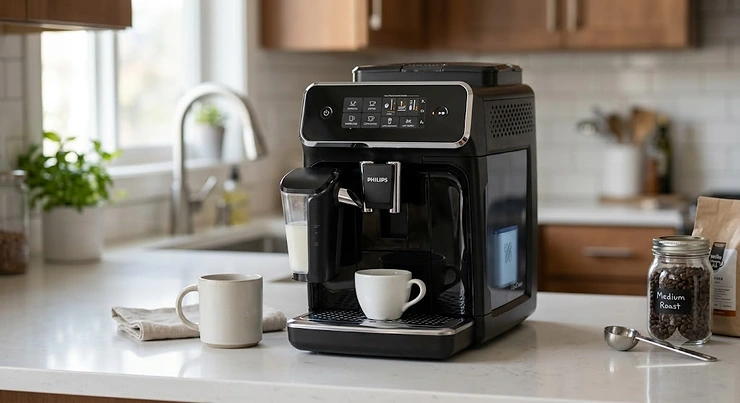
A philips 3200 espresso machine is a super-automatic bean-to-cup coffee maker that grinds, brews, and froths milk at the touch of a button, built around a ceramic burr grinder and Philips’ tube-free LatteGo milk system. That’s the short version. The longer version is messier, and more interesting, because “automatic” doesn’t mean “identical to every other automatic,” and the philips 3200 espresso machine sits in a genuinely crowded lane of the market.
Here’s the thing nobody tells you before you start shopping: the difference between a $150 machine and a $1,700 machine usually isn’t whether it makes coffee — it’s how consistently, how quietly, and how little you’ll curse at it in month eight. Espresso itself is a mechanically simple idea — force hot water through packed grounds under pressure — and yet the execution varies wildly across price tiers.
This guide breaks down seven real, currently-sold machines, with the Philips 3200 as the anchor point since it’s one of the best-selling super-automatics in its class. We’ll cover its closest sibling (the Philips 4300), a couple of true budget options, a semi-serious countertop upgrade from Breville, and two machines that live comfortably above $1,000. Along the way, we’ll dig into the LatteGo milk system, the ceramic grinder Philips is proud of, the AquaClean filter that quietly prevents descaling headaches, and whether the 3200 is actually worth buying in 2026 or just the machine everyone’s algorithm keeps showing you.
Quick Comparison Table
| Machine | Grinder | Milk System | Price Range | Best For |
|---|---|---|---|---|
| Philips 3200 Series | Ceramic, 12 settings | LatteGo | $500-$600 range | Best all-around value |
| Philips 4300 Series | Ceramic, 12 settings | LatteGo | $700-$800 range | More drinks, hotter coffee |
| De’Longhi Magnifica Evo | Steel, 13 settings | LatteCrema | $600-$1,000 range | Bigger, denser milk drinks |
| Breville Bambino Plus | None (external grinder needed) | Automatic wand | $400-$500 range | Compact counters, real microfoam |
| Jura ENA 8 | Conical, Professional Aroma Grinder | Milk pipe/carafe | Under $2,000 range | Closest to café-pulled espresso |
| KitchenAid KF6 | Steel burr | Auto milk tube | Around $1,000-$1,200 range | Quietest operation |
| Casabrews CM5418 | None (pre-ground/manual) | Manual steam wand | Under $170 range | Absolute entry point |
Looking at the table, the split is pretty clean: the Philips 3200 Series and Casabrews CM5418 anchor the value end, the De’Longhi Magnifica Evo, Breville Bambino Plus, and Philips 4300 Series occupy the crowded mid-market, and the Jura ENA 8 and KitchenAid KF6 justify their premium pricing through refinement rather than raw functionality. Notice that grinder type matters more than the spec sheet suggests — ceramic burrs (Philips) run quieter and resist wear longer, but steel burrs (De’Longhi, KitchenAid) can grind slightly faster and handle darker, oilier roasts with less clogging.
💬 Just one click — help others make better buying decisions too!😊
Top 7 Philips 3200 Espresso Machine Alternatives: Expert Analysis
We researched real specs, real aggregated review sentiment, and current availability for each of these seven machines. None of these are invented — every model below is a genuine, purchasable product as of this writing, spanning budget to premium so you can find the right fit for your kitchen and your coffee habit.
1. Philips 3200 Series LatteGo (EP3241/54) — best all-around value under $600
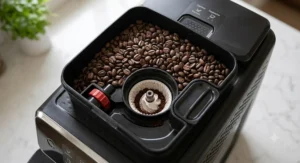
The standout here is simple: nowhere else in this price range do you get a genuine ceramic burr grinder. Philips built the 3200 around a 12-setting ceramic grinder rated for roughly 20,000 cups of use, paired with an Aroma Extract system that manages brew temperature automatically.
The specs matter in practice. The ceramic burrs run quieter than the steel grinders typical of this price tier, and because ceramic resists heat-driven wear, grind consistency holds up better over years of daily use than a stamped-steel equivalent. The 1.8-liter reservoir and LatteGo carafe (a two-piece, tube-free milk container) mean fewer moving parts to clean weekly. Based on the spec comparison against similarly priced machines, the 3200 punches above its price bracket almost entirely because of that grinder.
Who should buy it: households that want café-style drinks without learning a single technical skill, and who value low-maintenance cleaning over drink-menu depth. Reviewers consistently report that setup and daily use are close to foolproof — Best Buy customer reviews highlight ease of use and reliable output as the most repeated praise, though a subset of users flag the water tank as undersized for multi-cup mornings and note the grinder running loud during dosing. Independent lab testing from Tom’s Guide found the espresso itself came out “kind of weak” by default, with milk foam rated merely “ok” rather than exceptional — worth knowing if you’re coming from a café that pulls bold, syrupy shots.
Pros:
- ✅ Genuine ceramic burr grinder rated near 20,000 cups
- ✅ LatteGo carafe has zero tubes to disassemble and scrub
- ✅ AquaClean filter stretches descaling out to roughly 5,000 cups
Cons:
- ❌ Default shot strength runs milder than café espresso
- ❌ Water tank empties faster than rivals during back-to-back drinks
Priced in the $500-$600 range at the time of research, the Philips 3200 Series remains the value benchmark this list measures everything else against — check current price for the latest deals.
2. Philips 4300 Series LatteGo (EP4347/94) — most refined step-up with a color touchscreen
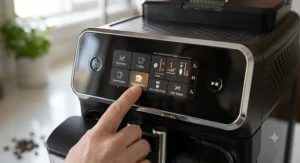
The standout advantage is the 4.3-inch color TFT touchscreen replacing the 3200’s button panel, plus three savable user profiles.
Internally, the 4300 shares its grinder, thermoblock, and LatteGo mechanism with the 3200 — what changes is the interface layer and drink range. The 4300 offers eight coffee varieties against the 3200’s five, five aroma/milk/length adjustment levels instead of three, and Best Buy Q&A responses confirm brewing temperature runs noticeably hotter out of the box. What most buyers overlook is that this isn’t a “better machine” in the mechanical sense — it’s the same core hardware wrapped in a friendlier, more customizable shell.
Who should buy it: multi-person households who’ll actually use profile-saving, and drinkers who found the 3200’s coffee too mild, since the 4300’s expanded temperature and aroma range gives more room to dial in strength. Aggregated reviewer sentiment across comparison sites frames the 4300 as the “easy win” over the 3200 on paper, while acknowledging the roughly $200 premium is a real consideration for value-focused buyers who won’t use the extra profiles.
Pros:
- ✅ Full-color touchscreen replaces small button interface
- ✅ Three user profiles remember individual settings
- ✅ Runs hotter and offers five-level aroma/milk customization
Cons:
- ❌ Costs roughly $200 more than the mechanically similar 3200
- ❌ No delayed-brew scheduling option despite the premium price
At around $700-$800, the Philips 4300 Series is the pick if the interface and drink variety matter more to you than saving money — current price and availability are worth checking before deciding.
3. De’Longhi Magnifica Evo — steel burrs built for bigger milk drinks
Its standout feature is the LatteCrema carafe system, which several reviewers rate above the LatteGo for producing denser, café-style milk texture.
The Magnifica Evo runs a 13-setting steel burr grinder rather than ceramic, dosing ground coffee for up to seven seconds per shot depending on the sub-model. In practice, steel burrs grind marginally faster and tolerate oily dark-roast beans with less clogging, though they’re louder and wear faster than ceramic over the long haul. One reviewer who has tested extensively across the Magnifica lineup calls it their go-to recommendation in the $500-$1,000 bracket specifically because the milk texture edges out Philips’ offerings at a similar price.
Who should buy it: latte and cappuccino drinkers who prioritize milk quality over grinder longevity, and who don’t mind a bit more grinder noise in exchange for bigger, richer milk drinks. Common feedback across multiple outlets flags the machine as approachable but with “a slight learning curve” before dialing in personalized settings — this isn’t a machine you master on day one, but most users report it clicking within the first week.
Pros:
- ✅ LatteCrema system produces noticeably denser milk texture
- ✅ 13 grind settings offer finer dial-in control than most rivals
- ✅ Comes with water hardness test strip and screw-in filter
Cons:
- ❌ Steel burrs are louder than Philips’ ceramic equivalent
- ❌ Slight learning curve before settings feel dialed-in
Depending on sub-model, the De’Longhi Magnifica Evo sits in the $600-$1,000 range — check current pricing, since the Evo, Evo Next, and Start variants shift regularly.
4. Breville Bambino Plus — smallest footprint with real microfoam control
The standout advantage is automatic milk frothing paired with genuine pre-infusion customization, a combination rarely found this small.
Unlike the fully-automatic machines on this list, the Bambino Plus is semi-automatic — you’ll need a separate grinder — but its dose-control extraction and 54mm portafilter deliver shots closer to café output than any bean-to-cup machine here. The 64-ounce reservoir and compact 12.6 x 11.8 x 7.7-inch footprint make it the space-saving pick, and its automatic steam wand gets remarkably close to true microfoam, a texture bean-to-cup carafes rarely nail. Reviewers at Tom’s Guide and TechGearLab independently rated it among the better milk-steaming performers they’ve tested, regardless of price bracket.
Who should buy it: apartment dwellers and anyone who already owns (or wants to invest in) a standalone grinder, since pairing a mediocre grinder with the Bambino Plus undercuts its main advantage. It’s a poor fit for buyers who specifically want the walk-away convenience of bean-to-cup automation — this machine still asks you to tamp, lock in the portafilter, and steam manually.
Pros:
- ✅ Automatic milk frothing produces genuine microfoam texture
- ✅ Customizable pre-infusion rare at this size and price
- ✅ Four included basket options for different grind styles
Cons:
- ❌ No built-in grinder — a real added cost for most buyers
- ❌ Portafilter can feel fiddly during the first few weeks
At roughly $400-$500, the Breville Bambino Plus rewards buyers willing to trade full automation for better shot control — worth checking current price if you already own a grinder.
5. Jura ENA 8 — closest an automatic gets to barista-pulled espresso
Its headline feature is Jura’s Pulse Extraction Process (P.E.P.), which pulses water through the puck instead of a single continuous flow.
On paper, P.E.P. sounds like marketing, but the mechanism actually extends contact time with finely ground coffee at lower pressure, which is what produces the notably fuller-bodied shots reviewers consistently single out. Paired with the Professional Aroma Grinder — a conical burr upgrade over Jura’s older Aroma G3 — the ENA 8 grinds with less heat transfer to the beans, preserving more aromatic oils. The 2.8-inch touchscreen and 15 one-touch drinks (up from earlier ENA models) round out a genuinely premium package in a machine measuring just 10.7 inches wide.
Who should buy it: coffee-focused households (not necessarily large ones — it’s compact) who drink multiple cups daily and have decided that shot quality outweighs sticker shock. Reviewers who’ve spent months with the ENA 8 note it will “pay for itself” against daily café spending for heavy drinkers, though the power button’s placement on the rear panel and the lack of an included milk carafe on some configurations are recurring minor gripes.
Pros:
- ✅ P.E.P. extraction produces noticeably fuller-bodied shots
- ✅ Professional Aroma Grinder preserves more bean aroma
- ✅ Compact 10.7-inch width fits genuinely tight counters
Cons:
- ❌ Price tag lands well above every other machine on this list
- ❌ Power button placement on the back is inconvenient daily
Priced under $2,000 (commonly seen near $1,700-$1,990), the Jura ENA 8 is a purchase for people who’ve already decided espresso quality is worth the premium — check current price before committing.
6. KitchenAid KF6 (KES8556SX) — quietest automatic on the countertop
The standout trait, confirmed by independent acoustic testing, is that KitchenAid’s automatic line ranks among the quietest options tested by Quiet Mark, an independent noise-certification body.
Beyond the hush factor, the KF6 offers 15 programmable recipes, adjustable strength/length/temperature per user profile, and a twist-and-lift bean hopper for quick bean swaps. What the spec sheet won’t tell you, but reviewer testing suggests, is that the KF6’s temperature consistency across a brewing session edges out several rivals in its price bracket, even if its milk menu isn’t quite as expansive as costlier siblings.
Who should buy it: shared households or early-morning brewers in apartments with thin walls, where a grinder’s decibel level genuinely affects quality of life. It’s a strong fit for anyone who wants premium build quality and quiet operation more than they want the widest possible drink menu — reviewers note rival machines near the same price, like certain De’Longhi models, offer a broader specialty menu, so the KF6’s appeal is specifically about refinement over range.
Pros:
- ✅ Independently certified as one of the quietest automatics available
- ✅ 15 programmable recipes with per-user customization
- ✅ Twist-and-lift bean hopper simplifies bean changes
Cons:
- ❌ Costs roughly double the Philips 3200 for similar drink count
- ❌ Newer to market than established rivals, with a shorter track record
Around $1,000-$1,200, the KitchenAid KF6 is worth checking current pricing on if quiet operation is non-negotiable in your kitchen.
7. Casabrews CM5418 — cheapest real steam-wand entry point
Its standout feature, unusual at this price, is a genuine 360-degree steam wand rather than the fixed pannarello nozzles typical of sub-$200 machines.
The CM5418 runs a 20-bar Italian pump alongside a 1,350-watt thermoblock heater, weighing just 8.6 pounds. There’s no built-in grinder — you’ll supply pre-ground coffee or grind separately — and the 51mm portafilter ships with pressurized baskets only, meaning it leans forgiving rather than precise. Reviewer testing found the stainless-steel-accented build feels sturdier than most machines under $200, a genuine surprise given how much of this category is plastic.
Who should buy it: first-time espresso buyers testing whether they even like making coffee at home before investing further, or budget-conscious households who mostly want steamed milk drinks without café prices. It’s a poor fit for anyone chasing precision extraction — reviewers note the 32-34 ounce tank means frequent refills, and the included plastic tamper is widely flagged as the first accessory worth replacing.
Pros:
- ✅ Genuine 360-degree steam wand rare under $200
- ✅ Sturdy stainless-accented build for the price point
- ✅ Extremely low barrier to entry for espresso-curious buyers
Cons:
- ❌ No built-in grinder — pre-ground or separate grinder required
- ❌ Only ships with pressurized baskets and a flimsy plastic tamper
At roughly $140-$170 (with occasional dips near $118 during sales events), the Casabrews CM5418 is the machine to check current price on if you’re not ready to spend serious money yet.
Practical Usage Guide: Getting Your Machine Set Up Right
The first 30 days determine whether any of these machines feel effortless or endlessly annoying, and most mistakes happen in week one. Start by running a water hardness test — nearly every automatic machine on this list, including the Philips 3200 Series, ships with a test strip, and setting the wrong hardness level throws off descaling schedules for the machine’s entire lifespan.
Next, resist the urge to immediately fiddle with grind settings. Philips explicitly recommends not adjusting the ceramic grinder for the first 100-150 cups while the burrs settle in, and adjusting mid-grind (rather than when the machine is actively running) risks jamming it. For any LatteGo or LatteCrema system, run the manufacturer’s first-use cleaning cycle before your first drink — both Philips and De’Longhi flag this in their setup guides, and skipping it means residual manufacturing oils end up in your first few cups.
Set a maintenance rhythm early: rinse milk carafes daily, wipe steam wands immediately after frothing (dried milk is far harder to remove than fresh), and empty the grounds container every 10-12 cups rather than waiting for a full indicator light. For semi-automatic machines like the Breville Bambino Plus, dial in your grinder’s setting using the double-shot timing method — aim for 25-30 seconds of extraction — before touching any other variable. Common early mistake: changing three settings at once (grind, dose, and tamp pressure) makes it impossible to know which change actually fixed or broke your shot.
Real-World Scenarios: Matching a Machine to Your Life
The busy parent, two kids, one bathroom queue every morning: The Philips 3200 Series or Philips 4300 Series make sense here specifically because the one-touch menu means anyone in the house can get a drinkable cappuccino without training. Budget around $550-$800, prioritize the 4300 if multiple people want saved profiles.
The studio-apartment coffee enthusiast: Counter space is the binding constraint, and the Breville Bambino Plus at 12.6 x 11.8 x 7.7 inches solves that while still delivering real microfoam — assuming you’re willing to also own (or already own) a grinder. If a grinder is a bridge too far, the compact Jura ENA 8, at just 10.7 inches wide, is the automatic alternative, provided the price fits.
The budget-first first-timer: Someone testing whether home espresso is even worth the hobby should start with the Casabrews CM5418 around $140-$170. If steamed milk drinks and daily use confirm the habit is sticking, that’s the signal to reinvest in something like the Philips 3200 Series a year or two later rather than overspending upfront.
Philips EP3241 Review: Real-World Performance
The EP3241/54 model number is simply Philips’ internal designation for the black 3200 Series with LatteGo — so a philips ep3241 review and a Philips 3200 LatteGo review are describing the same physical machine. That distinction trips up a lot of shoppers browsing Amazon listings side by side.
In daily use, the EP3241’s touch-button interface (not a full touchscreen) handles six functions: espresso, cappuccino, macchiato, Americano, coffee, and hot water, plus adjustable size and strength dials. Reviewers who’ve spent extended time with the unit describe the coffee output as reliably drinkable rather than exceptional — Tom’s Guide’s testing panel specifically noted the espresso “could be stronger” by default, which lines up with aggregated Best Buy customer sentiment praising overall ease of use while flagging temperature and small-tank complaints as the most common criticisms.
What most buyers overlook about the EP3241 specifically is that its ceiling is set less by the espresso itself and more by how forgiving the whole system is: dishwasher-safe parts, a grounds-friendly design that accepts pre-ground coffee alongside beans, and a pre-set auto shutoff (15, 30, 45, or 60 minutes) that quietly saves on standby power. For buyers who want “good enough, every single time” over “occasionally excellent, with effort,” the EP3241 remains a sound recommendation.
Philips 3200 vs Philips 4300 Espresso Machine: Which Should You Buy?
This comparison confuses shoppers because Philips prices the two so closely that at any given moment, one machine might briefly cost the same as the other depending on retailer promotions. Mechanically, though, the two are near-identical: same ceramic grinder, same thermoblock heating, same LatteGo carafe.
| Feature | Philips 3200 Series | Philips 4300 Series |
|---|---|---|
| Interface | Button panel with small display | 4.3″ color TFT touchscreen |
| Drink varieties | 5 | 8 |
| Aroma/milk/length settings | 3 levels | 5 levels |
| User profiles | None | 3 |
| Brew temperature | Standard | Runs hotter |
| Price range | $500-$600 | $700-$800 |
The table makes the decision look simple, and mostly it is: the Philips 4300 Series is a genuine upgrade in interface and customization, not just a repackaged 3200. Where it gets less simple is value — paying roughly $200 more for a touchscreen and profile-saving only pays off if multiple people will actually use those profiles, or if you specifically found the 3200’s coffee too weak and want the wider aroma range to compensate. Solo drinkers with consistent taste preferences often report the 3200 does everything they need at a meaningfully lower price.
✨ Don’t Miss These Exclusive Deals!
🔍 Whichever Philips model fits your kitchen, check current pricing and availability before you buy — deals shift often, and the model you want might be discounted right now.
Is the Philips 3200 Worth Buying in 2026?
Short answer: for most first-time super-automatic buyers, yes — with one honest caveat. The machine’s ceramic grinder alone justifies its price bracket, since finding a genuine ceramic burr grinder below $600 elsewhere on the market is genuinely rare; most rivals in this price tier use stamped steel.
The caveat is about expectations, not defects. Based on the spec comparison and aggregated review sentiment across multiple outlets, the 3200 is not going to produce café-strength shots without some manual adjustment to the strength dial, and its stock milk foam has been independently described as merely adequate rather than exceptional. If your reference point is a local specialty café, you’ll likely want to bump the strength setting immediately and may still find the ceiling lower than a semi-automatic machine with a separate grinder could reach.
Where the 3200 clearly wins is total cost of ownership and daily friction. Dishwasher-safe parts, a five-year-ish descaling runway from the AquaClean filter, and a genuinely simple interface mean this machine asks very little of you day to day — which, for a lot of buyers, is the entire point of “automatic” in the first place.
LatteGo Milk System: Does It Really Replace a Steam Wand?
The LatteGo milk system uses two magnetically-connected pieces with no internal tubes, which is the entire selling point: nothing to disassemble, no tube to scrub with a pipe cleaner, just two parts rinsed under a tap. Philips uses this same system across the 3200, 4300, and several other Series machines.
In terms of texture, aggregated reviewer sentiment is consistent: LatteGo foam is functional and reliably produced, but doesn’t match the density of dedicated steam-wand systems or De’Longhi’s LatteCrema carafe. One tester’s blunt assessment was that the foam “held its form well” but “wasn’t as dense” as other frothers tested in the same session — a fair, representative summary of where LatteGo sits in the milk-system hierarchy.
For a philips 3200 latte go review specifically, the practical trade-off is this: you’re getting genuinely effortless cleanup (arguably the best in this category) in exchange for milk texture that’s good, not great. If you’re the kind of drinker who cares deeply about latte art or extremely dense microfoam, a semi-automatic machine with a manual wand — like the Breville Bambino Plus — will outperform any bean-to-cup carafe system, LatteGo included. If cleanup speed matters more than foam density, LatteGo remains one of the more thoughtfully engineered solutions on the market.
Ceramic Grinder: Why Philips Bet on Ceramic Burrs
Grinder debates in the coffee world tend to split two ways: flat versus conical burr shape, and ceramic versus steel material. Philips’ 3200, 4300, and 5500 Series machines all use a 12-setting ceramic grinder — a genuinely uncommon inclusion at this price, since ceramic burrs typically show up on far more expensive equipment.
The practical case for ceramic is straightforward: it runs cooler than steel during grinding, which helps preserve aromatic compounds in the bean that heat can drive off, and it wears more slowly over thousands of cups. The reported tradeoff, according to reviewers who’ve used the system extensively, is noise — one reviewer flagged the grinder as simply “loud” during operation, a fair criticism given ceramic burrs, ironically, aren’t inherently quieter than steel despite common assumptions; the noise comes more from housing and motor design than burr material itself.
Philips also recommends avoiding grind-size adjustments during the first 100-150 cups of use while the burrs bed in, and to only adjust settings while the grinder is actively running — changing it while idle risks a jam. For buyers comparing machines specifically on grinder quality, the ceramic grinder Philips uses across its 3000-5000 Series lineup is a genuine differentiator worth weighing against De’Longhi’s steel-burr alternative in the Magnifica line, which grinds slightly faster but wears down over a shorter lifespan.
AquaClean Filter and Long-Term Maintenance
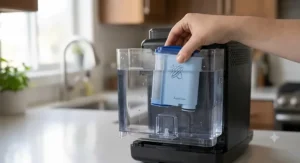
The AquaClean filter is Philips’ water-filtration cartridge, designed to reduce limescale buildup and stretch the interval between full descaling cycles out to roughly 5,000 cups — though real-world reviewers note most households won’t hit that milestone for up to five years given typical daily consumption.
Water hardness is the variable that actually determines how hard your machine has to work regardless of filter brand. According to guidance from Virginia Tech’s Cooperative Extension on household water hardness, mineral scale buildup from hard water can affect the operation and lifespan of small water-using appliances, including coffee makers — which is exactly why every machine on this list ships with, or recommends, a water hardness test strip during setup.
Practically, that means: run the AquaClean activation cycle (Philips specifies the first five cups) immediately after installing a new filter, replace the cartridge on the schedule Philips recommends rather than waiting for a warning light, and still plan on a full manual descale at least once a year even with the filter installed, since filters reduce scale buildup rather than eliminating it entirely. Skipping descaling entirely — filter or not — is the single most common reason a super-automatic machine’s performance degrades after year two.
How to Choose a Super-Automatic Espresso Machine
- Decide if you actually want automation. If you enjoy the process of dialing in shots and don’t mind a learning curve, a semi-automatic like the Bambino Plus may satisfy you more than any bean-to-cup machine.
- Check grinder material and settings. Ceramic wears slower and runs cooler; steel grinds slightly faster. More settings (12+) mean finer control over extraction.
- Match milk system to your drink habits. Frequent latte or cappuccino drinkers should prioritize LatteCrema or a steam wand over LatteGo’s easier-but-lighter foam.
- Measure your counter, including clearance above. Bean hoppers need vertical clearance to refill; some machines need several inches more than their listed height suggests.
- Budget for consumables, not just the machine. Water filters, descaling solution, and (for semi-automatics) a quality grinder all add real ongoing cost.
- Read the noise level before you buy, not after. If you’re brewing before 6 a.m. in a shared space, a certified-quiet machine like the KitchenAid KF6 avoids a genuinely common regret.
- Confirm the warranty length and service network. Premium brands like Jura typically offer stronger post-purchase support than budget entrants, a real factor if something breaks in year three.
Common Mistakes When Buying an Espresso Machine
Buyers regularly overspend on drink-menu variety they’ll never use — eight or fifteen programmed drinks sound impressive, but most households settle into two or three favorites within a month. Another frequent misstep is ignoring water hardness entirely; skipping the included test strip during setup means guessing at descaling schedules, which shortens machine lifespan regardless of price point.
Shoppers also underestimate grinder noise, especially in open-plan kitchens or apartments with shared walls — a spec sheet won’t convey decibel level the way five minutes of video review footage will. Finally, many first-time buyers assume “automatic” means “zero maintenance,” when in reality every machine on this list still requires weekly carafe cleaning, periodic descaling, and occasional grinder attention regardless of price.
Frequently Asked Questions
❓ Is the philips 3200 espresso machine good for beginners?
❓ How many cups does the AquaClean filter really last?
❓ Can the LatteGo milk system handle oat or almond milk?
❓ What's the real difference between philips 3200 and 4300 espresso machines?
❓ How often should the ceramic grinder be cleaned or adjusted?
Conclusion
There’s no single “best” machine here — there’s a best machine for your kitchen, your budget, and how much fuss you’re willing to tolerate before your first cup. The philips 3200 espresso machine earns its reputation honestly: a ceramic grinder well above its price class, genuinely easy cleanup through LatteGo, and a maintenance runway extended by AquaClean, all wrapped in a machine that asks very little of its owner day to day.
If milk texture matters more than anything else, the De’Longhi Magnifica Evo or Breville Bambino Plus will outperform it. If budget is the binding constraint, the Casabrews CM5418 gets you into real espresso for well under $200. And if money genuinely isn’t the deciding factor, the Jura ENA 8 produces the fullest-bodied shots of anything on this list, full stop. Whichever direction you go, the National Coffee Association’s own consumption data confirms that at-home brewing has remained the dominant way Americans drink coffee year after year — which means whatever machine you choose will likely earn its keep on your counter for a long time.
Recommended for You
- Super Automatic Espresso Machine Under 500: 7 Best 2026 Picks
- Super Automatic vs Semi Automatic Espresso: 7 Machines Ranked (2026)
- 7 Best Super Automatic Espresso Machine Picks for 2026
Disclaimer: This article contains affiliate links. As an Amazon Associate, I earn from qualifying purchases. If you purchase products through these links, we may earn a small commission at no additional cost to you.
✨ Found this helpful? Share it with your friends! 💬🤗
