In This Article
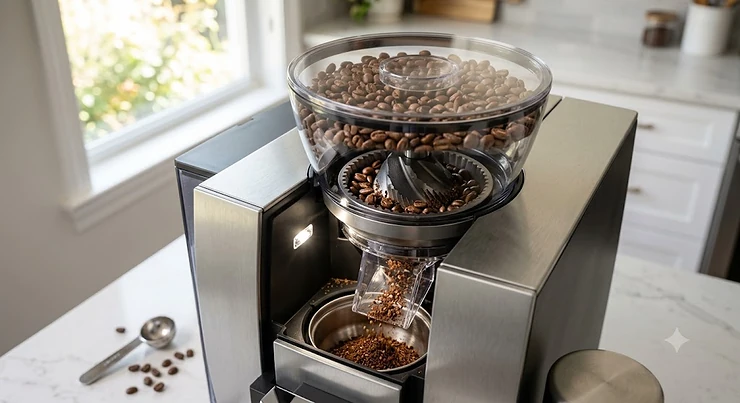
A super automatic espresso machine is a fully automated coffee maker that grinds whole beans, tamps, brews, and often froths milk, all at the push of one button, with no manual technique required. It’s the modern descendant of the pump-driven espresso machine design that’s been refined since the mid-20th century — minus the manual technique, and with a barista who never calls in sick.
Here’s the thing nobody tells you before you start shopping: the gap between a “cheap” super automatic espresso machine and a genuinely good one isn’t really about price. It’s about which corners got cut, and whether those corners matter to how you actually drink coffee. Some machines skimp on the grinder and nail the milk system. Others do the opposite. A few, mostly the pricier ones, don’t skimp at all — and you pay for that privilege.
I’ve spent the last several weeks buried in spec sheets, teardown videos, and aggregated review data for seven real machines currently sold in the US, ranging from a scrappy $400 workhorse to a $2,800 Swiss showpiece. This isn’t a rewritten spec dump. Every product section below tells you what the numbers actually mean once the machine is sitting on your counter at 6:45 a.m. and you have exactly ninety seconds before you need to leave the house.
Whether you’re comparing a fully automatic espresso machine to a semi-automatic setup for the first time, hunting for the best bean to cup espresso machine under $1,000, or just trying to figure out if an automatic milk frother is worth the extra cost, this guide covers it — with honest analysis instead of marketing copy.
Quick Comparison: Find Your Match in 10 Seconds
Not everyone wants to read 4,500 words before buying anything (though I hope you do, because there’s good stuff in here). If you’re in a hurry, this table gets you most of the way there.
| Category | Machine | Price Range | Best For |
|---|---|---|---|
| Best Budget Pick | Gaggia Brera | around $400–$500 | Black coffee drinkers who don’t need a milk system |
| Best Value | Philips 3200 LatteGo | $500–$600 range | Daily lattes with near-zero cleanup hassle |
| Best All-Rounder | De’Longhi Magnifica Evo | $700–$900 range | Households mixing espresso and milk drinks |
| Most Versatile Menu | De’Longhi Dinamica Plus | $1,000–$1,450 range | Multi-user homes wanting 16+ one-touch drinks |
| Best Design | Saeco Xelsis | $1,100–$1,300 range | Buyers who want a genuine dual milk system |
| Most Compact Premium | Jura ENA 8 | $1,600–$1,800 range | Small kitchens that still want luxury coffee |
| Best Overall Quality | Jura E8 | $2,700–$2,900 range | Espresso purists who refuse to compromise |
Look at that spread for a second. There’s nearly a $2,400 gap between the cheapest and priciest machine on this list, yet every single one of them can pull an espresso shot and steam milk without you touching a portafilter. What changes as the price climbs isn’t really “can it make coffee” — it’s grinder precision, milk system sophistication, drink variety, and how many corners the manufacturer was willing to cut on the parts you don’t see. The 15-bar pump pressure and touchscreen interfaces on machines like the Saeco Xelsis put them in a genuinely different tier from a $400 entry point, but that doesn’t mean the cheap end is a bad deal — it just means it’s a different bet.
💬 Found a category that fits your morning? Bookmark this page — you’ll want to compare the full specs before you check out.
💬 Just one click — help others make better buying decisions too!😊
Top 7 Super Automatic Espresso Machines: Expert Analysis
I picked these seven to cover every realistic budget and use case, not just to pad a list. Each one earned its spot because it’s currently sold, has a verifiable track record of real owner feedback, and represents a genuinely different approach to solving the same problem: good coffee with zero manual skill required.
1. Gaggia Brera — best budget entry into real bean-to-cup coffee
The Brera strips a super automatic espresso machine down to its studs, and that’s exactly the point. This is Gaggia’s answer to “I just want fresh-ground espresso without spending a grand.”
Under the hood you get a compact conical burr grinder and a Pannarello wand instead of an automatic carafe, which means you froth milk manually by dipping the wand into a pitcher. That single design choice is why the Brera undercuts nearly everything else on this list. The wand also doubles as a hot water dispenser for teas and Americanos, which is a nice bit of multitasking for such a small machine.
Based on the spec comparison against pricier machines, the tradeoff here is honest: you lose one-touch milk drinks and multi-user profiles, but you keep genuine fresh-ground espresso quality. This is the right call for solo drip-coffee refugees who mostly want straight espresso or Americanos and don’t mind a five-second manual frothing step for the occasional cappuccino. Rapid steam technology keeps heat-up times short, and the dregs drawer, drip tray, and water tank are all accessible from the front for quick daily cleaning.
Reviewers consistently report that build quality feels sturdier than the price suggests, though a few owners note the water tank runs small and needs refilling more often than they’d like on multi-cup mornings. One eBay buyer directly compared it to previous Saeco and Breville super-automatics and said this machine exceeded the overall quality of both, while another owner from Italy felt it wasted water and produced a weaker shot than expected — a reminder that grind and bean freshness matter enormously at this tier.
Pros:
- ✅ Genuine fresh-ground espresso at an entry-level price
- ✅ Pannarello wand doubles as hot water dispenser
- ✅ Front-accessible tank and drip tray simplify daily cleanup
Cons:
- ❌ No automatic milk carafe — frothing is manual
- ❌ Small water reservoir needs frequent refills
Expect to pay around $400–$500 depending on retailer and bundle. For anyone testing whether a super automatic espresso machine fits their life before committing serious money, this is the least risky way to find out.
2. Philips 3200 LatteGo — easiest milk cleanup in its class
If the Brera is the budget purist’s pick, the Philips 3200 LatteGo is the budget pragmatist’s pick. This is the machine reviewers keep circling back to specifically because of one part: the LatteGo milk system.
The LatteGo system uses just two parts, no tubes, and snaps apart in your hand for cleaning — a genuine departure from the hidden channels and internal tubing that trap milk residue in cheaper automatic milk frother designs. What most buyers overlook about this machine is the grinder: it’s a ceramic flat burr unit, which is unusual at this price point and generally holds an edge longer than the steel conical burrs found in competitors, including some pricier ones.
Here’s what to weigh: the drink menu tops out around five presets — espresso, coffee, and similar staples, with a raise-and-lower spout to fit different cup sizes — so this isn’t the machine for someone chasing 15 specialty variations. It’s the machine for someone who wants five things done extremely well and cleaned in under ten seconds. Aggregated review sentiment across major retailers is unusually consistent for a mass-market appliance, with more than 6,100 verified reviews making it one of the most proven machines in the category, and most complaints center on noise level during grinding rather than coffee quality.
Pros:
- ✅ Two-part LatteGo system is dishwasher-safe and tube-free
- ✅ Ceramic flat burr grinder is rare at this price tier
- ✅ Enormous, consistently positive owner review volume
Cons:
- ❌ Only about five one-touch drink presets
- ❌ Noticeable grinding noise compared to pricier machines
Pricing sits in the $500–$600 range at most retailers, occasionally higher with bundled AquaClean filters. For milk-drink households on a budget, this is very hard to beat.
3. De’Longhi Magnifica Evo — best all-rounder for mixed households
The Magnifica Evo occupies the sweet spot where “affordable” and “actually good at milk drinks” finally overlap. It’s the machine I’d point a genuinely undecided buyer toward first.
Seven one-touch drink icons pair with an integrated conical burr grinder and De’Longhi’s patented LatteCrema milk system, and a small photoeye sensor detects whether there’s milk in the carafe, which is how the machine handles its “My Latte” customization without you eyeballing anything. What most buyers overlook here is that adjustable button — hold it down and the machine keeps pouring your espresso shot until you release it, letting you dial in exact volume without digging through a menu.
On paper this means genuine flexibility without genuine complexity, and reviewers back that up. The LatteCrema system consistently produces excellent milk texturing with both dairy and oat milk, which matters more every year as plant-based milk drinkers become a bigger share of the home-espresso crowd. The spec sheet won’t tell you this, but user reports suggest the machine’s biggest weakness is milk texture that’s good, not exceptional — reviewers note it doesn’t froth to the same standard as high-ranking manual machines, which is a fair tradeoff for the convenience on offer.
Pros:
- ✅ Seven one-touch drinks including iced coffee presets
- ✅ Photoeye-guided LatteCrema handles dairy and oat milk well
- ✅ Minimal removable parts make maintenance genuinely easy
Cons:
- ❌ Milk foam quality trails dedicated manual steam wands
- ❌ Fewer customization depths than the step-up Dinamica line
Expect a $700–$900 range depending on the specific model number and included accessories. This is the machine most people should actually buy if they can’t decide.
4. De’Longhi Dinamica Plus — most versatile one-touch drink menu
Step up from the Magnifica line and you land on the Dinamica Plus, which trades some of that machine’s simplicity for a genuinely deep drink library and smart-home features most competitors skip entirely.
This is a super-automatic espresso machine, known as a bean to cup machine in the UK, with a detachable milk frother instead of a steam wand, and it uses the same conical burr grinder with 13 grind settings found across De’Longhi’s lineup, adjustable via a dial inside the bean hopper. Based on the spec comparison with the cheaper Magnifica Evo, the headline upgrade isn’t espresso quality — independent testing found the two roughly comparable on straight shots — it’s breadth: 16 one-touch drink recipes and three saved user profiles versus the entry-level machine’s smaller menu.
Where this machine earns its premium is the De’Longhi Coffee Link app, which lets you check machine status, adjust settings, and start a latte or cappuccino remotely from bed, provided the milk carafe stays attached overnight. Reviewers consistently frame this as a genuinely useful feature for busy households rather than a gimmick, though a fair number note it’s unnecessary if you’re the only person using the machine. Aggregated sentiment lands around 4.2 out of 5, with the recurring theme being that the LatteCrema system and recipe breadth justify the price for milk-drink households, but espresso purists shouldn’t pay the premium purely for shot quality.
Pros:
- ✅ 16 one-touch drinks with three saved user profiles
- ✅ Remote-start app control for milk drinks
- ✅ LatteCrema milk system rated a genuine standout feature
Cons:
- ❌ Espresso quality isn’t a meaningful step above the cheaper Magnifica Evo
- ❌ App dependency adds a layer some buyers find unnecessary
Prices typically run in the $1,000–$1,450 range depending on configuration. If your household has more than one coffee drinker with different preferences, this earns its keep.
5. Saeco Xelsis — best design and dual milk system
Saeco’s flagship brings a genuinely different industrial design philosophy to the category, and it shows the moment you see it — this doesn’t look like a “coffee box,” which is the polite way reviewers describe most machines in this price bracket.
The Xelsis offers up to 15 coffee varieties and six user profiles, controlled through a smartphone-style touchscreen with what Philips calls a Coffee Equalizer for fine-tuning each drink. Here’s what to weigh against the De’Longhi options above: the LatteDuo milk system on this machine is built for households where more than one person wants milk drinks in quick succession, which matters more than it sounds if mornings in your house are a scramble.
Based on aggregated review data, coffee quality lands squarely on par with other machines at its price point — it won’t blow your mind, but it satisfies anyone accustomed to super-auto espresso, and the standout here really is the physical design rather than a dramatic leap in cup quality. One long-term reviewer who pulled roughly 1,500 shots called it the most impressive unit they’d used in about 15 years of home espresso, while flagging price as the obvious sticking point.
Pros:
- ✅ Distinctive industrial design versus typical “coffee box” competitors
- ✅ Six user profiles fit multi-person households
- ✅ 15-bar pump pressure delivers consistent crema
Cons:
- ❌ Coffee quality is comparable to, not clearly above, similarly priced rivals
- ❌ Premium price for what is ultimately incremental cup improvement
Pricing generally falls in the $1,100–$1,300 range, occasionally lower during clearance as Philips streamlines the Saeco lineup. Worth watching if the design speaks to you more than raw spec superiority.
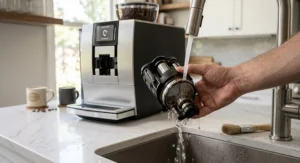
6. Jura ENA 8 — most compact luxury super automatic
Jura built the ENA 8 to answer a specific complaint about premium machines: they’re often huge. This one keeps a genuinely small footprint while still wearing the brand’s signature polish.
The water reservoir and bean hopper are sized similarly to Jura’s entry-level A1, yet the machine still packs in a serious feature set — an expansive menu of 15 one-touch beverages controlled through a highly intuitive touchscreen display, following a 2024 redesign that added five extra pre-programmed drinks over the prior generation.
What most buyers overlook about compact premium machines is that shrinking the footprint usually means shrinking capacity too, and that tradeoff is real here — you’ll be refilling water and beans more often than you would with a Jura E8 or a Dinamica Plus. On the other hand, reviewers note that for a “great mid-level machine,” the water tank design itself carries genuine wow factor, and the drink range spans ristretto, espresso, double espresso, long coffee, cappuccino, macchiato, latte macchiato, and flat white. It’s worth noting the ENA 8 sits well under Jura’s flagship Z10 while stepping up meaningfully from entry-level espresso-only models like the ENA 4, positioning it as the brand’s genuine mid-tier sweet spot for small kitchens.
Pros:
- ✅ Compact footprint without sacrificing a real touchscreen interface
- ✅ 15 one-touch beverages after the 2024 menu expansion
- ✅ Genuine design “wow factor” per multiple reviewers
Cons:
- ❌ Smaller water and bean capacity means more frequent refills
- ❌ Costs several hundred dollars more than comparable-capacity mid-range machines
Expect a $1,600–$1,800 range. For a kitchen where counter space is precious but you still want genuine Jura engineering, this is the pick.
7. Jura E8 — the espresso purist’s premium choice
At the top of this list sits the Jura E8, and after comparing it against everything else here, the case for it comes down to one word reviewers use over and over: refinement.
The E8 offers 17 one-touch recipes and represents Jura’s positioning above the ENA 8 in both capacity and cup quality. One reviewer who directly compared it against a competing premium Italian machine noted that despite the higher price, the E8 represents very good value for money given how premium the machine actually is, which is a notable admission from someone who reviews dozens of machines a year.
Reviewers consistently note that Jura’s espresso extraction at this tier edges out the Italian competition on nuance and crema consistency, though the gap narrows considerably against something like the Gaggia Accademia for milk-heavy drinks specifically. What the spec sheet won’t tell you is that the E8’s real advantage isn’t any single number — it’s consistency across hundreds of consecutive shots, which is exactly what you’re paying for if you’ve already lived with a cheaper super automatic espresso machine and noticed drink-to-drink variation creeping in over time.
Pros:
- ✅ 17 one-touch recipes with class-leading consistency
- ✅ Reviewers rate espresso nuance above competing premium Italian machines
- ✅ Backed by Jura’s reputation for long-term mechanical reliability
Cons:
- ❌ Highest price point on this list by a significant margin
- ❌ Diminishing returns for buyers who mostly drink milk-forward drinks
Pricing runs in the $2,700–$2,900 range depending on finish and included accessories. This is the machine for someone who has already decided coffee is a genuine daily ritual worth investing in.
Setting Up and Maintaining Your Machine the Right Way
Every super automatic espresso machine on this list will disappoint you in the first month if you skip a few basics — and every single complaint I read that blamed the machine actually traced back to setup or maintenance, not hardware.
Start with water. Whatever machine you buy, run the manufacturer’s priming cycle in full before your first real drink; you’ll typically need to make several cups just to clear factory dust and let the circuit fill and adjust to your beans, and yes, that coffee gets dumped. Skipping this step is the single most common reason first-week espresso tastes off. Bean freshness matters just as much as the priming cycle — the National Coffee Association notes that roasted beans are at their best within a few weeks of roasting, which is worth keeping in mind no matter which machine you buy.
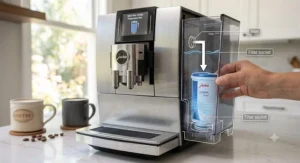
Descale on schedule, not “when it seems slow.” Hard water accelerates mineral buildup in the boiler and brew group, and most machines will warn you but plenty of owners ignore the light for weeks. A monthly rinse-and-descale routine, using the manufacturer’s own solution rather than generic vinegar, keeps flow rate and temperature consistent. For milk systems, rinse daily and do a deeper clean weekly — this matters even more for tube-based frothers than for two-part systems like LatteGo, since residue hides in channels you can’t see.
The most common first-30-days mistake is grind adjustment panic. New owners taste a slightly off shot and immediately crank the grind dial multiple notches, when one click at a time and a few test shots is the right approach — burr grinders are sensitive, and overcorrecting turns a minor issue into a genuinely bad one. Give any adjustment three to four shots before judging it.
✨ Ready to stop guessing and start brewing? Check current pricing on any machine above before availability shifts.
Real-World Scenarios: Matching a Machine to Your Actual Life
Specs are one thing; matching them to how you actually live is another. Here are three profiles pulled from common buyer patterns.
If you’re a solo apartment dweller who drinks two straight espressos a day and occasionally wants a cappuccino on weekends, the Gaggia Brera solves this cheaply — you’re not paying for a milk system you’ll barely touch, and manual frothing twice a week is no burden. If you’re part of a two-person household where one of you drinks black coffee and the other wants a latte every single morning without waiting, the Philips 3200 LatteGo or De’Longhi Magnifica Evo both fit — fast milk cleanup and one-touch simplicity matter more here than menu depth.
If you’re hosting frequently or running a small home office where four or five people want different drinks on demand, the De’Longhi Dinamica Plus or Saeco Xelsis earn their higher price through saved profiles and wider recipe libraries — nobody has to remember anyone else’s preferred settings. And if coffee is simply a non-negotiable daily ritual and budget genuinely isn’t the deciding factor, the Jura ENA 8 or Jura E8 deliver the consistency and refinement that a decade of daily use will actually reward.
Common Problems, Solved
Problem: Espresso tastes weak or watery. This is almost always a stale bean or grind-size issue, not a machine defect — beans lose meaningful flavor within two to three weeks of opening the bag, and a coarser-than-needed grind under-extracts the shot. Fix: buy smaller bags more often, and adjust grind one notch finer.
Problem: Milk foam is inconsistent day to day. Milk temperature and fat content both affect foam quality more than most people expect. Fix: use cold milk straight from the fridge and stick to one milk type, since switching between dairy and oat can shift results noticeably even on machines like the De’Longhi Magnifica Evo that handle both reasonably well.
Problem: The machine seems louder than expected. Grinder noise varies significantly by burr type and machine, and it’s rarely a fault. Fix: if noise is a dealbreaker, prioritize machines reviewers specifically praise for quieter grinding, and expect ceramic burr models like the Philips 3200 LatteGo to trend louder during the grind cycle than some steel-burr competitors, despite the ceramic’s durability advantage.
Problem: Descaling seems intimidating. It genuinely isn’t, once you’ve done it once. Fix: follow the on-screen or manual prompts exactly, use the branded descaling solution rather than substitutes, and set a recurring phone reminder so it never becomes a “someday” task.
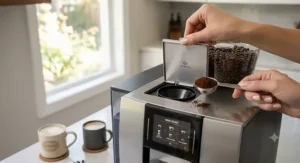
How to Choose a Super Automatic Espresso Machine
Cutting through marketing language, here’s the actual decision framework that matters:
- Decide your drink profile first. If you drink straight espresso 90% of the time, prioritize grinder quality over milk-system sophistication — a machine like the Gaggia Brera covers this fine.
- Count your household’s daily drinkers. More than two regular users pushes you toward saved-profile machines like the De’Longhi Dinamica Plus or Saeco Xelsis.
- Weigh cleanup tolerance honestly. If daily milk-system cleaning is a dealbreaker, a tube-free design like LatteGo on the Philips 3200 LatteGo removes real friction.
- Check counter space before falling for a spec sheet. Compact bodies like the Jura ENA 8 trade tank capacity for footprint — know which one you actually need.
- Set a real budget band, not a single number. Decide whether you’re comparing $400–$600 entry machines or $1,000+ mid-range and premium options; comparing across tiers muddies the decision.
- Read aggregated reviews for your specific model, not the brand generally. Brand reputation is a decent starting signal, but model-specific issues (small water tanks, loud grinders) vary meaningfully within a lineup.
- Factor in long-term maintenance cost, not just sticker price — covered in detail below.
Fully Automatic vs Semi-Automatic Espresso Machines: What’s the Real Difference?
The terminology confuses a lot of first-time buyers, so let’s be precise. A fully automatic espresso machine, which is essentially synonymous with “super automatic” in most US retail listings, grinds, doses, tamps, brews, and can froth milk without any manual steps. A semi-automatic machine grinds and doses for you at best, but you control extraction timing and manually operate a steam wand for milk.
Here’s what actually matters in that distinction: semi-automatic machines put a genuine skill ceiling in your hands — a well-practiced barista can extract more nuance from a semi-auto than any super automatic espresso machine currently produces. But that ceiling requires practice, and most home users never climb high enough on it to beat what a good fully automatic espresso machine delivers on autopilot. If you’ve never manually steamed milk and have no interest in learning, none of that theoretical ceiling matters. The Philips 3200 Series offers the same fully automatic, adjustable settings, and milk-frothing features that make this category valuable in the first place — zero technique required, every single time.
Bean to Cup Espresso Machine vs Pod Machines: The Real Cost Comparison
This comparison comes up constantly, and the math genuinely favors bean-based machines over the long run for anyone drinking more than one cup a day. A bean to cup coffee maker uses whole beans priced roughly $12–$18 per pound, which typically yields 30-plus espresso shots — landing well under $1 per cup even before accounting for bulk discounts. Pod-based machines run closer to $0.50–$1.25 per pod for a single shot’s worth of coffee, with premium pod lines pushing higher, and you’re locked into whichever pod ecosystem you bought into.
The upfront cost gap is real, though. A bean to cup espresso machine costs meaningfully more than most pod machines at purchase, so the breakeven point depends entirely on your consumption. For a household drinking three or more cups daily, most of the machines on this list pay back their price premium over pod machines within twelve to twenty-four months, purely on per-cup cost — and that’s before counting the freshness and customization advantages whole beans offer over pre-portioned pods.
⚡ Curious which pick fits your consumption level? Compare the full spec table above before deciding.
Common Mistakes When Buying a Super Automatic Espresso Machine
The most expensive mistake is buying based on drink-count marketing alone. A machine boasting “20 specialty drinks” often just remixes the same three base recipes with different milk ratios — actual differentiation matters more than raw numbers, and reviewers who dig past marketing copy consistently make this point.
The second common mistake is ignoring bean hopper and water tank capacity relative to household size, which is exactly the tradeoff the compact Jura ENA 8 makes explicit. A gorgeous machine that needs refilling twice a day becomes a chore fast. The third mistake is underestimating maintenance commitment — buyers who skip descaling schedules see performance degrade within months regardless of how much they spent upfront, which flattens the gap between a $500 machine and a $2,800 one faster than most people expect.
What to Expect: Real-World Performance
On paper, spec sheets promise consistency. In practice, here’s the lived experience: entry-level machines like the Gaggia Brera deliver genuinely good espresso but require you to babysit milk manually, which adds thirty to sixty seconds per milk drink. Mid-range machines like the De’Longhi Magnifica Evo and De’Longhi Dinamica Plus cut that time to near zero but introduce a slightly longer warm-up cycle, generally under a minute. Premium machines like the Jura E8 shave inconsistency between shot one and shot fifty of the day to a level most drinkers genuinely notice only after they’ve lived with a cheaper machine first.
Noise is the other real-world factor spec sheets undersell. Ceramic grinders, prized for edge retention, often run slightly louder than steel conical burrs during the actual grind cycle — a real tradeoff on machines like the Philips 3200 LatteGo, worth factoring in if your kitchen is near a bedroom.
Best Automatic Espresso Machine for Home Use by Household Size
Solo households: prioritize compact footprint and low maintenance frequency over drink variety — the Gaggia Brera or Jura ENA 8 both fit, at opposite price points. Couples: split preferences (one espresso drinker, one milk drinker) point toward the Philips 3200 LatteGo or De’Longhi Magnifica Evo for fast, low-fuss mornings. Families of three-plus or shared home offices: saved user profiles stop becoming a nice-to-have and start becoming essential — the De’Longhi Dinamica Plus and Saeco Xelsis both support multiple profiles specifically for this reason.
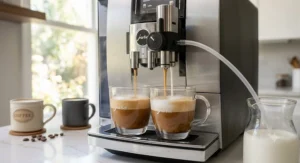
One-Touch Convenience: What “One-Touch” Actually Means
“One-touch” gets thrown around loosely in marketing, so here’s the honest breakdown. A genuine one-touch espresso machine completes an entire drink — grind, dose, brew, and where applicable, milk — from a single button press, with zero additional steps. Every machine on this list qualifies for at least straight espresso. Where they differ is milk drinks: machines with automatic carafes like the De’Longhi Magnifica Evo‘s LatteCrema system genuinely deliver one-touch lattes, while wand-based machines like the Gaggia Brera require you to manually position and froth, meaning they’re one-touch for espresso only, not for milk drinks.
This distinction matters more than most buying guides admit. If “one-touch” is the actual deciding factor for you, confirm it applies to every drink type you’ll regularly order, not just the espresso base.
Automatic Milk Frother: The Feature That Divides Buyers
An automatic milk frother is arguably the single biggest price driver on this list once you get past entry-level machines, and opinions on whether it’s worth it are genuinely split. The case for it: tube-free designs like LatteGo on the Philips 3200 LatteGo eliminate the cleaning friction that makes people abandon manual frothing within weeks. The case against it: reviewers consistently note automatic systems, even good ones, rarely match the microfoam texture a practiced barista gets from a manual steam wand — this machine doesn’t froth milk to the same standard as high-ranking manual machines, and that pattern holds across most automated systems, not just one brand.
Here’s the honest framing: if milk texture is your top priority and you’re willing to learn technique, a manual wand on a machine like the Gaggia Brera might outperform a mediocre automatic system. If convenience and consistency matter more than peak microfoam, an automatic milk frother on any of the mid-range or premium picks here is the right call.
Long-Term Cost & Maintenance: The Real Total Cost of Ownership
Sticker price is only the entry fee. Over five years, expect to spend $150–$300 on descaling solution, water filters, and replacement gaskets across any machine on this list, plus roughly $60–$120 per year on beans for a moderate two-cup-a-day household. Premium machines like the Jura E8 carry a genuine reliability edge that can offset their higher upfront cost — one service center reported a previous-generation Gaggia unit still functioning after nearly 30,000 brewing cycles, roughly two decades of daily use, which is the kind of longevity data that changes the total-cost math meaningfully.
Budget machines aren’t necessarily false economy, though. A $450 Gaggia Brera replaced every four to five years costs roughly the same over a decade as one $1,700 Jura ENA 8 that lasts the full period — the right answer depends entirely on how much you value not thinking about it versus paying less upfront.
Features That Actually Matter (And Those That Don’t)
Matters: burr grinder quality (ceramic or steel, both fine if well-reviewed), milk system design if you drink milk drinks daily, and water tank/bean hopper capacity relative to your household. Doesn’t matter nearly as much as marketing suggests: raw drink-count claims, app connectivity for solo users, and cosmetic touchscreen upgrades that don’t change extraction quality. Ceramic flat burr grinders, genuinely rare at budget price points, are a real differentiator worth paying attention to — that’s a spec worth prioritizing over a longer drinks menu with limited real-world variety.
Safety and Maintenance Compliance Basics
All machines on this list are UL-listed for the US market and include standard electrical safety certifications, but a few practical points matter regardless of which you buy. Never descale with anything other than the manufacturer-approved solution — generic descalers can damage internal seals not designed for them. Keep the machine on a dedicated outlet where possible, since shared circuits with other high-draw kitchen appliances can trip breakers during the heating cycle. For anyone wanting deeper detail on coffee’s broader supply chain and quality standards, the Specialty Coffee Association publishes widely referenced sourcing and quality guidelines that inform how manufacturers grade the beans recommended for these machines.
Frequently Asked Questions
❓ Is a super automatic espresso machine worth it for home use?
❓ How long do super automatic espresso machines typically last?
❓ Do I need to buy special coffee beans for a bean to cup espresso machine?
❓ Are super automatic espresso machine reviews reliable for predicting real-world performance?
❓ Can an automatic milk frother handle plant-based milk?
Conclusion
Choosing the right super automatic espresso machine really comes down to being honest with yourself about three things: how much milk you drink, how many people share the machine, and how much daily maintenance you’re genuinely willing to do. The Gaggia Brera and Philips 3200 LatteGo prove you don’t need to spend a fortune to get real bean-to-cup quality, while the De’Longhi Magnifica Evo and De’Longhi Dinamica Plus sit comfortably in the range where most households find their actual sweet spot. If you’ve decided coffee is a genuine daily ritual worth investing in long-term, the Saeco Xelsis, Jura ENA 8, and Jura E8 all deliver a level of consistency and refinement that cheaper machines simply can’t match, backed by real longevity data from owners who’ve put them through years of daily use.
None of these seven machines is objectively “the best” — they’re each the best at solving a specific version of the same morning problem. Match the machine to your actual routine, not to the spec sheet with the most impressive-sounding number, and you’ll end up genuinely happy with whichever one comes home with you.
Recommended for You
- High End Home Espresso Machine: 7 Flagship Picks Worth It in 2026
- Breville Dual Boiler Review 2026: 7 Machines Compared Honestly
- 7 Best Espresso Machines Under 1000 Dollars in 2026
Disclaimer: This article contains affiliate links. As an Amazon Associate, I earn from qualifying purchases. If you purchase products through these links, we may earn a small commission at no additional cost to you.
✨ Found this helpful? Share it with your friends! 💬🤗
