In This Article
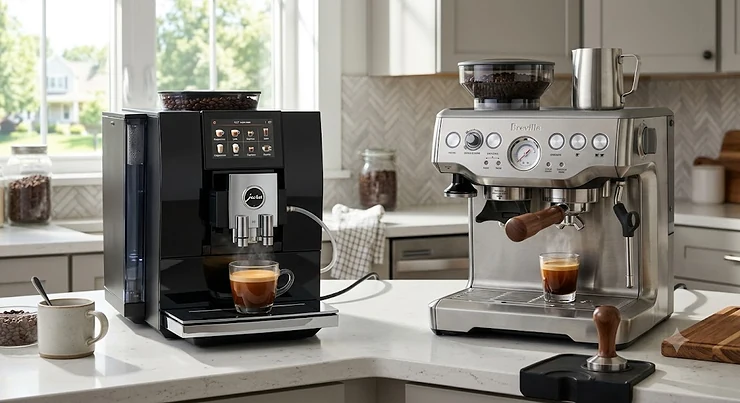
Here’s a scene that plays out in kitchens every single morning: someone stands in front of a gleaming espresso machine, thumb hovering over a button, wondering if they made the right call. That’s the emotional core of the super automatic vs semi automatic espresso machine debate, and it’s messier than most buying guides let on. A super automatic espresso machine is a bean-to-cup appliance that grinds, doses, tamps, brews, and often froths milk with a single touch, while a semi automatic machine hands you the portafilter and asks you to grind, tamp, and pull the shot yourself. Neither is objectively “better” — they’re built for different relationships with coffee.
I’ve spent years poking around this category, comparing spec sheets against real owner feedback, and one thing keeps surfacing: people don’t regret the machine’s price. They regret buying the wrong philosophy. Someone who wants a five-second latte before a 7 a.m. meeting has completely different needs than someone who finds tamping meditative on a Saturday morning. This guide walks through seven real machines — budget, mid-range, and premium, spanning both camps — with honest analysis of what the spec sheets actually mean once the machine is sitting on your counter. According to the Specialty Coffee Association’s brewing standards, proper espresso requires roughly 9 bars of pressure and a 20-30 second extraction window — a benchmark every machine on this list is measured against.
Quick Comparison Table
| Machine | Type | Price Range | Best For |
|---|---|---|---|
| Breville Bambino Plus | Semi Automatic | Around $400-450 | First-time semi auto buyers |
| Gaggia Classic Pro | Semi Automatic | Around $450-500 | Aspiring home baristas on a budget |
| Rancilio Silvia | Semi Automatic | $700-900 range | Long-term prosumer reliability |
| Breville Barista Express | Semi Automatic | $700-750 range | All-in-one grinder + machine convenience |
| De’Longhi Magnifica Evo | Super Automatic | $700-900 range | Busy households wanting one-touch coffee |
| Philips 3200 Series LatteGo | Super Automatic | $800-900 range | Easiest milk system to clean |
| Jura E8 | Super Automatic | $2,000-2,300 range | Premium buyers who want café-level polish |
Looking at this table, the split is obvious the second you scan it top to bottom: everything under $750 in the semi automatic column rewards patience with a much lower entry price, while the super automatic side charges a premium for skipping the learning curve entirely. The Rancilio Silvia and Breville Barista Express sit in a similar price bracket to the super automatic machines but deliver control instead of convenience — that’s the actual trade you’re making, not just a spec difference. Notice, too, that the jump from the Philips 3200 Series LatteGo to the Jura E8 isn’t small; that gap buys you a more advanced grinder and app-level polish, and whether it’s worth it depends entirely on how much you drink milk-based drinks daily.
💬 Bookmark this comparison — you’ll want to reference it again once you hit the product breakdowns below.
Top 7 Super Automatic and Semi Automatic Espresso Machines: Expert Analysis
Picking seven machines for a list like this always means leaving good options on the table, but these seven cover the real decision points buyers actually face: how much control do you want, how much counter space do you have, and how much are you willing to spend to remove effort from your morning.
1. Breville Bambino Plus — fastest heat-up in its class
The Breville Bambino Plus turns on and is ready to pull a shot in about 3 seconds flat, which sounds like a gimmick until you’re the person standing there at 6:45 a.m. Its 54mm portafilter is genuinely commercial-sized rather than a shrunken novelty basket, and it holds a stable 9 bars of pressure through the shot — right in the SCA’s recommended pressure window for proper extraction. Digital PID temperature control keeps water heat consistent shot after shot, which matters more than most beginners realize; wildly swinging temperatures are the silent culprit behind sour or bitter shots that seem to come out of nowhere.
Based on the spec comparison against other sub-$500 semi automatics, this is the strongest “first real espresso machine” on the market precisely because it doesn’t cut corners on the parts that affect flavor — pressure and temperature — while keeping the learning curve manageable with an automatic steam wand. Reviewers consistently report that the auto-frothing feature produces surprisingly good microfoam without requiring steam-wand practice, which is unusual at this price point. The most common complaint in aggregated review sentiment involves the compact 1.9-liter water tank needing frequent refills for households that pull more than four or five shots a day.
Pros:
- ✅ Ready to brew in about 3 seconds — no warmup wait
- ✅ Commercial 54mm portafilter for real crema development
- ✅ Automatic milk frothing lowers the beginner learning curve
Cons:
- ❌ Small water tank needs refilling often in busy households
- ❌ No built-in grinder, so you’ll need a separate one
Priced around $400-450, the Breville Bambino Plus is arguably the best value entry point into real semi automatic espresso — you’re paying for genuine 9-bar extraction and PID stability, not brand markup.
2. Gaggia Classic Pro — commercial-grade build at a hobbyist price
The Gaggia Classic Pro is built in Italy around a commercial-style 58mm portafilter and stainless steel housing, and that’s not just cosmetic bragging — the larger basket diameter distributes water more evenly across the coffee puck, which is one reason prosumer baristas gravitate toward 58mm gear when they eventually upgrade. A 3-way solenoid valve releases pressure from the puck the instant the shot finishes, which prevents drips and makes cleanup meaningfully easier than valve-less budget machines.
What most buyers overlook about this model is that its simplicity is the whole point: there’s no digital display, no automated recipes, just a pressurized boiler and a switch. That’s exactly why the espresso community keeps recommending it as the machine you grow into rather than out of — mods like PID kits and bottomless portafilters exist because the underlying hardware is worth upgrading around. Reviewers consistently praise the steam power for microfoam, and the aggregated sentiment across owner forums points to a machine that, with basic descaling discipline, keeps running for a decade or more.
Pros:
- ✅ Commercial 58mm portafilter for even extraction
- ✅ 3-way solenoid valve simplifies puck removal
- ✅ Strong community support for mods and upgrades
Cons:
- ❌ No digital temperature readout out of the box
- ❌ Steam wand technique takes real practice to master
At around $450-500, the Gaggia Classic Pro delivers a better long-term value proposition than machines twice its price, provided you’re willing to learn the ropes.
3. Rancilio Silvia — the twenty-year icon of home espresso
Rancilio has built the Rancilio Silvia for more than two decades with barely a redesign, and that consistency alone tells you something about the underlying engineering. Its 12-ounce brass boiler retains heat far better than the thinner boilers found in cheaper machines, which translates to more stable shot-to-shot temperature once it’s properly warmed up — though that warmup itself can run 15-20 minutes for baristas chasing precision. The stainless steel case and commercial-grade internals mirror what you’d find on café equipment costing several times as much.
Here’s what the spec sheet won’t tell you, but seasoned owners note constantly: the stock thermostat causes noticeable temperature swings between shots, which is why a huge share of Silvia owners eventually install a PID controller as a first upgrade. That’s not a flaw so much as a feature of buying into a machine with two decades of aftermarket support behind it. Aggregated review sentiment is remarkably consistent on durability — people report Silvias still running after 10+ years of daily use, often after a rebuild kit or two.
Pros:
- ✅ Brass boiler holds heat exceptionally well
- ✅ Two decades of proven durability and parts support
- ✅ Commercial-grade steam wand for serious milk texturing
Cons:
- ❌ Long warmup time before the temperature stabilizes
- ❌ Stock thermostat causes shot-to-shot temperature swings
In the $700-900 range, the Rancilio Silvia is less a purchase and more an entry ticket into the modding hobby — buy it expecting to tinker, and it rewards you for years.
4. Breville Barista Express — the all-in-one grinder-and-machine combo
The Breville Barista Express solves the single biggest headache of semi automatic ownership: needing a separate grinder. Its built-in conical burr grinder doses directly into the portafilter, and the integrated pressure gauge gives visual feedback most machines in this range simply don’t offer — you can actually watch whether your grind is too fine (needle pinned high) or too coarse (barely moving) instead of guessing from taste alone.
Based on the spec comparison, the real advantage here is workflow, not raw power; the pump still regulates to the same 9-bar standard as everything else on this list, but having grinder and machine in one footprint means fewer moving pieces to dial in and less counter real estate consumed. What most buyers overlook is that the built-in grinder, while genuinely capable, isn’t quite in the same league as a dedicated single-dose grinder — reviewers consistently note it performs well for everyday espresso but hits a ceiling if you’re chasing competition-level consistency. The pressure gauge earns near-universal praise in aggregated review sentiment as the single best beginner training tool on any machine in this price class.
Pros:
- ✅ Built-in grinder removes a whole separate purchase
- ✅ Visual pressure gauge teaches proper dialing-in
- ✅ Compact footprint for the features packed in
Cons:
- ❌ Grinder quality plateaus below dedicated prosumer units
- ❌ More parts to clean than a grinder-less machine
Around $700-750, the Breville Barista Express is the most sensible all-in-one for someone who wants to learn real technique without assembling a multi-box setup.
5. De’Longhi Magnifica Evo — the super automatic value benchmark
The De’Longhi Magnifica Evo built its reputation as the machine most reviewers point to when someone asks for a first super automatic without a four-figure price tag. Its built-in grinder and one-touch recipe buttons handle everything from ristretto to a full milk-based drink, and the LatteCrema-style milk system (depending on configuration) automates frothing to a consistency that would take a beginner months to hand-steam reliably.
Here’s the honest trade-off: convenience at this price means a simpler grinder than what you’d find in a Jura, so espresso quality is genuinely good rather than exceptional — reviewers consistently describe the shots as “café-adjacent” rather than “matches my favorite local roastery.” What most buyers overlook is how much daily friction this removes; there’s no dialing in, no tamping, no cleaning a portafilter after every cup. Aggregated review sentiment flags the automatic cleaning cycles as a genuine time-saver, with the most common complaint being that descaling reminders can feel frequent in hard-water regions.
Pros:
- ✅ One-touch recipes cover espresso through lattes
- ✅ Automatic cleaning cycles reduce daily maintenance
- ✅ Strong value against pricier super automatic rivals
Cons:
- ❌ Grinder ceiling means shots plateau below premium machines
- ❌ Descaling frequency increases noticeably with hard water
At roughly $700-900, the De’Longhi Magnifica Evo earns its reputation as the value benchmark for anyone entering the super automatic side of this debate.
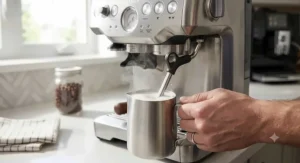
6. Philips 3200 Series LatteGo — the easiest milk system to actually clean
The standout feature on the Philips 3200 Series LatteGo is right there in the name: the LatteGo milk system uses just two parts and no internal tubing, which means it rinses clean under a tap in under a minute instead of requiring the multi-piece disassembly that intimidates a lot of first-time super automatic owners. A ceramic burr grinder handles bean grinding, and ceramic burrs tend to run cooler and last longer than steel equivalents, which matters over years of daily use.
What most buyers overlook about the LatteGo system specifically is that “easy to clean” isn’t just a convenience claim — milk residue is one of the top causes of off-flavors and hygiene complaints in bean-to-cup machines, so a system that’s actually likely to get cleaned every single day produces measurably better milk drinks over time than a fussier system that gets neglected. Reviewers consistently rank this machine as the most beginner-friendly super automatic for households that drink a lot of cappuccinos and lattes, while noting the specialty drink menu is narrower than pricier rivals.
Pros:
- ✅ LatteGo milk system cleans in under a minute
- ✅ Ceramic grinder burrs resist wear over years of use
- ✅ Compact, straightforward control layout
Cons:
- ❌ Fewer specialty drink presets than premium competitors
- ❌ Espresso strength customization is more limited
In the $800-900 range, the Philips 3200 Series LatteGo wins on the metric that actually determines long-term satisfaction: whether you’ll keep the milk system clean without dreading it.
7. Jura E8 — the premium benchmark for super automatic espresso
The Jura E8 uses Jura’s Pulse Extraction Process, which pulses water through the grounds in short bursts rather than one continuous stream — on paper this means better saturation of the coffee bed, and in practice reviewers consistently describe noticeably richer crema than typical single-pass super automatics produce. Its Professional Aroma Grinder is a genuine step up in grind consistency compared to the grinders in the Magnifica Evo or Philips 3200, and the touchscreen interface handles 15+ specialty drinks with per-drink customization saved to user profiles.
Based on the spec comparison against every other machine on this list, the Jura E8 is the closest a super automatic gets to matching a well-dialed semi automatic in cup quality — which is precisely the premium you’re paying for. Reviewers who’ve owned both categories consistently note that this is the rare super automatic that satisfied coffee enthusiasts, not just convenience-seekers. The most common critique in aggregated feedback is straightforward: at $2,000-2,300, you’re paying a substantial premium for that last 10-15% of quality improvement over the mid-range machines above.
Pros:
- ✅ Pulse Extraction Process improves crema and richness
- ✅ Professional-grade grinder outperforms mid-range rivals
- ✅ 15+ customizable specialty drinks with saved profiles
Cons:
- ❌ Substantial price premium over mid-range super automatics
- ❌ Overkill for buyers who only drink straight espresso
For buyers who’ve decided convenience matters but refuse to compromise on quality, the Jura E8, at $2,000-2,300, is the machine that closes the gap between “good enough” and “genuinely excellent.”
Fully Automatic vs Semi Automatic Espresso: Which Is Actually Better?
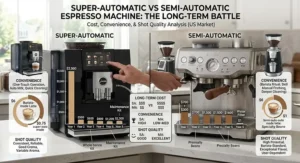
The honest answer to fully automatic vs semi automatic espresso which is better is: it depends what “better” is measuring. If better means faster mornings, fewer decisions, and consistent results without practice, super automatics win decisively — machines like the De’Longhi Magnifica Evo and Jura E8 remove nearly every variable a human could mess up. If better means flavor ceiling, machines like the Rancilio Silvia and Gaggia Classic Pro give a skilled operator more room to push extraction toward its absolute best, because a person adjusting grind size shot-by-shot can react to humidity, bean freshness, and roast date in ways a fixed algorithm can’t.
This is really the convenience vs control espresso question wearing a different hat. Convenience means the machine absorbs the decisions; control means you absorb them, and get to correct mistakes in real time. Neither position is wrong — plenty of professional baristas would tell you a great semi automatic in untrained hands makes worse coffee than a good super automatic, and that’s true. The variable that actually decides “better” for your household is how much you want espresso-making itself to be part of your daily ritual versus a five-second interruption before you get on with your day.
Super Automatic and Semi Automatic Espresso: Pros and Cons Compared
Buyers researching super automatic espresso pros and cons and semi automatic espresso pros and cons separately often end up more confused, not less, because most lists just repeat spec sheets. Here’s the honest, side-by-side version grounded in how these categories actually perform once you own one.
Super Automatic Espresso: Pros and Cons
Pros:
- ✅ Push-button consistency without any technique required
- ✅ Built-in grinders remove a separate equipment purchase
- ✅ Automated cleaning cycles reduce daily maintenance effort
Cons:
- ❌ Higher upfront cost for comparable extraction quality
- ❌ Repairs on internal components can be pricier and less DIY-friendly
Semi Automatic Espresso: Pros and Cons
Pros:
- ✅ Lower entry price for genuinely good espresso hardware
- ✅ Full control over grind, dose, and extraction time
- ✅ Skills improve over time, and so does the coffee
Cons:
- ❌ Real learning curve before shots taste consistently good
- ❌ Requires a separate grinder unless you buy an all-in-one model
Reading these two lists side by side, the pattern is clear: super automatics trade money for time and forgiveness, while semi automatics trade time and effort for a lower price and a genuinely higher performance ceiling in skilled hands.
Espresso Machine Buying Guide: How to Choose
What is a super automatic vs semi automatic espresso machine, in plain terms: one handles the entire brewing process for you, the other hands you the controls. Working through an espresso machine buying guide gets much simpler once you rank these factors in order of what actually matters to you:
- Decide your involvement level first. If you resent extra morning steps, lean super automatic. If you’d enjoy the process, lean semi automatic.
- Set a realistic budget band. Genuine 9-bar extraction starts around $350-400; below that, pressure and temperature stability both suffer.
- Count your milk drinks per week. Heavy latte and cappuccino drinkers benefit enormously from an easy-clean system like LatteGo.
- Check your counter space and plumbing needs. Bean-to-cup super automatics tend to be larger and heavier than compact semi automatics.
- Factor in maintenance tolerance. Semi automatics need daily backflushing habits; super automatics need bean hopper and milk-system upkeep.
- Think five years out, not five months. A machine like the Rancilio Silvia or Gaggia Classic Pro is built to be repaired and modded for a decade.
- Match the grinder to your ambitions. A weak grinder caps espresso quality no matter how good the brewing unit is — this is true on both sides of the aisle.
✨ Ready to Compare Real Prices?
🔍 Check current availability on any of the seven machines above before you commit — pricing and stock shift often, and the machine matching your workflow is worth confirming today!
Common Mistakes When Buying an Espresso Machine
The most expensive mistake buyers make isn’t overspending — it’s mismatching machine type to actual behavior. Someone buys a semi automatic because reviews call it “better,” then never learns to dial in the grind and ends up with sour, inconsistent shots for months. The opposite mistake happens just as often: someone drops premium money on a super automatic like the Jura E8 while only ever drinking a single straight shot a day, paying for milk-system sophistication they’ll never touch.
A second common mistake is ignoring the grinder entirely. Reviewers consistently note that pairing a strong brewing unit with a mediocre grinder — whether that’s a cheap blade grinder next to a Breville Bambino Plus or an underpowered internal grinder in a budget super automatic — caps flavor quality no matter how good the rest of the machine is. A third mistake is underestimating maintenance commitment; skipping regular descaling and backflushing shortens the lifespan of both categories, and the Specialty Coffee Association has documented how pressure and temperature control directly shape the resulting cup — neglect either one and no amount of good beans will save the shot.
Home Barista Skill Level: Matching the Machine to Your Experience
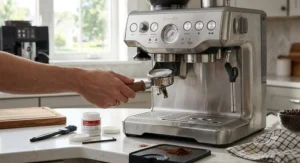
Your home barista skill level should weigh almost as heavily as your budget when picking between categories. A total beginner who’s never tamped a puck will get frustrated fast with the Rancilio Silvia‘s temperature swings and steep steam-wand learning curve — that machine rewards someone who already has basic reps in. Meanwhile, an intermediate hobbyist who’s outgrown a starter kit but isn’t ready for a $2,000 investment fits neatly into the Gaggia Classic Pro or Breville Barista Express, both of which offer genuine room to grow technique without punishing early mistakes too harshly.
At the true beginner end, someone who’s never operated any espresso equipment benefits most from the Breville Bambino Plus, because its automatic milk frothing and PID stability remove two of the hardest skills to learn simultaneously (steaming milk and controlling temperature) while still teaching proper tamping and dosing. On the opposite end, someone who values consistency over craft — regardless of actual barista skill — is better served skipping the learning curve altogether with a super automatic like the De’Longhi Magnifica Evo or Philips 3200 Series LatteGo, both of which perform identically whether the person operating them has ten years of barista experience or zero.
What to Expect: Real-World Performance
Spec sheets rarely translate cleanly into lived experience, so here’s the honest version of what happens after the first few weeks of ownership. With a semi automatic like the Breville Barista Express, the first ten to fifteen shots usually taste inconsistent — too sour, too bitter, or just watery — while you learn to read the pressure gauge and adjust grind size accordingly. By week two or three, most owners report a noticeable jump in quality as muscle memory kicks in for tamping pressure and extraction timing.
With a super automatic like the Jura E8 or De’Longhi Magnifica Evo, day one and day sixty taste nearly identical, because the whole point is removing variability. What reviewers consistently describe as the biggest surprise is how quickly the “magic” of one-touch espresso becomes invisible — you stop noticing the convenience and just experience it as normal, which is exactly the outcome super automatic buyers are paying for. The real-world performance gap between categories narrows considerably once a semi automatic owner has three or four weeks of practice in, but it never fully closes without continued attention to technique.
Long-Term Cost & Maintenance
Total cost of ownership tells a different story than sticker price alone. The Gaggia Classic Pro and Rancilio Silvia both have documented lifespans stretching well past a decade thanks to serviceable brass and stainless components, meaning their effective cost-per-year can undercut a super automatic that needs internal grinder or boiler replacement sooner. Super automatics like the De’Longhi Magnifica Evo typically run 5-7 years before major components need attention, and internal repairs tend to cost more since fewer parts are user-serviceable compared to a simple semi automatic setup.
Ongoing costs also diverge in kind rather than just amount. Semi automatic owners spend money on burr grinders, descaling solution, and eventually replacement gaskets or steam tips — all relatively small, spread-out costs. Super automatic owners spend less time on maintenance but face steeper individual repair bills if the internal grinder or brew unit fails, and the Specialty Coffee Association notes that regular descaling can extend a machine’s working life by 50% or more regardless of which category you own — neglect is the actual long-term cost driver, not the machine type itself.
Practical Usage Guide: Setup, First 30 Days, and Ongoing Maintenance
Getting a new machine right in its first month sets the tone for years of use. For semi automatic machines like the Gaggia Classic Pro or Breville Bambino Plus, run several blank water cycles before the first shot to clear manufacturing residue, then expect to waste a handful of shots dialing in grind size — write down what worked once you find it. Backflush with plain water after each session if your machine has a 3-way valve, and do a full detergent backflush weekly.
For super automatics like the Philips 3200 Series LatteGo or Jura E8, the first-use ritual is different: run the built-in rinse cycle, set your water hardness level correctly in the machine’s menu (this single step massively affects descaling frequency), and resist the urge to skip the very first cleaning cycle prompt even though the machine feels brand new. The single biggest mistake in the first 30 days across both categories is neglecting the grinder hopper — stale beans left sitting for weeks before first use produce noticeably flat espresso no matter how good the machine underneath them is. Descale every 1-3 months depending on your local water hardness, and always use manufacturer-approved descaling solution rather than generic substitutes.
Real-World Scenarios: Which Buyer Should Choose Which Machine
Picture a graduate student living in a studio apartment, budget-conscious, drinking one strong espresso before an 8 a.m. lab shift. That person doesn’t need milk-frothing sophistication or a five-figure upgrade path — the Breville Bambino Plus fits both the counter space and the wallet, delivering real 9-bar shots without demanding a steep learning investment before finals week.
Now picture a household of four where two adults drink lattes daily and mornings are already chaotic with school runs. Cleaning a portafilter and steaming milk by hand simply isn’t happening reliably every day in that environment — the Philips 3200 Series LatteGo or De’Longhi Magnifica Evo removes that friction entirely, and the two-minute cleanup on the LatteGo system means it’s actually likely to get done. Finally, picture a retired engineer who’s always wanted to understand the craft side of coffee, has weekend time to spare, and enjoys tinkering with equipment. The Rancilio Silvia, with its PID-modding culture and two-decade support network, turns that curiosity into an ongoing hobby rather than a one-time purchase.
Should You Buy a Super Auto or Semi Auto? Your Decision Framework
If you value speed and zero learning curve over ultimate flavor control, choose super automatic — models like the De’Longhi Magnifica Evo or Jura E8 solve that need directly. If you’re willing to trade fifteen minutes of morning ritual for a higher flavor ceiling and lower repair costs over a decade, choose semi automatic — the Gaggia Classic Pro and Rancilio Silvia reward that patience. If your household drinks heavy milk-based drinks daily and cleanup fatigue is a real risk, prioritize an easy-clean milk system like LatteGo regardless of category. If your budget caps below $500 but you still want genuine 9-bar extraction, the Breville Bambino Plus and Gaggia Classic Pro both clear that bar without cutting corners on pressure or temperature stability.
✨ Still Torn Between Categories?
🔍 Revisit the comparison table above, match it against your actual morning routine, and pick the machine that fits the life you already live — not the one you imagine you’ll have time for!
Frequently Asked Questions
❓ Is a super automatic espresso machine worth the extra money?
❓ Can a semi automatic espresso machine make coffee as good as a café?
❓ How often do super automatic espresso machines need descaling?
❓ Do semi automatic espresso machines require a separate grinder?
❓ Which is easier to clean, super automatic or semi automatic espresso machines?
Conclusion
There’s no universal winner in the super automatic vs semi automatic espresso machine debate, and honestly, anyone who tells you otherwise is selling something. The Breville Bambino Plus and Gaggia Classic Pro prove real espresso doesn’t require a four-figure budget, provided you’re willing to learn. The Rancilio Silvia and Breville Barista Express sit in the same price range as entry-level super automatics but ask for your attention instead of your patience with a menu button. On the other side, the De’Longhi Magnifica Evo and Philips 3200 Series LatteGo prove convenience doesn’t have to mean bad coffee, and the Jura E8 shows what happens when a super automatic refuses to compromise on quality at all.
The right choice comes down to one honest question: do you want espresso-making to be part of your morning, or do you want it out of the way as fast as possible? Answer that first, and the rest of this guide should make the decision almost automatic — pun very much intended.
✨ Found Your Match?
🔍 Take the next step and check current pricing and availability on the machine that fits your routine — your future mornings will thank you!
Recommended for You
- 7 Best Super Automatic Espresso Machine Picks for 2026
- High End Home Espresso Machine: 7 Flagship Picks Worth It in 2026
- Breville Dual Boiler Review 2026: 7 Machines Compared Honestly
Disclaimer: This article contains affiliate links. As an Amazon Associate, I earn from qualifying purchases. If you purchase products through these links, we may earn a small commission at no additional cost to you.
✨ Found this helpful? Share it with your friends! 💬🤗
