
In This Article
A Nespresso machine vs other pod machine brands comparison weighs one capsule ecosystem (Nespresso’s aluminum Original and Vertuo capsules) against rivals like Keurig K-Cups, Tassimo T Discs, Dolce Gusto capsules, and illy iperEspresso pods. The real question isn’t which machine looks prettiest. It’s which pod system you’re willing to commit to, because the capsule shape, price, and coffee choices come bundled with the machine.

That commitment is not a figure of speech. Single-serve systems aren’t interchangeable, and some are built so the owner buys capsules from one company only. Walk out of a store with a $100 gadget and you’ve quietly signed up for years of capsule purchases.
So here’s the plan. I researched seven real machines across five pod ecosystems, compared their published specs, and read through professional and retailer review patterns. Then I translated every number into what it means on an ordinary weekday counter. You’ll find budget, mid-range, and premium picks, an honest Nespresso vs Keurig comparison, a frank look at brand ecosystem lock-in, and a short list of pod coffee alternatives for anyone who suspects pods aren’t their thing.
A word on method: this article is analysis, not a diary. It’s built on specs, professional reviews, and aggregated owner sentiment, so you won’t find invented hands-on stories. Prices are ranges as of October 2026 and move constantly, so check current pricing before you buy.
Quick Comparison: Nespresso Machine vs Other Pod Machine Brands at a Glance
Before the deep dive, here’s the cheat sheet: seven machines, five pod systems, one table. Read the “Pod System” column first. It matters more than color, size, or even sticker price, because it dictates what you’ll buy every week for years.
| Machine | Pod System | Drink Style | Best For |
|---|---|---|---|
| Nespresso Vertuo Pop+ | Nespresso Vertuo | Mug-size coffee and espresso with thick foam | Small counters, one-touch fans |
| Nespresso Original Essenza Mini | Nespresso Original | Espresso and lungo | Budget espresso, tiny kitchens |
| Keurig K-Elite | K-Cup | Drip-style cups, iced, hot water | Families, variety hunters |
| Keurig K-Café Barista Bar | K-Cup | Coffee plus frothed-milk drinks | Latte lovers on a budget |
| Bosch Tassimo T20 | T Disc | Coffee, tea, cocoa | Households mixing hot drinks |
| Illy Y3.3 iperEspresso | illy iperEspresso | Espresso and lungo | Brand-loyal espresso purists |
| Nescafé Dolce Gusto Genio S Plus | Dolce Gusto | Hot and cold drinks, XL cups | Flavor and cocoa fans |
Looking at the comparison above, Nespresso Vertuo Pop+ and Keurig K-Elite chase the same promise (one button, zero fuss) from opposite directions. The Nespresso route trades flexibility for crema and consistency, while the Keurig route trades a little polish for an enormous pod selection. Nespresso Original Essenza Mini and Illy Y3.3 iperEspresso are the espresso-first pair, and they disappoint anyone secretly craving a 12 oz mug. Bosch Tassimo T20 and Nescafé Dolce Gusto Genio S Plus are the hot-drink generalists, better for the household where someone wants cocoa at 8 p.m. than for people chasing a perfect shot.
One more thing to keep in mind: pod-machine specs are slippery. A “19-bar” espresso pump and a “3-bar” drink brewer are not competing on the same scale, so judge each machine by the drinks it makes, not by the biggest number on the box.
💬 Just one click — help others make better buying decisions too!😊
Top 7 Pod Machines: Nespresso Machine vs Other Pod Machine Brands, Analyzed
Each pick below earns its place through real specs, real review patterns, and a clear answer to “who is this actually for?” Ratings are aggregated and approximate, and prices are ranges only.
1. Nespresso Vertuo Pop+ — compact barcode brewing with big crema
The Nespresso Vertuo Pop+ shrinks Nespresso’s barcode-reading Vertuo system into one of the slimmest footprints in the lineup.
It brews five formats: 5, 8, and 12 oz coffees plus single and double espresso, hot or over ice. Heat-up takes roughly 30 seconds, and the water lives in a removable side tank listed at about 25 oz. In practice, that side tank lets it tuck under a cabinet. The barcode on each capsule tells the machine how fast to spin and how much water to use, so there’s nothing to program. Nespresso’s Centrifusion method spins the capsule at high speed (one published review puts it near 7,000 rpm), which is where the thick foam comes from.
Here’s the honest take: this is the “press, wait, sip” machine of the group, ideal if you value consistency over tinkering. The trade-off is the capsule bill. Vertuo capsules run roughly a dollar to $1.40 apiece depending on size and seller, and only Vertuo capsules fit. One or two cups a day feels fine. Four a day starts to sting.
Reviewers on retailer pages consistently praise the compact size, easy operation, and flavor variety. Common gripes include brewing noise and cups that aren’t as hot as some drinkers like. Nespresso’s own support replies note the temperature can’t be raised manually. Retailer listings sat around 4.4 out of 5 across thousands of ratings at the time of research.
Pros:
- ✅ Slim footprint with side-access water tank
- ✅ Barcode brewing removes all guesswork
- ✅ Hot or iced across five sizes
Cons:
- ❌ Accepts Vertuo capsules only
- ❌ Costs more per cup than Original capsules
Price check: roughly $100-$150 for the machine at the time of research. Verdict: strong value for crema lovers who accept the Vertuo-only rule.

2. Nespresso Original Essenza Mini — cheapest door into Nespresso
The Nespresso Original Essenza Mini is the lowest-cost way into Nespresso’s Original system. It comes in two body styles, one rectangular and one curvier, built by Breville and De’Longhi with matching specs.
You get a 19-bar pump, two programmable buttons (espresso and lungo), a 0.6-liter tank, and a body of about 2.3 kg, plus an auto-off after nine minutes. Nineteen bars is a pump rating, not a trophy. What matters is that it’s enough to push a crema-topped shot out of a sealed capsule. The light body means you can move it around, while the small tank means refilling every few drinks if you’re a heavy user.
My read: the machine itself is almost a loss-leader. The real appeal is Original capsules, which start around 80 cents each and enjoy a bigger third-party selection than Vertuo. The catch is the format. It makes espresso and lungo, not mugs, and there’s no built-in frother. Nespresso sells the Aeroccino separately.
Professional verdicts split usefully. One long-term reviewer prizes its simplicity and price, while another review site scores it a middling 3.75 out of 5 and flags shot-to-shot inconsistency.
Pros:
- ✅ Lowest entry price in Nespresso’s range
- ✅ Original capsules cost less than Vertuo
- ✅ Tiny, light, and quick to heat
Cons:
- ❌ No mug-size coffee or built-in frother
- ❌ Small tank needs frequent refills
Price check: roughly $130-$180 range at the time of research. Verdict: great value if espresso is the goal, mismatched if you want a big mug.
3. Keurig K-Elite — five sizes, strong brew, and a 75 oz tank
The Keurig K-Elite is what happens when Keurig stops compromising and adds every feature a daily drinker actually uses.
It brews 4, 6, 8, 10, and 12 oz cups, adds a strong-brew option and an iced setting, dispenses hot water, and offers temperature control and a programmable auto-on. The 75 oz removable reservoir is the quiet hero. It covers roughly eight cups between refills, which in a busy kitchen is the difference between “I’ll top it up later” and a daily chore. Strong brew slows the pour for a bolder cup, which helps with the thin, watery reputation that K-Cups sometimes earn.
Zooming out, the K-Elite wins on one thing above all: access. K-Cups are the most widely sold pod format, and one popular food-media report puts Keurig ownership above 33 million U.S. households as of 2020. That means pods at the grocery store, the office, and the gas station. K-Cups reportedly run from roughly 40 cents to just over a dollar each.
Reviewers like the speed and big tank. The recurring criticisms are brew temperatures that some find lukewarm, a loose reservoir lid, and a 12 oz ceiling that can feel small for travel-mug people.
Pros:
- ✅ Huge 75 oz tank means fewer refills
- ✅ Strong brew and iced settings included
- ✅ Widest pod selection of any system here
Cons:
- ❌ Some owners find cups only lukewarm
- ❌ Largest cup size tops out at 12 oz
Price check: around $150-$180 range at the time of research. Verdict: the sensible all-rounder for families and variety hunters.
4. Keurig K-Café Barista Bar — built-in hot and cold milk frother
The Keurig K-Café Barista Bar is the only machine on this list that handles milk on its own, with a built-in hot and cold frother.
It brews 8, 10, and 12 oz cups, holds a 42 oz reservoir, and includes a brew-over-ice mode that starts hotter and then cools to limit ice melt. The trick is the concentrated 2 oz coffee shot, made with any K-Cup, which gives lattes and cappuccinos enough backbone to stand up to milk. To be clear, this is strong coffee, not true pump-pressure espresso, so expect a café-style drink rather than a café-grade shot.
Analytically, this machine suits people who currently pay coffee-shop prices for milky drinks and want a cheaper routine without learning espresso technique. The frother works with dairy and plant milks, which widens its appeal.
Review sentiment is the most polarized in this roundup. Some owners rave about the frother and settings, while a warehouse-club listing sat near 3.6 out of 5 on nearly 300 reviews with recurring problem reports. Other retailers show mid-4s. One professional review also found it drew the most power of the Keurigs it tested, so factor in electricity.
Pros:
- ✅ Built-in frother handles dairy and plant milks
- ✅ Brew-over-ice mode for iced lattes
- ✅ Works with any K-Cup pod
Cons:
- ❌ Ratings vary widely depending on retailer
- ❌ Higher energy draw than simpler Keurigs
Price check: roughly $140-$200 range at the time of research. Verdict: good value for latte lovers, provided you buy from a retailer with a clear return policy.
5. Bosch Tassimo T20 — barcode-driven hot-drink all-rounder
The Bosch Tassimo T20 reads a barcode on each T Disc and adjusts its brewing to match, much like Vertuo but aimed at a broader menu of hot drinks.
A listing for the machine cites 1,300 W, roughly 3.3 bar of pressure, and a brew in about 90 seconds. It also includes automatic cleaning and descaling using a reusable service disc. Another review describes a roughly 50 oz plastic tank. That 3.3-bar figure explains the machine’s personality: it’s a drink brewer rather than an espresso maker, so don’t expect pump-style crema.
Where it shines is range. Coffee, tea, and hot chocolate all come from the same disc format, which is handy when the household’s tastes disagree. Where it stumbles is flexibility. It accepts only T Discs, so you can’t use your own grounds, and Keurig’s partner list is far bigger. One review source says T Discs are recyclable through Tassimo’s channel, but verify local rules.
Aggregated sentiment is mostly positive on automation and ease. A handful of critical owner reports question long-term reliability, so keep your receipt and check warranty terms.
Pros:
- ✅ Barcode brewing adjusts to each disc
- ✅ Coffee, tea, and cocoa from one system
- ✅ Automatic cleaning and descaling cycles
Cons:
- ❌ T Discs only, with a smaller selection
- ❌ Some owners report reliability issues
Price check: typically under $200 at the time of research. Verdict: decent value for mixed-drink households, less so for espresso chasers.

6. Illy Y3.3 iperEspresso — Italian design for illy loyalists
The Illy Y3.3 iperEspresso is the machine you buy when the coffee brand matters more than the machine, because it takes illy’s patented iperEspresso capsules only.
Designed by Piero Lissoni, it’s slim and minimal, with two programmable cup sizes for espresso and lungo, an adjustable cup shelf, and a bin holding about seven used capsules. A retailer listing cites a 19-bar pump. That used-capsule bin is small enough that you’ll empty it daily if you’re a multi-cup person.
Here’s the analytical catch: iperEspresso capsules aren’t as easy to find as Nespresso or K-Cups, according to one in-depth review. That makes the Y3.3 a great fit for someone who already loves illy’s roast and a poor fit for someone who values choice. You’re essentially buying a delivery device for one roaster’s coffee.
Reviewers who tested it describe it as simple and no-fuss, and one two-week review called it a basic, practical choice. The retailer review pool is small (one listing shows 3.5 out of 5 from only six ratings), so treat any star average with caution.
Pros:
- ✅ Slim, elegant Italian design
- ✅ Simple two-size espresso and lungo control
- ✅ Authentic illy flavor profile
Cons:
- ❌ Locked to illy capsules, which are harder to find
- ❌ Small used-capsule bin
Price check: roughly $150-$200 range at the time of research. Verdict: fair value if you’re already an illy fan, otherwise a narrow ecosystem.
7. Nescafé Dolce Gusto Genio S Plus — hot-and-cold variety with XL cups
The Nescafé Dolce Gusto Genio S Plus is the Dolce Gusto line’s most adjustable machine, built for people who want more than one kind of drink.
It offers four temperature settings, an espresso-boost function, and an XL setting for long drinks up to about 300 ml (roughly 10 oz). One professional review found it gives more options than any other machine in the range, and the grounds stay inside the pod, which keeps cleanup minimal. An eco mode shuts it off after one minute of inactivity. Dolce Gusto pods also include Starbucks-branded options, a nice draw for loyalists.
The caveat is geography. Its U.S. availability is patchier than in Europe or Australia, so verify stock and pod supply before you commit. A pod system you can’t easily restock is a pretty countertop ornament.
Aggregated sentiment looks positive but thin. A European retailer listing showed 4.8 out of 5 on just 13 reviews, with owners praising compactness and ease of use. That’s a nice signal but too small a sample to be conclusive.
Pros:
- ✅ Four temperature settings plus espresso boost
- ✅ XL option for travel-mug-size drinks
- ✅ Grounds stay in the pod for tidy cleanup
Cons:
- ❌ U.S. availability and pod supply less consistent
- ❌ Priciest machine in the Dolce Gusto range
Price check: roughly $100-$180 range depending on region and seller, so check current price. Verdict: worth it where pods are easy to buy, risky where they aren’t.
Top 7 Comparison: Specs, Prices, and Sentiment
| Machine | Key Spec | Price Range | Review Sentiment | Best For |
|---|---|---|---|---|
| Nespresso Vertuo Pop+ | 5 sizes, barcode brewing, side tank | ~$100-$150 | Strong on convenience; some noise and temperature notes | Small counters |
| Nespresso Original Essenza Mini | 19-bar pump, espresso and lungo | ~$130-$180 | Split between “simple” and “inconsistent” | Budget espresso |
| Keurig K-Elite | 5 sizes, 75 oz tank | ~$150-$180 | Positive on tank and speed; lukewarm notes | Busy families |
| Keurig K-Café Barista Bar | Built-in frother, 42 oz tank | ~$140-$200 | Polarized by retailer | Latte fans |
| Bosch Tassimo T20 | Barcode T Discs, auto-clean | Under ~$200 | Praised automation; reliability reports | Mixed-drink homes |
| Illy Y3.3 iperEspresso | iperEspresso only, 2 cup sizes | ~$150-$200 | Small review pool, simple to use | Illy loyalists |
| Nescafé Dolce Gusto Genio S Plus | XL up to 300 ml, 4 temperatures | ~$100-$180 | Small sample, positive | Variety seekers |
Reading across the table, the Keurig K-Elite and Nespresso Vertuo Pop+ are the most broadly useful, but they serve different priorities. Pick the K-Elite for pod choice and big cups, and the Nespresso Vertuo Pop+ for foam and consistency. If your budget is tight and espresso is the goal, the Nespresso Original Essenza Mini is the cleaner buy. Anyone drawn to the Illy Y3.3 iperEspresso or Nescafé Dolce Gusto Genio S Plus should confirm pod availability first.
✨ Don’t Miss These Exclusive Deals!
🔍 Take your morning coffee to the next level with these carefully selected machines. Click on any highlighted product name to check current pricing and availability. The right pod system will help you create café-style cups your whole household will love!
How to Choose Between a Nespresso Machine vs Other Pod Machine Brands
Choosing well comes down to six decisions, in this order.
- Decide the drink first. Espresso and lungo point toward Nespresso Original or illy, mug-size coffee toward Vertuo or Keurig, and cocoa-plus-tea households toward Tassimo or Dolce Gusto.
- Do the per-cup math. K-Cups run roughly 40 cents to just over a dollar, Nespresso Original starts near 80 cents, and Vertuo capsules land around $1 to $1.40. Over years, pods cost far more than the machine.
- Check pod availability where you live. If you can’t grab capsules locally or reliably order them, the machine is a paperweight.
- Weigh the lock-in. Ask whether third-party capsules exist for your system, because competition is what keeps prices honest.
- Match footprint and tank to your household. A 75 oz tank suits a family, while a tiny espresso machine suits a studio apartment.
- Think about the pod’s end of life. Recyclable and actually recycled are different things, as the sustainability section below explains.

Nespresso vs Keurig Comparison: Where the Two Giants Really Differ
Every Nespresso vs Keurig comparison starts with origin stories. Nespresso was born inside Nestlé after engineer Eric Favre noticed how a busy Rome coffee bar served espresso, and its machines have been made by partners including Krups, Breville, and De’Longhi, with most built by Eugster/Frismag. Nespresso reached homes in the 1980s and licensed machine production to others while keeping its focus on the capsules, which is the root of its ecosystem model. Keurig’s K-Cup, by contrast, is a trademarked name, but compatible pods from many third-party makers now fill shelves.
The brewing methods differ too. Original Nespresso machines use a high-pressure pump for espresso-style shots, Vertuo spins the capsule for foam-topped mugs, and Keurig pushes hot water through a pierced pod at lower pressure for drip-style cups. In plain language: Nespresso aims for a café-like result, and Keurig aims for flexibility and speed.
Cost sits in the middle. Keurig’s machine range is wide and its pods are cheap and everywhere, while Nespresso’s machines can be inexpensive but its capsules cost more per cup. Reviewers often note Keurig brews can run cooler, and Vertuo owners sometimes make the same complaint, so preheating your mug helps both.
For espresso lovers and foam fans, Nespresso wins. For households wanting variety and big cups, Keurig wins. Neither is “better” overall, only better for a specific habit.
Capsule Coffee Brand Comparison: Cost, Variety, and Availability
A useful capsule coffee brand comparison looks at three things beyond taste: cost per cup, variety, and how easy pods are to find.
On cost, Keurig K-Cups reportedly span about 40 cents to just over a dollar. Nespresso Original starts near 80 cents, and Vertuo sits around $1 to $1.40. Illy, Tassimo, and Dolce Gusto fall somewhere in between depending on blend and pack size, so compare per-cup math rather than box price.
On variety, Keurig dominates, with hundreds of options and partnerships with household-name roasters. Nespresso counts over 40 permanent Vertuo blends plus limited editions. Tassimo spans coffee, tea, and cocoa from multiple brands, while Dolce Gusto leans on Nescafé and Starbucks-branded pods. Illy offers a narrow, roaster-specific range.
On availability, K-Cups win by a mile. Nespresso is easy online and at some retailers, and Original capsules enjoy a bigger third-party scene than Vertuo. Illy’s iperEspresso pods are the hardest to find.
The practical takeaway: if you shop for coffee the way you shop for batteries (whatever’s closest), K-Cups fit your life. If you shop for coffee like wine, Nespresso or illy might. In every capsule coffee brand comparison, availability quietly decides the winner.
Brand Ecosystem Lock-In: What You’re Really Buying Into
The phrase “brand ecosystem” sounds like marketing, but it describes a plain commercial reality: the machine is the razor, the capsule is the blade.
Look at how tightly each brand ecosystem is closed. Nespresso runs two incompatible ecosystems under one name, since Original and Vertuo capsules don’t cross over. Tassimo accepts only T Discs and can’t reuse them. Illy accepts only iperEspresso. Dolce Gusto accepts only its own pods. Keurig is the most open of the group, because third-party K-Cup-compatible pods are sold widely.
That openness has real consequences. A closed brand ecosystem can still be a good one, since Nespresso’s tight control over capsules is a big reason its quality feels consistent. But closed systems rarely offer price competition, and they leave you exposed if a capsule is discontinued or your local retailer stops stocking it.
Three habits protect you. First, price three capsules you’d actually drink before buying the machine. Second, check whether third-party or reusable options exist for your system. Third, remember that reusable pods are available for some formats, which can soften lock-in.
Think of buying a pod machine as choosing a subscription service that happens to include a free appliance.
Pod Coffee Alternatives Worth Considering
If lock-in makes you wince, pod coffee alternatives deserve a look. The most underrated is the E.S.E. (Easy Serving Espresso) pod, a paper-wrapped, 44 mm pod holding about seven grams of coffee. It’s an open standard supported by many roasters and machines, which means you can switch brands without replacing your machine. The catch is that you need a compatible machine, and not all pod brewers accept E.S.E.
Other alternatives include drip makers, French presses, and bean-to-cup machines. Each trades convenience for control or cost.
| Method | Speed | Cost Per Cup | Flexibility | Best For |
|---|---|---|---|---|
| Capsule pod machine | Fastest | Highest | Locked to one system | Convenience seekers |
| Drip coffee maker | Moderate | Low | Any grounds | Batch brewing |
| French press | Slow | Lowest | Any grounds | Hands-on drinkers |
| Bean-to-cup machine | Moderate | Low-medium | Any beans | Quality-focused households |
| E.S.E. pod machine | Fast | Medium | Open pod standard | Lock-in avoiders |
Looking at the comparison above, capsule machines win on speed and lose on cost and flexibility. A drip maker or French press beats any pod system on price per cup, while E.S.E. offers the middle ground of pod convenience without a single-vendor trap. If mornings are chaotic, pods still earn their keep. If you brew four cups a day, an alternative may pay for itself within a year.
Long-Term Cost & Maintenance: The Math Behind the Brand Ecosystem
Here’s where the brand ecosystem decision gets real. Assume two cups a day for three years, about 2,190 pods. At roughly 50 cents per pod, you land near $1,100. At about 80 cents (Nespresso Original territory), it’s near $1,750. At about $1.10 (Vertuo territory), it’s near $2,400. Next to those totals, a $100-$180 machine is a rounding error.
So the cheap machine isn’t the cheap option. A $100 machine feeding $1.10 capsules can cost more over three years than a $180 machine using 50-cent pods.
Maintenance is lighter but not zero. Descale every few months, or sooner in hard-water areas. Tassimo guidance, for example, points to about every three to four months, and the Bosch Tassimo T20 handles it with a service disc. The Nespresso Vertuo Pop+ includes a descaling alert, which removes the guesswork. Nespresso advises against putting Nespresso Original Essenza Mini parts in the dishwasher, so wash by hand. Empty drip trays and rinse tanks weekly to prevent buildup.
Warranties vary by market, with listings I found ranging from one to two years, so confirm yours before purchase.
Pod Waste and Recycling: The Sustainability Reality Check
Pods are convenient, but the waste question deserves honesty. “Recyclable” and “recycled” are not the same word.
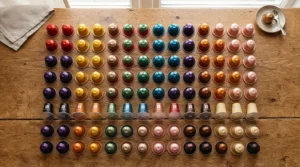
Nespresso has offered an aluminum capsule recycling program since 1991 and provides free mail-back bags and drop-off options. Yet the company’s own reported global recycling rate sits near a third, which means most capsules still don’t make it back. K-Cups are mostly #5 plastic with an aluminum foil lid, and two of the largest U.S. recycling companies have said they won’t accept them, according to reporting. A Tasting Table breakdown of Nespresso vs Keurig sustainability covers the details.
What should you do? Use the brand’s take-back program if one exists, separate components (foil, cup, grounds) where your local recycler allows it, and consider reusable pods for compatible systems. If waste is a deal-breaker, E.S.E. paper pods or a French press avoid the issue. Whatever you choose, check your local rules before tossing pods in the blue bin.
Practical Setup Guide: Getting the Most From Any Pod Machine in the First 30 Days
A few small habits separate a delightful pod machine from a disappointing one.
Week one: prime and prep. Run the recommended blank or rinse cycles (Keurig suggests two before first use). Enter your Nespresso sample pack into rotation to find your favorites before buying in bulk.
Warm your cup. Nespresso’s own support advice for temperature complaints is to preheat the cup with hot water and use a cup sized to the drink. A 5 oz coffee in a giant mug cools fast.
Match size to pod. Brewing a small pod at a big cup setting is the classic cause of watery coffee. On a Keurig K-Elite, try strong brew or a smaller size.
Keep a cleaning rhythm. Rinse the tank weekly, empty the capsule bin daily on small-bin machines like the Illy Y3.3 iperEspresso, and descale on schedule.
Common first-30-day mistakes: ignoring descale alerts, using filtered water inconsistently, buying capsules in bulk before knowing your taste, and forgetting to register the machine and warranty. Fix these four and most “my machine is terrible” complaints disappear.
Real-World Scenarios: Which Pod Machine Fits Which Life?
Specs are abstract. Lives are not. Here are four profiles.
The college student with a tiny counter. If you’re a student in a small apartment drinking one espresso a day on a tight budget, the Nespresso Original Essenza Mini is a smart pick, with its low machine price and cheaper Original capsules. If you prefer a mug, the Nespresso Vertuo Pop+ fits the space too, but expect higher capsule costs.
The family of four with mixed tastes. Two coffee drinkers, one tea sipper, and a kid who wants cocoa? The Keurig K-Elite handles it with endless pod variety and a large tank. The Bosch Tassimo T20 is the alternative if you prefer one disc format for all hot drinks.
The remote worker making lattes. If you pour two or three milk drinks daily, the Keurig K-Café Barista Bar replaces coffee-shop runs without needing barista skills. Compare its mixed ratings against a Vertuo plus separate frother before deciding.
The illy loyalist. If you already prefer illy’s roast and buy it regularly, the Illy Y3.3 iperEspresso makes sense. Otherwise, its narrow pod supply is a poor trade.
Problem → Solution: Fixing the Most Common Pod Machine Complaints
“My coffee is lukewarm.” Preheat your mug with hot water, use a smaller cup, and on a Keurig K-Elite check the temperature setting. Vertuo temperature can’t be manually increased, so mug prep matters more there.
“The pods are costing me a fortune.” Do the three-year math, then consider cheaper compatible pods where they exist (far easier for K-Cups and Nespresso Original than for Vertuo). Buying multipacks usually beats single boxes.
“Coffee tastes weak.” Use a smaller size, pick a bolder blend, or choose the strong-brew option. On the Keurig K-Café Barista Bar, the concentrated 2 oz shot builds a stronger base for milk drinks.
“I feel guilty about the waste.” Use mail-back recycling for Nespresso, check local acceptance for K-Cups, or try reusable pods. If none of that works for you, consider the alternatives above.
“My machine died early.” Keep your receipt, register the warranty, and descale regularly. Some owners report reliability issues with certain models, including the Bosch Tassimo T20, so a retailer with an easy return policy is worth a few extra dollars.

FAQ
❓ Can I use Keurig K-Cups in a Nespresso machine?
❓ Are Nespresso Original and Vertuo capsules interchangeable?
❓ Which pod coffee machine has the cheapest capsules per cup?
❓ Where can I recycle Nespresso capsules and K-Cups?
❓ Is Nespresso or Keurig better for iced coffee?
Conclusion
So, which wins in a Nespresso machine vs other pod machine brands showdown? It depends entirely on how you drink coffee. If you want espresso-style shots and a refined result, Nespresso’s Original line, led by the Nespresso Original Essenza Mini, is hard to beat on value. If foam-topped mugs and one-touch simplicity matter, the Nespresso Vertuo Pop+ is the standout. If pod variety, big cups, and easy shopping matter most, the Keurig K-Elite is the sensible choice, and the Keurig K-Café Barista Bar fits latte fans. The Bosch Tassimo T20 suits mixed hot-drink households, the Illy Y3.3 iperEspresso suits illy devotees, and the Nescafé Dolce Gusto Genio S Plus suits variety seekers where pods are easy to find.
The deeper lesson is that the machine is the smaller decision. The capsule system, its cost per cup, its availability, and its lock-in are what you’ll live with. Do the three-year math, check pod availability, and pick the ecosystem you can happily feed.
✨ Ready to upgrade your mornings?
🔍 Compare current prices on your favorite pick, check capsule availability near you, and choose the pod system that fits your routine. Your future self, mid-sip, will thank you!
Recommended for You
- Nespresso Machine For Office Use: 7 Proven Picks For 2026
- Nespresso Machine With Built-In Frother: 7 Best Picks (2026)
- Nespresso Machine For Milk-Based Drinks: 7 Best Picks (2026)
Disclaimer: This article contains affiliate links. As an Amazon Associate, I earn from qualifying purchases. If you purchase products through these links, we may earn a small commission at no additional cost to you.
✨ Found this helpful? Share it with your friends! 💬🤗
