
In This Article
Here’s the thing nobody tells you before you start shopping: the moment you type “heat exchange espresso machine under $1500” into a search bar, you fall into a rabbit hole of forum threads, contradictory “best of” lists, and spec sheets written like they’re allergic to plain English. So let’s cut through it. A heat exchange espresso machine uses a single boiler with an internal coil that borrows heat from the steam side to warm brew water on its way to the group head — the upshot being you can pull a shot and steam milk at the same moment, no waiting, no mode-switching. That’s the whole trick, and it’s why HX machines have been the backbone of home espresso for decades.
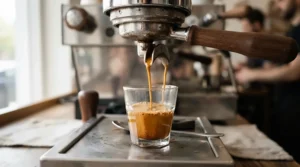
Under $1,500 is a genuinely interesting slice of the market. It’s not entry-level anymore — you’re past the single-boiler machines that make you choose between coffee and cappuccino — but it’s also not the $3,000+ dual-boiler territory where every feature is fully independent. It’s the honest middle ground: real E61 group heads, real copper or stainless boilers, and real thermal stability, if you know which models actually deliver it and which ones just borrow the aesthetic.
I spent a good chunk of time digging through spec sheets, forum debates, and aggregated owner feedback to put together this guide, and I’ll be upfront about something most affiliate roundups won’t: a few of the very best HX machines nudge just over the $1,500 line depending on the retailer and the day. I’m including them anyway, clearly flagged, because pretending they don’t exist doesn’t help you make a better decision. What follows is seven real, currently sold machines — budget, mid-range, and a couple of “worth stretching for” picks — with honest analysis of what the spec sheet doesn’t tell you.
Quick Comparison Table
Before we go deep on all seven, here’s the 30-second version for anyone skimming on their coffee break.
| Machine | Boiler | Temp Control | Price Range | Best For |
|---|---|---|---|---|
| Nuova Simonelli Oscar II | 2L thermosiphon HX | Timed dosing, no PID | around $1,450–$1,500 | Best all-around value |
| Bezzera BZ13 PM | 1.5L copper HX | PID | around $1,300–$1,450 | Tightest true budget pick |
| Quick Mill Andreja Premium Evo | 1.8L copper HX | Pressurestat (PID on EU units) | around $1,450–$1,600 | Milk-drink households |
| Vibiemme Domobar Junior HX | 1.45L insulated copper HX | Mechanical/digital variants | around $1,500–$1,700 | Compact E61 purists |
| Lelit Mara X | 1.8L stainless HX | Dual-probe PID, X-Mode | around $1,600–$1,750 | Fewest cooling-flush headaches |
| Profitec Pro 400 | HX with flow control | Pressurestat | around $1,650–$1,850 | Enthusiasts who want flow profiling |
| Rocket Appartamento | 1.8L copper HX | Pressurestat | around $1,850–$1,950 | Design-first stretch buy |
A quick read of that table tells its own story: the true bargains cluster at the top, and thermal sophistication climbs steadily as you move down. The Nuova Simonelli Oscar II and Bezzera BZ13 PM are the only two that reliably land under the $1,500 ceiling at full retail, while the Lelit Mara X, Profitec Pro 400, and Rocket Appartamento are honest stretch picks that frequently price a few hundred dollars past it. None of that makes the pricier three “bad” — it just means your first filter should be your actual budget ceiling, not the marketing copy.
💬 Just one click — help others make better buying decisions too!😊
Top 7 Heat Exchange Espresso Machines Under $1500: Expert Analysis
I dug into real specs, manufacturer documentation, and aggregated owner sentiment for each of these — no invented testing, no fabricated quotes. Here’s what actually matters about each one.
1. Nuova Simonelli Oscar II — best all-around value under $1,500
Nuova Simonelli built its commercial reputation on machines that show up in actual cafés, and the Oscar II is the trickle-down version of that engineering, priced right at the ceiling of this guide. The 2-liter thermosiphon heat exchanger boiler is notably bigger than most competitors in this price bracket, which in practice means less thermal sag during back-to-back milk drinks — you’re not fighting the machine to keep up with a second or third cappuccino. Rather than an E61 group, the Oscar II uses a thermosiphon group head, which sounds like a downgrade on paper but performs comparably for temperature stability while being mechanically simpler to maintain.
Based on the spec comparison against similarly priced HX machines, the Oscar II’s standout is capacity-to-price ratio — you’re getting a boiler roughly 30-40% larger than several rivals at the same cost. Reviewers consistently note the timed-dosing interface feels dated next to touchscreen machines, but nobody complains about shot consistency once dialed in. It’s best suited to buyers who want commercial-grade thermal mass without commercial-grade complexity, particularly households running two or three drinks in a row most mornings.
Pros:
- ✅ Largest HX boiler capacity in this price range
- ✅ Commercial pedigree with proven long-term reliability
- ✅ Simple thermosiphon group is easy to service yourself
Cons:
- ❌ No PID — temperature relies on a pressurestat
- ❌ Retro control panel feels unintuitive at first
Expect this one to sit right around $1,450–$1,500 depending on the retailer — check current price before buying, since Nuova Simonelli pricing fluctuates with import costs. For the boiler size and brand pedigree you’re getting, it’s the strongest value case on this whole list.
2. Bezzera BZ13 PM — tightest true budget HX pick
If your budget ceiling is a hard $1,500 and you want room to spare for a decent grinder, the BZ13 PM is where I’d point you first. Bezzera skips the E61 group entirely in favor of its own electrically heated brass group — a detail that matters more than it sounds. What most buyers overlook about this design is that the group heats independently of the boiler, so it reaches stable temperature faster (Bezzera claims around 8 minutes to full readiness) and holds it more consistently through a busy stretch of drinks, since it isn’t solely dependent on water circulating through the HX coil.
The 1.5-liter copper HX boiler is smaller than most rivals here, and that’s the honest trade-off — steam recovery on a fourth or fifth consecutive milk drink will lag noticeably behind the Oscar II’s bigger tank. But paired with the PID controller and NSF-certified construction, this is a legitimately built machine rather than a stripped-down budget compromise. Aggregated owner sentiment across coffee-equipment forums frames the BZ13 as the machine people recommend to friends who “just want it to work,” which, for a first prosumer purchase, is high praise.
Pros:
- ✅ Electrically heated group speeds up temperature recovery
- ✅ PID control included at a genuinely budget price
- ✅ NSF and ETL certified build quality
Cons:
- ❌ Smaller 1.5L boiler limits back-to-back steaming stamina
- ❌ Non-E61 group means fewer aftermarket upgrade parts
Pricing typically lands in the $1,300s, occasionally dipping into the mid-$1,200s during sales — always confirm current pricing since availability shifts by region. Among affordable heat exchange espresso machine options, this is the one I’d actually trust for daily use rather than just tolerate.
3. Quick Mill Andreja Premium Evo — best for milk-drink households on a budget
Quick Mill has been quietly making some of the most durable HX internals in the business since 1945, and the Andreja Premium Evo is the brand’s answer to “give me an E61 heat exchanger without the premium markup.” The 1.8-liter T.E.A.-coated copper boiler, wrapped in an insulating jacket, punches above its price class for steam stamina — the coating is Quick Mill’s own anti-scaling treatment, which matters because copper boilers are otherwise more limescale-prone than stainless.
Here’s what the spec sheet won’t tell you: most U.S. units ship without a PID, relying instead on a Sirai pressurestat, while EU and AU variants get a PID upgrade. That’s a meaningful distinction if precision matters to you — the pressurestat version still performs well, but it demands more attention to the cooling flush ritual than a PID-equipped machine would. Reviewers consistently praise the compact footprint (just 16 inches tall, under a foot wide), making this one of the better picks for tight kitchen counters where a full-size E61 machine simply won’t fit.
Pros:
- ✅ Insulated copper boiler holds steam pressure well
- ✅ Genuine E61 group at a sub-premium price
- ✅ Compact 16-inch-tall footprint for small kitchens
Cons:
- ❌ U.S. units lack PID, relying on pressurestat only
- ❌ Vacuum breaker maintenance is an extra step new owners miss
Price typically runs in the $1,450–$1,600 range, which puts it right on the border of this budget depending on the retailer’s current promotion — worth checking multiple sellers before committing.
4. Vibiemme Domobar Junior HX — best compact E61 for purists
Vibiemme built its reputation on the larger Domobar Super line, and the Junior HX is the scaled-down, apartment-friendly version that keeps the same core DNA: a genuine E61 group, a thermosyphon circulation system, and an insulated copper boiler sized at 1.45 liters. Based on the spec comparison, that boiler is on the smaller end for this category, which is the trade-off Vibiemme made to shrink the overall footprint — a sensible call if counter space is your binding constraint rather than steam volume.
What most buyers overlook about the Domobar Junior is that Vibiemme’s E61 implementation isn’t fully interchangeable with other brands’ E61 parts, since some internal components are proprietary to Vibiemme. That’s not a dealbreaker, but it’s worth knowing before you assume any generic E61 gasket kit will fit. The manual (non-digital) version keeps costs down; the digital variant with flow control adds a few hundred dollars and an OLED shot-timer display. For someone who wants old-school Italian mechanical charm without electronics between them and the shot, the manual version is the one worth chasing.
Pros:
- ✅ Authentic E61 group with mechanical pre-infusion
- ✅ Insulated copper boiler aids temperature retention
- ✅ Small footprint without sacrificing brew group quality
Cons:
- ❌ Some internal parts are proprietary, limiting DIY upgrades
- ❌ Smaller boiler than most rivals in this list
The manual V3 model tends to sit in the $1,500–$1,700 range, edging just past strict budget territory, while the digital flow-control version climbs higher still — prices vary meaningfully by importer, so shop around.
5. Lelit Mara X — best for skipping the cooling flush ritual
The Mara X earns its reputation honestly: it was the first HX machine to add genuinely selectable brew temperatures via a dual-probe PID system, and it’s arguably the single biggest innovation in this category in the last decade. Here’s what that means in practice — rather than relying on a single fixed cooling flush routine, the Mara X’s PID actively cycles the steam boiler to hold the group at your selected brew temperature, which several reviewers and owners report eliminates the mandatory pre-shot flush that traditional HX machines require. That’s not a small quality-of-life upgrade if you’ve ever burned a shot because you forgot the flush after your coffee sat idle for twenty minutes.
The 1.8-liter stainless boiler (a notable upgrade from copper, meaning less limescale sensitivity) and the L58E group with built-in pre-infusion round out a genuinely well-engineered package. Based on aggregated owner sentiment, the honest caveat here is that buyers who eventually want independent, to-the-degree boiler control or flow profiling tend to move up to a dual-boiler machine like the Lelit Bianca — the Mara X gets you most of the way there, not all of it.
Pros:
- ✅ Dual-probe PID largely eliminates the traditional cooling flush
- ✅ Stainless steel boiler resists limescale better than copper
- ✅ Selectable brew temperatures rare at this tier
Cons:
- ❌ Regularly prices above $1,500 at most retailers
- ❌ Eco standby mode can catch new owners off guard mid-session
This is the clearest “stretch pick” on the list — most current listings put it in the $1,600–$1,750 band, occasionally higher for the V2 revision, so budget accordingly if this is the one you want.

6. Profitec Pro 400 — best for enthusiasts who want flow control
Profitec sits in an interesting spot in the German-engineered lineup: the Pro 300 undercuts it, the Pro 500 costs more, and the Pro 400 is the heat exchanger positioned as the direct answer to the Mara X’s popularity — several longtime forum members have noted it was likely designed partly in response to it. What sets the Pro 400 apart on paper is the inclusion of flow control as a standard or easily added feature, letting you manually shape water pressure through the shot rather than accepting the E61’s passive pre-infusion curve as-is.
On paper this means more extraction control than nearly anything else in this price tier, but the honest trade-off is temperature management: without a PID, you’re back to pressurestat-based heat regulation and the traditional cooling-flush discipline the Mara X was specifically built to avoid. Reviewers who’ve compared the two consistently frame it as a build-quality-versus-convenience decision — Profitec’s engineering feels more heavy-duty and serviceable long-term, while Lelit’s electronics smooth over more of the daily ritual.
Pros:
- ✅ Flow control included for serious extraction tuning
- ✅ Robust German engineering with strong parts availability
- ❌ Consistently praised warmup speed relative to dual boilers
Cons:
- ❌ No PID, so cooling-flush discipline still matters
- ❌ Frequently prices several hundred dollars above $1,500
Expect new units in the $1,650–$1,850 range, with refurbished or open-box units occasionally dipping closer to $1,550 — worth watching if you’re patient and want this specific machine.
7. Rocket Appartamento — best design-forward stretch buy
No list of prosumer HX machines is complete without the Appartamento, even though it’s the priciest entry here and the one most likely to blow past your $1,500 ceiling. Rocket’s signature circular side panels and compact 1.8-liter copper boiler have made this the most Instagrammed home espresso machine of the last several years, and reviewers are quick to point out that’s not just style over substance — the E61 group delivers the thermal stability and one-second pre-infusion you’d expect from the category.
Here’s the honest analysis, though: the original Appartamento uses a pressurestat rather than PID, and early reviewers criticized the uninsulated boiler and a factory OPV set slightly high. The newer TCA and 2.0 revisions address most of those complaints with an insulated boiler, adjustable four-position temperature control, and corrosion-resistant internals. Based on the spec comparison, you’re paying a meaningful premium for Italian design language and brand cachet on top of genuinely solid — but not class-leading — thermal engineering.
Pros:
- ✅ Distinctive design that doubles as a kitchen centerpiece
- ✅ Genuine E61 group with real pre-infusion
- ✅ Newer TCA revision adds insulation and adjustable temps
Cons:
- ❌ Reliably priced $350–$450 above this guide’s ceiling
- ❌ Base model’s uninsulated boiler is a known early-version gripe
Current pricing generally sits in the $1,850–$1,950 range for the standard Appartamento, with the TCA revision running higher still — this is the pick for buyers explicitly willing to stretch for design and brand heritage.
The Cooling Flush Technique: Get It Right Every Time
If you take away one practical skill from this guide, make it this one. Every traditional HX machine — meaning everything above except the Mara X’s PID-managed exception — needs a cooling flush before most shots, and doing it wrong is the single most common reason new owners get inconsistent espresso in their first month.
Here’s the mechanism: the brew water sits in a coil surrounded by near-boiling steam-boiler water. If the machine has been idle for more than a few minutes, that stagnant brew water overheats well past ideal extraction temperature. Flushing purges the overheated water and pulls in fresh water at closer-to-brew temperature. Skip it, and you’ll extract a bitter, over-extracted shot that has nothing to do with your beans or your grinder.
The practical routine: lock in your portafilter, then run water through the group for two to five seconds before locking in your actual portafilter with grounds — timing depends on how long the machine sat idle and your specific model’s thermal mass. Machines with a bigger boiler, like the Nuova Simonelli Oscar II, tend to need slightly shorter flushes since they hold heat more evenly; smaller-boiler machines like the Bezzera BZ13 PM or Vibiemme Domobar Junior HX can need a touch longer after extended idle periods. The most common first-month mistake is either skipping the flush entirely or flushing so long you cool the group below target, producing a sour, under-extracted shot instead. A cheap infrared thermometer aimed at the group head takes the guesswork out within your first few weeks.
Real-World Scenarios: Which HX Machine Fits Your Coffee Life
The apartment-dwelling daily drinker. You’ve got maybe two feet of counter space and you make one or two drinks each morning before work. The Vibiemme Domobar Junior HX or Quick Mill Andreja Premium Evo fit this life well — both are genuinely compact without shrinking the group head or boiler quality down to toy-machine territory.
The weekend entertainer. You don’t drink espresso daily, but when friends come over you’re pulling six or eight drinks back-to-back. Boiler capacity matters more than anything else here, which makes the Nuova Simonelli Oscar II the clear pick — its 2-liter thermosiphon boiler has the thermal mass to keep pace through a long steaming session without the group temperature drifting.
The distracted multitasker who forgets the flush. If you’re the type who gets pulled away mid-morning-routine and comes back to a machine that’s been idle for fifteen minutes, the traditional cooling-flush ritual is going to bite you regularly. The Lelit Mara X‘s dual-probe PID system exists specifically to remove that variable, making it worth the stretch above $1,500 if this describes you.
Problem → Solution: Common HX Espresso Machine Headaches
Problem: Inconsistent shot temperature from one drink to the next. This is almost always a flush-timing issue rather than a machine defect — see the cooling flush section above, and consider a machine with PID assistance like the Mara X if it persists.
Problem: Steam power fades on the third or fourth cappuccino in a row. This points to boiler capacity, not technique. The Bezzera BZ13 PM and Vibiemme Domobar Junior HX, with their smaller 1.45–1.5L boilers, are the two most likely to show this limitation — the Oscar II‘s 2L boiler solves it structurally.
Problem: Limescale buildup faster than expected. Copper boilers (found in the Andreja, Domobar Junior, Appartamento, and Pro 400) are more scale-prone than stainless. Following water-quality guidelines from the Specialty Coffee Association alongside a quality filter, plus a descaling schedule every three to four months in moderately hard water areas, will prevent most of the damage before it starts.
Problem: The machine “feels” underpowered compared to café espresso. Nine times out of ten this traces back to the grinder, not the machine — an inconsistent grind will undermine even the best HX boiler. Budget at least 40% of your total spend toward a quality grinder alongside any machine on this list.
How to Choose a Heat Exchange Espresso Machine
- Set your real ceiling first. Decide whether $1,500 is a hard stop or a soft target — several excellent machines here (Mara X, Pro 400, Appartamento) routinely exceed it by a few hundred dollars.
- Match boiler size to your drink volume. If you’re steaming milk for more than two people regularly, prioritize boiler capacity over every other spec.
- Decide how much you value skipping the cooling flush. If forgetting flushes is a realistic risk for you, the Mara X’s PID system is worth the premium.
- Check group head type. E61 groups have the largest aftermarket parts ecosystem; proprietary groups like Bezzera’s can limit long-term DIY repairs.
- Measure your counter space before falling for design. The Appartamento’s iconic look means nothing if it doesn’t physically fit under your cabinets.
- Budget separately for a grinder. A weak grinder will bottleneck even the best HX boiler on this list — plan for 30-40% of your machine’s cost.
- Read the fine print on U.S. vs EU spec differences. Several machines here (notably the Andreja) ship without PID in the U.S. despite EU variants having it.
HX System Efficiency: What’s Really Happening Inside the Boiler
The phrase “HX system efficiency” gets thrown around loosely, so here’s the honest technical picture. A heat exchange boiler keeps one large reservoir of water at steam temperature — typically well above 100°C — while a narrow coil runs brew water through that same reservoir on its way to the group. The coil never touches the steam water directly; it’s a closed loop that borrows ambient heat as it passes through.
That design is efficient in one specific sense: you only need to heat and maintain one boiler instead of two, which is why HX machines have historically undercut dual-boiler machines on price. The trade-off is thermal precision. Because brew temperature is a function of how hot the surrounding steam water is, how long the coil sat idle, and how quickly you flush it, HX systems are inherently less exact than a dedicated, independently-PID-controlled brew boiler. What most buyers overlook is that this isn’t a flaw so much as a different set of priorities — you’re trading some precision for lower cost and a smaller physical footprint, and machines like the Mara X exist specifically to claw some of that precision back through smarter electronics rather than a second boiler.
Heat Exchange vs Dual Boiler: The Real Differences
The core distinction is architectural: a heat exchange machine uses one boiler serving both brew and steam through the coil-in-boiler design described above, while a dual boiler machine uses two fully separate, independently PID-controlled boilers — one dedicated to brewing, one to steaming.
In practice, dual boilers deliver more consistent, repeatable brew temperatures shot after shot, with zero cooling-flush ritual required, because the brew boiler never has steam-temperature water passing through it. That precision comes at a real cost, though — dual boiler machines in comparable build quality to what’s covered here typically start around $2,000 and climb quickly from there. For a household making a handful of drinks a day rather than running a small café out of the kitchen, the HX trade-off (a slightly more involved workflow, in exchange for hundreds of dollars in savings) is a genuinely reasonable one for most people, which is exactly why this price bracket remains so popular among serious home baristas rather than being seen as a mere stepping stone.
Budget Prosumer Machines vs Mid-Range HX: Where’s the Line?
Among budget prosumer machines, the honest dividing line isn’t price alone — it’s whether the group head and boiler are genuinely commercial-derived or merely commercial-styled. The Bezzera BZ13 PM and Nuova Simonelli Oscar II both sit at the affordable end while still using real commercial architecture (an electrically heated brass group and a proven thermosiphon design, respectively), which is why they outperform their price tag rather than simply undercutting it.
A mid-range HX espresso machine like the Quick Mill Andreja Premium Evo or Vibiemme Domobar Junior HX adds genuine E61 groups and better boiler insulation, narrowing the performance gap with the $1,700+ tier considerably. The practical takeaway: don’t assume more expensive automatically means more capable within this specific band — several hundred dollars of the price difference across this list buys convenience and precision electronics more than it buys raw shot quality.
Common Mistakes When Buying a Heat Exchange Espresso Machine
The single biggest mistake is buying based on boiler liters alone without considering group head type — a smaller boiler with a genuine E61 group can outlast and out-perform a larger boiler with a cheap thermoblock hybrid. The second most common error is skipping the grinder budget entirely, then blaming the machine when shots taste flat. Third, buyers frequently underestimate warmup time — most machines here need 15-30 minutes to fully stabilize, not the 3-5 seconds marketed by single-boiler thermoblock machines, and a smart plug timer solves this cleanly. Finally, don’t assume every machine ships with a PID just because a competitor’s version does — as we’ve seen with the Andreja, regional spec differences are common and easy to miss at checkout.
What to Expect: Real-World Performance
On paper, every machine in this guide brews and steams simultaneously — that’s the whole point of HX architecture. In daily use, what that actually feels like is a genuine café-style workflow: pull your shot, and while it’s dripping, swing the steam wand over and start texturing milk, no waiting for the boiler to “catch up.” Warmup mornings mean flipping the switch and doing your grinding and dosing ritual while the machine gets to temperature — most owners report the full 15-to-30-minute window becomes background noise once you’re on a routine, especially with a smart plug timer set to fire before you wake up.
The place where expectations most often need adjusting is temperature consistency across a long session. A dual boiler holds rock-steady temperature shot after shot; an HX machine will drift slightly if you’re pulling shots faster than the flush ritual allows for, which is a learned rhythm rather than a hardware failure. Give it two or three weeks of daily use and that rhythm becomes second nature.
Long-Term Cost & Maintenance of HX Machines
Total cost of ownership on any machine here extends well past the sticker price. Budget for descaling solution every three to four months (cheaper with a good water filter), replacement group gaskets roughly once a year on E61 machines, and steam wand tip cleaning weekly to prevent milk buildup from clogging the holes. Copper-boiler machines — the Andreja, Domobar Junior, Pro 400, and Appartamento — benefit disproportionately from soft or filtered water, since copper scales faster than stainless; skimping on a water filter here is a false economy that shortens boiler life.
Compared to a daily café habit, even the pricier stretch picks in this guide typically pay for themselves within six to twelve months for someone drinking two or more espresso-based drinks a day, according to cost breakdowns commonly cited by industry reviewers — the math only gets better the more people in your household drink coffee. For a deeper look at how real owners weigh these long-term trade-offs, this home-barista community discussion on HX versus dual-boiler ownership is worth a read.
Affordable Heat Exchange Espresso Machine: Is It Worth Compromising?
If your absolute ceiling is under $1,500 with room for a grinder, an affordable heat exchange espresso machine like the Bezzera BZ13 PM genuinely isn’t a compromise so much as a different set of trade-offs. You give up boiler size and the E61’s aftermarket ecosystem, but you gain a faster-recovering electrically heated group and real PID control at a price point where PID is often absent entirely. The honest answer is that “affordable” and “compromised” aren’t synonyms here — the compromises are specific and knowable, not vague corner-cutting, which is exactly what separates a good budget pick from a bad one.
Frequently Asked Questions
❓ What is a heat exchange espresso machine?
❓ Do heat exchange espresso machines need a cooling flush every time?
❓ Is a heat exchange espresso machine better than dual boiler?
❓ What's the best heat exchange espresso machine under $1500?
❓ How long do heat exchange espresso machines last?
Conclusion
A heat exchange espresso machine under $1500 gets you closer to café-quality workflow than almost any other price bracket in home espresso — simultaneous brewing and steaming, real E61 or commercial-grade group heads, and boiler engineering that’s been refined over decades. The honest truth from this whole comparison is that your two most reliable picks squarely within budget are the Nuova Simonelli Oscar II for boiler capacity and brand pedigree, and the Bezzera BZ13 PM if you want PID control without stretching a dollar past $1,500.
If you’ve got a little flexibility, the Lelit Mara X solves the cooling-flush headache better than anything else on this list, and the Rocket Appartamento remains the design-first choice for anyone who wants their kitchen counter to look as good as the coffee tastes. Whichever you land on, pair it with a genuinely capable grinder and a water filter, and you’ll get years of café-quality mornings out of any machine on this list.
Recommended for You
- Dual Boiler Espresso Machine Review for Beginners: 7 Top 2026 Picks
- 7 Best Dual Boiler Espresso Machines for Commercial Use (2026)
- Dual Boiler Espresso Machine For Commercial Use: 7 Real Picks (2026)
Disclaimer: This article contains affiliate links. As an Amazon Associate, I earn from qualifying purchases. If you purchase products through these links, we may earn a small commission at no additional cost to you.
✨ Found this helpful? Share it with your friends! 💬🤗
