
In This Article
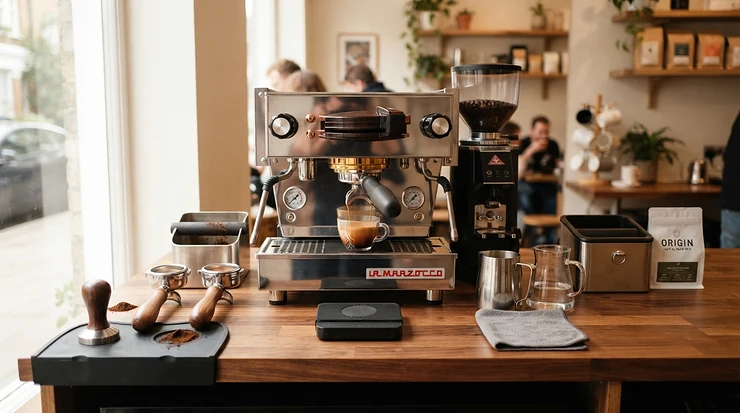
Here’s the thing nobody tells you when you start shopping for espresso gear: the boiler matters more than the brand name on the front panel. A heat exchange espresso machine is the quiet workhorse of the home-barista world — it lets you pull a shot and steam milk at the same time, using one boiler instead of two. That single design choice is why so many serious home setups, and plenty of small cafés, still lean on this technology decades after it was invented. If you’ve been staring at spec sheets wondering whether “HX” is worth the extra few hundred dollars over a single-boiler machine, you’re asking exactly the right question.
This guide walks through seven real, currently available heat exchange machines spanning budget to premium, plus the steam wand technique, microfoam science, and steam pressure fundamentals that actually determine whether your lattes look like café art or a science experiment gone sideways. We researched actual specs, aggregated review sentiment, and manufacturer documentation — no fabricated testing, no invented quotes. Just the honest breakdown you need before you spend real money.
A heat exchange espresso machine uses a single boiler filled with steam, with a thin tube (the “heat exchanger”) running through it that flash-heats fresh water for brewing on demand. That’s what makes simultaneous brewing and steaming possible, and it’s the backbone of the classic E61 group head design still found on most machines in this category today.
Quick Comparison Table
| Machine | Price Range | Group Head | Best For |
|---|---|---|---|
| Nuova Simonelli Oscar II | Around $1,500 | Thermosiphon | Budget entry into HX brewing |
| Turin Gallatin R | Around $1,650 | E61 | Rotary pump + flow control on a budget |
| Lelit Mara X | $1,650-$1,750 range | E61 | Best all-around temperature stability |
| Rocket Appartamento | $1,750-$1,950 range | E61 | Classic Italian looks, compact footprint |
| Profitec JUMP | $1,900-$2,300 range | E61 | Tech-forward compact HX with PID |
| Diletta Bello+ | Under $2,500 | E61 | Handmade Italian build with active temp management |
| Profitec Pro 800 | $2,600-$2,800 range | Lever | Enthusiasts who want manual pressure profiling |
Looking at this lineup, the split really comes down to how much control you want over the process. The Nuova Simonelli Oscar II and Turin Gallatin R get you into genuine HX territory without maxing out a credit card, while the Lelit Mara X solves the classic HX headache — temperature drift — better than machines twice its price used to. If you want to slow down and treat espresso like a ritual rather than a routine, the Profitec Pro 800‘s manual lever brings a different kind of control entirely, though it demands more from the person pulling the shot.
💬 Just one click — help others make better buying decisions too!😊
Top 7 Heat Exchange Espresso Machines: Expert Analysis
1. Nuova Simonelli Oscar II — best budget entry into true HX brewing
The standout here is simple: you get a real 2-liter heat exchanger boiler for a price that usually only buys single-boiler machines. That’s a meaningful upgrade in capability.
The Oscar II skips the famous E61 group in favor of a thermosiphon design, which sounds like a downgrade but actually does a comparable job holding brew temperature steady shot after shot. Timed dosing is programmed through the control panel rather than a manual lever, and there’s no hot water outlet — a genuine omission if you’re an americano drinker.
Based on the spec comparison, this machine rewards people who want café-style simultaneous brew-and-steam without learning a lever or a PID interface. It’s the machine to hand a total beginner who’s outgrown a pod machine but isn’t ready to obsess over flow profiles yet. What most buyers overlook is that the lack of manual shot control is actually a feature for someone who just wants consistent, repeatable espresso every morning without fiddling.
Reviewers consistently report that the stainless housing holds up well over years of daily use, and the steam wand punches above its price class for milk volume and pressure. A common complaint in user reviews is the absence of a manual brew mode — the workaround (setting the timer to 60 seconds and stopping manually) works but feels like a patch rather than a real solution.
Pros:
- ✅ Real 2L heat exchanger boiler at an entry price
- ✅ Durable stainless steel housing built to last
- ✅ Strong steam wand for its price tier
Cons:
- ❌ No manual brew mode, only timed dosing
- ❌ No hot water outlet for americanos or tea
Priced around $1,500, the Oscar II delivers legitimate HX performance without premium-machine pricing — a strong value pick if you can live without manual shot control.

2. Turin Gallatin R — most rotary-pump power for the money
What stands out immediately is the rotary pump paired with flow control at a price point where most competitors still use a basic vibration pump.
The rotary pump runs quieter and handles continuous use better than a vibe pump, which matters if your household pulls four or five drinks back-to-back most mornings. Flow control lets you manually restrict water flow mid-shot, giving you a taste of the pressure-profiling tricks usually reserved for machines twice the price.
Here’s what to weigh: a rotary pump machine typically needs either a direct plumb-in or a larger external reservoir, so check your kitchen setup before buying. On paper this means more flexibility for dialing in unusual roast profiles, but it also means a slightly steeper learning curve than a “set it and forget it” HX machine.
Aggregated owner sentiment points to this machine punching well above its price class for build quality, though documentation and customer support are thinner than what you’d get from a more established European brand.
Pros:
- ✅ Rotary pump handles back-to-back drinks smoothly
- ✅ Flow control adds real pressure-profiling flexibility
- ✅ Strong value relative to rotary-pump competitors
Cons:
- ❌ Thinner documentation and support network
- ❌ May require plumbing or a larger reservoir setup
At around $1,650, the Gallatin R is the pick for anyone who wants rotary-pump reliability and flow control without paying dual-boiler prices.
3. Lelit Mara X — best all-around temperature stability
The Mara X earns its reputation for one reason: it solved heat exchangers’ oldest complaint, temperature drift, with an active thermal management system rather than just relying on a bigger boiler.
Under the hood, Lelit built in a management system that lets you prioritize either brew stability or steam power depending on what you’re making next, paired with a PID controller and the classic E61 group head. What that means in practice is fewer cooling flushes and more predictable shots, especially if you’re jumping between straight espresso and a string of milk drinks.
Based on the spec comparison, this is the machine most home baristas should default to unless they have a specific reason to look elsewhere — it’s compact, it fits standard kitchen counters, and it closes the performance gap with dual-boiler machines costing considerably more. What the spec sheet won’t tell you, but reviewers note, is that the rubber feet are a known weak point and the documentation around managing the thermal system can be frustratingly sparse for a machine this well-engineered.
Reviewers consistently report strong build quality and genuinely improved consistency compared to older-generation E61 heat exchangers, alongside occasional frustration with Lelit’s customer support when thermal management questions come up.
Pros:
- ✅ Active thermal management nearly eliminates cooling flushes
- ✅ Compact footprint fits small kitchens
- ✅ Genuine dual-boiler-rivaling shot consistency
Cons:
- ❌ Rubber feet are a recurring quality complaint
- ❌ Support documentation can be thin on thermal issues
In the $1,650-$1,750 range, the Mara X remains the benchmark HX machine most people should measure everything else against.
4. Rocket Appartamento — most classic Italian design in a compact frame
What grabs you first is the look — hand-built in Milan with cutout panels and a copper-toned finish that makes it feel more like a design object than an appliance.
Underneath the styling sits a 1.8-liter brass-and-copper heat exchanger boiler and the E61 group head, giving you the same thermal-inertia advantage prized in commercial machines. The mechanical pre-infusion valve gradually saturates the puck before full pressure hits, cutting down on channeling — a detail that matters more than most marketing copy admits.
Based on the spec comparison, this is a machine for someone who wants zero digital interface between them and their espresso — no PID, no display, just a pressure gauge and a lever. That simplicity is either a feature or a dealbreaker depending on your patience for manual temperature surfing. Reviewers consistently note that build quality and steam power justify the mid-price positioning, though the absence of PID control means you’re at the mercy of a standard pressurestat rather than digital precision.
A recurring theme in aggregated feedback: this machine will “survive decades” with basic maintenance like filtered water and regular backflushing, which is a meaningful long-term value argument even against cheaper alternatives.
Pros:
- ✅ Excellent temperature stability from E61 thermal inertia
- ✅ Standout Italian design and build quality
- ✅ Genuinely long service life with basic upkeep
Cons:
- ❌ No PID control, fully manual pressurestat
- ❌ Vibration pump is louder than rotary alternatives
Priced between $1,750 and $1,950 depending on finish, the Appartamento suits buyers who value craftsmanship and simplicity over digital bells and whistles.
5. Profitec JUMP — most tech-forward compact HX machine
The headline feature is the 3-position PID switch that lets you toggle brew temperature instantly — something you’d normally need a full digital PID display to access.
Despite a 9-inch-wide footprint, the JUMP packs a 1.6-liter insulated stainless steel heat exchange boiler and a 2.8-liter reservoir, enough to run several milk drinks in sequence without falling behind. An OLED display doubles as a shot timer, and automatic pre-infusion is toggleable — features that used to be reserved for machines a full price tier up.
Here’s what to weigh: because it’s a heat exchanger, you get simultaneous brew-and-steam capability, which reshapes your morning routine if you’re regularly making more than one drink. What most buyers overlook about this model is that the German engineering (built near Heidelberg) shows up less in flashy specs and more in tolerances and long-term reliability — the kind of thing you only notice after two years of daily use, not week one.
Reviewers consistently describe the build quality as outclassing other machines at a similar price, with the walnut accents on the joysticks and portafilter handle adding a tactile, non-plasticky feel that budget machines rarely manage.
Pros:
- ✅ Instant 3-way PID temperature switching
- ✅ Automatic pre-infusion with built-in shot timer
- ✅ Genuinely space-saving at just 9 inches wide
Cons:
- ❌ Flow control is a costly optional add-on
- ❌ Premium pricing relative to similarly sized competitors
Base models run $1,900-$2,300 depending on retailer and accessories, making the JUMP a strong pick if counter space is tight but you still want precise control.

6. Diletta Bello+ — most refined handmade HX under $2,500
What sets the Bello+ apart is active temperature management that essentially eliminates the cooling flush — a ritual every other traditional HX owner has learned to tolerate.
The machine combines an E61 group head with PID temperature control and programmable pre-infusion, all assembled by hand in Italy using commercial-grade components. The stainless steel boiler is even wrapped in an insulating blanket, a small but telling detail about how seriously the manufacturer treats thermal consistency.
Based on the spec comparison, this is the machine for someone who wants the ritual and craftsmanship of a traditional Italian HX but isn’t willing to accept the temperature-surfing quirks that come with older designs. Reviewers consistently point to shot-to-shot consistency and steam power as standout traits, describing it as the most polished heat exchanger available under $2,500. What the spec sheet won’t tell you is that the pressure gauge — monitoring both boiler and group-head pressure — genuinely helps with dialing in shots, not just looking impressive on the counter.
A recurring theme across aggregated feedback is that this machine narrows the gap with dual-boiler machines costing considerably more, particularly for households heavy on milk drinks.
Pros:
- ✅ Cooling-flush-free thermal management system
- ✅ Handmade Italian construction with commercial components
- ✅ Dual pressure gauges aid precise shot dialing
Cons:
- ❌ Smaller review pool than more established brands
- ❌ Premium positioning within the HX category
Coming in under $2,500, the Bello+ is the pick for buyers who want the most refined traditional HX experience currently on the market.
7. Profitec Pro 800 — best for hands-on lever enthusiasts
The Pro 800 stands apart from every other machine on this list for one reason: it’s a spring-loaded lever machine, putting shot pressure directly in your hands rather than behind a pump.
A 3.5-liter copper dipper boiler pairs with a hidden PID controller for temperature precision, while lever valves — handles carved from American walnut — control steam and hot water instead of the usual rotary knobs. Because the vibratory pump only engages in tank mode, plumbing it in for fixed water supply quiets the whole operation further.
Here’s what to weigh: pulling a lever shot is a fundamentally different skill than pressing a button, and the learning curve is real. On paper this means more experimentation and inconsistency at first, but reviewers consistently note that once dialed in, lever machines deliver a distinctly different mouthfeel and body that pump-driven HX machines can’t fully replicate. What most buyers overlook is that the 2-hole steam tip, while commercial-standard, isn’t quite as fast for milk texturing as the multi-hole tips on some competitors — a fair tradeoff for the tactile brewing experience you’re buying into.
Pros:
- ✅ Manual lever control over shot pressure
- ✅ PID-controlled copper boiler for temperature precision
- ✅ Striking design with handcrafted walnut details
Cons:
- ❌ Steep learning curve compared to pump machines
- ❌ Slower steam recovery than some multi-hole competitors
At $2,600-$2,800 depending on configuration, the Pro 800 is a deliberate choice for enthusiasts chasing manual control, not a first machine for beginners.
Practical Usage Guide: Your First 30 Days With a Heat Exchange Espresso Machine
The single biggest first-30-days mistake is skipping the cooling flush on traditional (non-actively-managed) HX machines. Because the group head sits right next to a near-boiling steam boiler, brew water can overheat between shots — a quick 1-2 second flush through the group before pulling a shot resets the temperature. Machines like the Lelit Mara X and Diletta Bello+ minimize this need with active thermal management, but the Rocket Appartamento, Nuova Simonelli Oscar II, and Profitec Pro 800 still benefit from the habit.
Descaling schedule matters more than most new owners realize. Depending on your water hardness, plan on descaling every 2-3 months with a food-safe descaling solution, and backflush with a cleaning detergent weekly if you’re pulling multiple shots daily. Skipping this is the single fastest way to shorten the life of any heat exchange espresso machine, regardless of price tag.
For the first week, resist the urge to chase perfect extraction numbers immediately. Dial in your grinder first — most HX machines are less forgiving of stale or poorly-ground beans than pod-based systems, so a consistent grind matters more than a fancy machine. Once your shots taste balanced, move to milk texturing practice, since heat exchangers make it easy to practice both skills in the same session without waiting between tasks.
Real-World Scenarios: Which HX Machine Fits Your Life
If you’re a busy parent making two lattes and a straight shot every weekday morning before the school run, the simultaneous brew-and-steam capability of a heat exchanger isn’t a nice-to-have — it’s the entire point. The Lelit Mara X or Diletta Bello+ fit this scenario well because their active thermal management keeps up with rapid, back-to-back drink orders without a cooling flush between each one.
If you’re a solo espresso purist who wants exactly one excellent shot most mornings and treats brewing as a slow ritual rather than a rushed task, the Profitec Pro 800‘s lever system rewards that patience with a level of manual control pump machines can’t offer. Budget matters less here than the willingness to learn a genuinely different brewing method.
If you’re a small-apartment dweller with limited counter space but still want café-quality output, the Profitec JUMP‘s 9-inch width and the Rocket Appartamento‘s compact 10.5-inch footprint solve the space problem without sacrificing E61 group head performance — and both let you steam milk while a shot pulls, which matters when your kitchen doesn’t have room for two separate stations.
How to Choose a Heat Exchange Espresso Machine
- Decide how many milk drinks you make daily. If it’s more than one back-to-back, prioritize active thermal management (Mara X, Bello+) over cheaper traditional HX designs that need cooling flushes.
- Check your counter space before your budget. A beautiful machine that doesn’t fit is a wasted purchase — measure width and clearance for the portafilter swing.
- Decide if you want a PID or a pressurestat. PID machines offer digital precision; pressurestat machines (Appartamento) offer simplicity and, some argue, more character.
- Factor in pump type. Rotary pumps (Gallatin R) run quieter and handle continuous use better; vibration pumps are cheaper and work fine for typical home volume.
- Consider your skill ceiling. A lever machine like the Pro 800 has real upside for enthusiasts willing to learn, but it’s a poor fit if you just want consistent, repeatable shots.
- Look at reservoir and boiler size together. A large reservoir with a small boiler still limits how many drinks you can make before a wait.
- Read the warranty and support reputation, not just the spec sheet. Aggregated owner feedback on documentation and customer service varies more between brands than raw specs suggest.
Common Mistakes When Buying a Heat Exchange Espresso Machine
The most frequent mistake is comparing HX machines purely on price without checking group head type. A thermosiphon design like the Oscar II’s isn’t inferior, but it behaves differently than an E61, and buyers who don’t research this end up disappointed when their new machine doesn’t match a review they read about a different group head entirely.
A close second: underestimating plumbing requirements. Rotary pump machines like the Gallatin R often need either a direct water line or a much larger external reservoir than vibration-pump machines, and this detail gets buried in spec sheets. Check before you buy, not after installation day.
Buyers also frequently skip researching real aggregated review sentiment in favor of marketing copy. A broader comparison of heat exchanger machines from Clive Coffee is worth reading precisely because it discusses tradeoffs honestly rather than just listing specs — that’s the kind of source that should inform a purchase decision more than a glossy product page.
Heat Exchange vs Dual Boiler Espresso Machines
The core tradeoff is simple: a heat exchange espresso machine uses one boiler for both brewing and steaming, while a dual boiler machine uses two separate boilers running at independent temperatures simultaneously. Dual boilers offer marginally better temperature precision because brew water isn’t flash-heated through a tube sitting inside a much hotter steam boiler — there’s less thermal “noise” to manage.
In practice, that precision gap has narrowed considerably. Machines like the Lelit Mara X and Diletta Bello+ use active thermal management specifically to close this gap, and most home baristas genuinely can’t taste the difference once a machine like the Mara X is dialed in. Where dual boilers still pull ahead is recovery speed between shots pulled in rapid succession, which matters more for a small café workflow than a household making three drinks each morning.
Cost is the other major factor. Dual boiler machines in comparable build quality typically run several hundred dollars more than their HX equivalents, since you’re paying for a second boiler, additional plumbing, and often more complex electronics. For most home users, a well-built heat exchange espresso machine delivers 90% of the dual-boiler experience for meaningfully less money — the Profitec Pro 800 and Diletta Bello+ in particular blur this line further.
Mastering the Steam Wand on a Heat Exchange Espresso Machine
A steam wand HX espresso machine setup gives you an advantage dual-boiler machines can’t easily match: because the boiler is already primed for steam duty, recovery between milk pitchers tends to be fast, letting you texture two or three drinks in quick succession. The tradeoff is that steam pressure on an HX machine is tied to the same boiler managing your brew water, so a poorly maintained machine can show pressure fluctuations that a dedicated steam boiler wouldn’t.
Positioning the wand tip just below the milk’s surface for the first two to three seconds introduces air and builds foam volume; submerging it deeper afterward creates the whirlpool that folds that foam into a smooth, unified texture rather than a separate layer of bubbles sitting on top. Machines with anti-burn wand sleeves, like the Rocket Appartamento and Profitec models, make this technique safer to practice as a beginner since accidental contact with the wand itself is less punishing.
Clean the wand immediately after each use with a damp cloth and a quick purge — dried milk inside the tip restricts steam flow and, over months, can throw off your microfoam consistency in ways that are hard to diagnose without knowing to check there first.

Turning Your HX Machine Into a Latte Art Practice Machine
Any of the seven machines above can double as a genuine latte art practice machine, but the ones with faster steam recovery — particularly the Diletta Bello+ and Lelit Mara X — let you run more practice pours per session without waiting on the boiler to catch back up. That matters more than people expect: latte art is a repetition skill, and fewer breaks between attempts means faster muscle memory.
Start practicing pours with plain water and a few drops of dish soap before wasting milk — it foams similarly enough to practice pitcher control and pour angle without the cleanup or cost. Once you move to real milk, a narrow-spout pitcher gives more control than a wide one, and starting your pour from higher above the cup, then dropping closer as the cup fills, is the fundamental motion behind nearly every classic pattern.
Consistency in your espresso pull matters as much as your milk technique — a canvas of thin, watery crema won’t hold a pattern no matter how good your microfoam is, so dial in extraction before blaming your pouring.
Microfoam Texture: The Science Behind the Silk
Microfoam is the layer of tiny, uniform bubbles that gives properly steamed milk its glossy, paint-like consistency — and it’s built almost entirely on milk proteins and temperature control. Casein and whey proteins in cold milk stabilize the air bubbles you introduce with the wand, but that stability has a narrow temperature window. Below roughly 60°C the foam hasn’t fully set; above about 65-70°C, those same whey proteins begin to break down, the foam turns thin and unstable, and the sugars start reacting in ways that produce a flat, slightly burnt taste rather than the natural sweetness milk develops in its ideal range.
Fat content plays a supporting role — whole milk generally produces more stable, silkier microfoam than skim, because fat molecules help the protein network hold its structure longer once poured. Fresh, cold milk also holds more dissolved oxygen, which gives you more working room when introducing air at the start of the steam.
Getting microfoam texture right is less about the machine and more about consistent habits: cold milk, a clean wand tip positioned correctly, and stopping at the right temperature rather than the right time on a clock, since ambient conditions shift how fast milk heats day to day.
Steam Pressure Explained: What It Actually Means for Your Milk and Shots
Steam pressure on a heat exchange espresso machine is generated in the same boiler that supplies your brew water, which is exactly why HX machines can froth milk and pull shots at once — but it also means pressure and brew temperature are linked in ways a dual-boiler machine’s are not. Higher boiler pressure generally means more aggressive steam output, which speeds up milk texturing but also makes it easier to overshoot your target temperature if you’re not paying attention.
Machines with a visible pressure gauge, like the Diletta Bello+ and Rocket Appartamento, let you monitor boiler pressure directly, which is genuinely useful for diagnosing problems — a pressure reading that’s drifted from spec is often the first sign a machine needs servicing, well before symptoms show up in your cup. Rotary pump machines like the Turin Gallatin R tend to deliver steadier pressure under continuous use than vibration pump machines, since the mechanism itself experiences less strain.
Practically, higher isn’t always better. Excess steam pressure without proper wand technique just produces bigger, harsher bubbles faster — it doesn’t automatically improve microfoam texture. Pressure needs to be paired with correct wand positioning to actually help.
Milk Frothing Technique: Step-by-Step for HX Machines
- Start with cold, fresh milk in a pitcher filled to just below the spout — cold milk gives you more working time before it reaches your target temperature.
- Purge the wand briefly into the drip tray to clear any condensation before it touches your milk.
- Position the tip just below the surface at a slight angle, off-center, so the milk begins spinning rather than just bubbling straight up.
- Introduce air for two to three seconds, listening for a light tearing-paper sound rather than a loud slurp — that sound is your signal you’re adding air correctly, not overdoing it.
- Lower the pitcher gradually as volume increases, keeping the tip just below the surface to maintain the whirlpool without pulling air in again.
- Submerge the tip slightly deeper once you’ve hit your target volume, letting the remaining steam integrate and heat the milk evenly.
- Stop around 60-65°C, tap the pitcher to release large surface bubbles, then swirl gently to fold in any remaining texture before pouring.
Machines with strong, steady steam output — the Profitec JUMP and Diletta Bello+ among them — tend to forgive small timing errors better than lower-pressure budget machines, which rewards practicing on a slightly more capable machine if latte art is a real priority for you.
Long-Term Cost & Maintenance
The real cost of a heat exchange espresso machine extends well past the sticker price. Budget roughly $15-30 every 2-3 months for descaling solution and cleaning detergent, plus occasional gasket replacement every 1-2 years depending on use frequency — a minor expense that prevents far costlier pump or boiler repairs down the line.
Water quality matters more than most new owners expect. Hard water accelerates scale buildup inside the boiler and heat exchanger tube, and scale is the single biggest driver of premature failure across every machine on this list. A basic water filter or using filtered/bottled water for the reservoir is a small upfront cost that meaningfully extends a machine’s working life — several owner reports across these machines specifically credit filtered water with avoiding the repair issues that plague neglected units.
Cost-per-cup math still favors these machines over café habits within one to two years for a moderate daily drinker, even after factoring in beans, milk, descaling supplies, and the occasional professional service call every few years for machines running daily.
Frequently Asked Questions
❓ Is a heat exchange espresso machine better than a single boiler?
❓ How long does a heat exchange espresso machine last?
❓ Do I need a PID on a heat exchange espresso machine?
❓ Can beginners use a heat exchange espresso machine?
❓ Why does my HX machine need a cooling flush?
Conclusion
Choosing a heat exchange espresso machine really comes down to how you actually use it, not which model has the flashiest spec sheet. If milk drinks dominate your routine, the active thermal management on the Lelit Mara X or Diletta Bello+ will save you real frustration over cooling-flush routines. If counter space is your constraint, the Profitec JUMP and Rocket Appartamento solve that without giving up E61-grade performance. And if you’re chasing a slower, more hands-on ritual, the Profitec Pro 800‘s lever system offers something none of the pump-driven machines here can replicate.
Whichever machine you land on, remember that the boiler is only half the equation — a decent grinder, filtered water, and a genuine commitment to practicing your steam wand technique will do more for your daily cup than upgrading from a $1,500 machine to a $2,800 one ever will.
Recommended for You
- Heat Exchange Espresso Machine For Lever Operation: 7 Picks (2026)
- Heat Exchange Espresso Machine For Small Households: 7 Best 2026 Picks
- 7 Best Heat Exchange Espresso Machines For Home Use In 2026
Disclaimer: This article contains affiliate links. As an Amazon Associate, I earn from qualifying purchases. If you purchase products through these links, we may earn a small commission at no additional cost to you.
✨ Found this helpful? Share it with your friends! 💬🤗
