
In This Article
Somewhere between a $150 pod machine and a $3,000 commercial-grade setup sits the most interesting price bracket in home espresso: under $1000. This is where an espresso machine under 1000 dollars stops being a compromise and starts being a genuine tool — the kind with real thermal stability, real steam power, and real longevity, rather than a plastic shell pretending to be a barista station. A semi auto espresso under 1000 typically means you control the grind, the dose, and the shot timing yourself, while the machine handles water temperature and pressure. That hands-on control is exactly why serious home baristas rarely graduate past this range unless they’re chasing dual-boiler luxury they don’t strictly need. Below, we break down seven real machines — spanning true budget entries to genuine prosumer entry point territory just under the $1000 ceiling — based on their actual boiler design, build materials, and aggregated owner sentiment, so you can figure out which one matches your coffee habits instead of your fear of overspending.
What Is a Semi-Automatic Espresso Machine Under $1000?
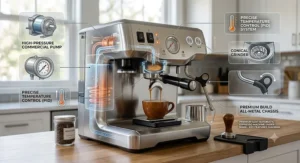
A semi-automatic espresso machine under $1000 is a home brewing device where you manually start and stop each shot while the machine controls water temperature and pump pressure. In this price range, expect single boiler with PID temperature control, commercial-style portafilters, and — on the higher end — E61 group heads once reserved for café equipment. A patent filing on espresso brewing methods notes that shot quality depends heavily on precise, adjustable control over both pressure and temperature — exactly the variables a PID controller is designed to manage.
Quick Comparison Table
| Machine | Best For | Boiler Type | Price Range |
|---|---|---|---|
| Breville Barista Express | All-in-one with built-in grinder | Thermocoil, PID | $700-$750 |
| Gaggia Classic Pro | Budget entry, most moddable | Single boiler | $450-$500 |
| Rancilio Silvia | Durable no-grinder workhorse | Single boiler | $700-$750 |
| Breville Bambino Plus | Compact budget PID pick | Thermojet, PID | $400-$500 |
| Lelit Anna | Compact prosumer alternative | Single boiler, PID | $650-$700 |
| Lelit Victoria | Prosumer entry point, E61 group | Single boiler, PID | $950-$999 |
| Bezzera New Hobby | Commercial-style build | Single boiler | $800-$900 |
Reading across this table, there’s a clean split between all-in-one machines with a built-in grinder (the Breville Barista Express) and dedicated brew-only machines that assume you already own or will buy a separate burr grinder (everything else here). The Lelit Victoria stands out as the closest thing to commercial hardware you’ll find under $1000, thanks to its E61 group head, while the Breville Bambino Plus wins on footprint and simplicity for anyone tight on counter space. If you’re deciding between a grinder-included machine and a brew-only prosumer pick, your existing grinder situation should drive that decision more than price alone.
💬 Found a machine that fits your kitchen? Share this guide with a friend who’s still stuck on pod coffee!
💬 Just one click — help other golfers find the right club for their game too!😊
Top 7 Espresso Machines Under $1000: Expert Analysis
1. Breville Barista Express — best all-in-one with built-in grinder
The standout feature is the integrated conical burr grinder with a dial-adjustable size setting, which briefly expanding on that: it means you get grind-to-cup control without buying, plumbing in, or finding counter space for a separate machine. The thermocoil heating system paired with PID temperature control keeps shot temperature consistent, while the 54mm portafilter, though smaller than commercial 58mm baskets, is genuinely capable in the hands of a careful home barista. Based on the spec comparison, this is the strongest single pick for someone who wants to go from beans to shot in one box without assembling a two-piece setup. Reviewers consistently note that dialing in grind size takes practice, and the stock portafilter basket is a common early upgrade, but the core machine holds up well over years of daily use. The tradeoff for that convenience is a single boiler, meaning brewing and steaming aren’t simultaneous.
Pros:
- ✅ Built-in grinder eliminates a separate purchase and setup step
- ✅ PID temperature control keeps shots consistent shot after shot
- ✅ Dial-adjustable grind size makes dialing in approachable
Cons:
- ❌ Single boiler means waiting between brewing and steaming
- ❌ Stock portafilter basket is a common early upgrade
At around $700-$750, the Breville Barista Express remains the default recommendation for anyone who wants one machine to handle the entire process without buying components separately.
2. Gaggia Classic Pro — best budget entry and most moddable
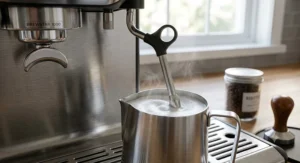
What most buyers overlook about this machine is that its real value isn’t what comes in the box — it’s what the aftermarket can turn it into. The Classic Pro ships as a straightforward single-boiler semi-automatic without a grinder, but it has one of the most active modding communities in home espresso, with widely available PID kits, over-pressure valve springs, and flow-control upgrades. Here’s what to weigh: out of the box, it’s a capable, no-frills machine that produces solid shots once you learn its quirks; with a $100-$150 PID mod, owners report it can compete with machines costing $300-$400 more. Aggregated review sentiment consistently praises its simple boiler design and stainless steel build, with the main complaint being the stock pressurized basket, which many owners swap for a naked portafilter fairly quickly.
Pros:
- ✅ Lowest price point of any machine on this list
- ✅ Massive aftermarket support for PID and pressure mods
- ✅ Simple, durable boiler design built to last for years
Cons:
- ❌ No built-in grinder, requiring a separate purchase
- ❌ Stock portafilter basket needs upgrading for best results
Priced around $450-$500, the Gaggia Classic Pro is the smartest entry point for hobbyists who want room to grow the machine alongside their skills.
3. Rancilio Silvia — best durable no-grinder workhorse
The insulated brass boiler is the headline feature here, and what most buyers overlook is how much that single component contributes to heat stability and long-term durability compared to the thinner boilers found in cheaper machines. Because this is a single boiler without a pressure gauge, you’ll need to learn “temperature surfing” — flushing water through the group head to dial in brewing temperature — which is a real learning curve compared to PID-equipped alternatives. Based on the spec comparison, the Silvia rewards patience: reviewers consistently describe it as a machine that takes real time to master but delivers commercial-grade steam power and years of reliable service once you do. It has no built-in grinder, so factor that into your total budget. The commercial-grade steam wand is a genuine highlight, producing microfoam quality that punches well above machines at this price.
Pros:
- ✅ Insulated brass boiler delivers excellent heat stability
- ✅ Commercial-grade steam wand produces genuine microfoam
- ✅ Iron-frame build known to last well over a decade
Cons:
- ❌ Requires temperature surfing without a PID or gauge
- ❌ No built-in grinder and a roughly 20-minute warm-up
At around $700-$750, the Rancilio Silvia is best for buyers who want to genuinely learn the craft rather than have the machine handle temperature for them.
4. Breville Bambino Plus — best compact budget PID pick
The standout feature is Breville’s Thermojet heating system, which briefly expanding on that: it heats water dramatically faster than a traditional boiler, meaning a much shorter wait from power-on to first shot compared to the Silvia or Gaggia. Paired with built-in PID temperature control and automatic pre-infusion, the Bambino Plus produces impressively consistent shots for its compact footprint and price. Based on the spec comparison, this is the best fit for someone unsure whether espresso is a long-term hobby, since it delivers genuinely good results without demanding a large investment or counter space. Reviewers consistently highlight how much more consistent it feels compared to single-boiler semi-automatics in its price range, though the stock portafilter and basket are frequently cited as needing an upgrade, and temperature isn’t independently adjustable.
Pros:
- ✅ Thermojet heating means a dramatically faster warm-up
- ✅ Built-in PID delivers strong shot-to-shot consistency
- ✅ Compact footprint fits small kitchens and apartments easily
Cons:
- ❌ Temperature is not independently adjustable by the user
- ❌ Stock portafilter and basket are a common early upgrade
In the $400-$500 range, the Breville Bambino Plus offers some of the best value on this list for anyone testing the waters of home espresso.
5. Lelit Anna — best compact prosumer alternative
The compact chassis paired with genuine PID temperature control is the standout combination — what most buyers overlook is how rare it is to find true PID precision in a footprint this small. Built in Italy, the Anna targets buyers who want prosumer-grade temperature stability without the larger frame of machines like the Silvia or Victoria. Based on the spec comparison, this makes it a strong fit for smaller kitchens where counter space is the limiting factor rather than budget. Aggregated review sentiment highlights its fast heat-up relative to boiler-only competitors and dependable, no-fuss mechanical controls, with the tradeoff being a smaller boiler that limits back-to-back milk drinks compared to larger machines on this list. It has no built-in grinder, so factor a separate burr grinder into your overall budget.
Pros:
- ✅ Most compact machine on this list with genuine PID control
- ✅ Excellent espresso quality relative to its size and price
- ✅ Simple, reliable mechanical controls with minimal learning curve
Cons:
- ❌ Smaller boiler limits consecutive milk-based drinks
- ❌ No built-in grinder adds to the total investment
Around $650-$700, the Lelit Anna is the pick for space-conscious buyers who still want genuine PID precision.
6. Lelit Victoria — best prosumer entry point with E61 group
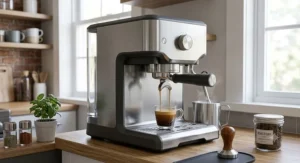
The commercial-grade LELIT58 E61 group head is the star feature, and it’s genuinely rare to find this level of thermal stability and mechanical pre-infusion this close to the $1000 ceiling. What most buyers overlook about the E61 design is that its thermosyphon circulation keeps brew temperature remarkably steady shot after shot, a feature typically reserved for machines costing considerably more. Paired with PID temperature control and programmable pre-infusion, the Victoria delivers professional-feeling results that Based on the spec comparison, justify its position as the top prosumer entry point on this list. Reviewers consistently point to it as the machine to buy when you’re ready to commit to espresso as a long-term hobby rather than a passing interest, with the honest caveats being a single boiler (so no simultaneous steaming and brewing) and a smaller boiler than some direct competitors.
Pros:
- ✅ Commercial-grade E61 group head with mechanical pre-infusion
- ✅ Genuine thermal stability rare at this price point
- ✅ Strong resale value thanks to the trusted Lelit name
Cons:
- ❌ Single boiler means no simultaneous brewing and steaming
- ❌ Smaller 300ml boiler than some higher-priced rivals
At roughly $950-$999, the Lelit Victoria is the clearest answer for anyone asking whether an $1000 espresso machine is worth it — for the right buyer, it genuinely is.
7. Bezzera New Hobby — best commercial-style build under $1000
The commercial-style group head paired with a 58mm portafilter is the standout feature — briefly expanding on that, it’s the same professional basket size used in cafés, which matters because larger baskets are generally more forgiving during the dialing-in process than smaller 54mm alternatives. Built by an Italian company with a long manufacturing history, the New Hobby pairs a 250mL brass boiler with the largest water tank on this list at 3 liters, meaning fewer refills during a busy morning. Based on the spec comparison, its steam power is the standout strength here: reviewers consistently note it can froth milk for a full latte in well under 30 seconds thanks to its professional steam wand, unusual for a machine this compact. It has no built-in grinder and no PID as standard, so temperature management still relies on user technique rather than automation.
Pros:
- ✅ Commercial-style 58mm portafilter and group head
- ✅ Largest water tank on this list at 3 liters
- ✅ Genuinely powerful steam wand for fast milk texturing
Cons:
- ❌ No PID as standard, requiring some temperature-surfing skill
- ❌ No built-in grinder, adding to the total setup cost
Priced around $800-$900, the Bezzera New Hobby is the pick for buyers who want commercial-grade components without crossing the $1000 line.
Practical Usage Guide: Dialing In and Maintaining Your Machine
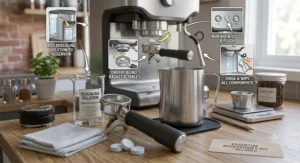
Your first 30 days with any semi-automatic espresso machine under $1000 should focus on dialing in grind size before you judge the machine itself — most disappointing first shots trace back to grind, not equipment. Start with a slightly coarser grind than you think you need, since a properly dialed-in shot should run for roughly 25-30 seconds; adjust finer if it runs too fast, coarser if it chokes. If your machine uses a single boiler like the Gaggia Classic Pro or Rancilio Silvia, practice temperature surfing by running a short flush through the group head before you brew, especially right after steaming milk. Descale every one to three months depending on your water hardness — hard water is the single fastest way to shorten the life of internal boiler components across every machine on this list. Finally, resist the urge to skip basket and portafilter maintenance; a clogged basket or dirty group gasket is one of the most common reasons a well-maintained machine like the Lelit Victoria starts producing inconsistent shots after months of otherwise normal use.
Real-World Scenarios: Which Machine Actually Fits Your Coffee Life
Picture a home cook who just got serious about coffee, has zero grinder, and wants to go from beans to espresso without buying two separate machines — that’s the exact use case the Breville Barista Express was built for, with its integrated grinder and dial-in convenience. Now picture a hobbyist who already owns a grinder, has some patience for a learning curve, and wants a machine they can upgrade themselves over years — the Gaggia Classic Pro with its enormous modding community solves that specific itch better than any all-in-one could. Finally, consider a buyer who’s already spent a year on an entry-level machine, knows their preferences, and is ready to invest in commercial-style components without going all the way to a $2,000 dual-boiler setup — that’s squarely the Lelit Victoria or Bezzera New Hobby, both genuine prosumer entry point machines that reward a buyer who already knows what they want. Matching the machine to your actual grinder situation and patience for a learning curve matters more here than simply picking the highest-rated option.
Problem → Solution: Common Home Espresso Mistakes
Sour, weak shots are usually a grind-size problem, not a machine problem — the fix is grinding finer and extending your shot time toward 25-30 seconds rather than assuming your machine is underpowered. Bitter, over-extracted shots typically mean your grind is too fine or your dose is too high; back off slightly and re-taste before making any other change. Inconsistent milk texture on machines without a PID, like the Bezzera New Hobby, usually comes down to technique rather than hardware — practice stretching the milk early in the steaming process, then focus purely on texturing once volume is set. A machine that seems to “lose” temperature between shots on single-boiler machines like the Rancilio Silvia is normal behavior, not a defect, and solved with a quick water flush rather than troubleshooting the boiler. Finally, scale buildup causing weak pressure or odd flavors nearly always traces back to skipped descaling — set a recurring reminder rather than waiting for symptoms to appear.
How to Choose a Home Espresso Machine Around $1000
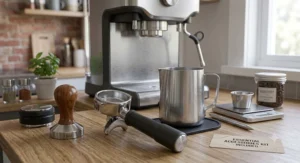
- Decide on grinder-included versus brew-only first. The Breville Barista Express solves both problems at once; every other machine on this list assumes a separate grinder purchase.
- Prioritize PID temperature control if consistency matters most to you. Machines like the Lelit Anna, Breville Bambino Plus, and Lelit Victoria remove the guesswork that single-boiler-only machines require.
- Match boiler size to your milk-drink habits. If you make multiple lattes daily, a larger boiler or willingness to wait between drinks matters more than it seems on paper.
- Check group head size and type. A commercial 58mm E61 group, like on the Lelit Victoria, is more forgiving during dial-in than smaller proprietary groups.
- Consider your appetite for DIY upgrades. The Gaggia Classic Pro rewards tinkerers; machines like the Breville lineup are more sealed-box in design.
- Budget for a separate grinder if needed. A quality burr grinder can cost $150-$300 and meaningfully affects shot quality more than the machine itself in many cases.
- Weigh warm-up time against your morning routine. Thermocoil and thermojet designs heat in seconds; traditional boilers like the Silvia can take 15-20 minutes.
Common Mistakes When Buying an Espresso Machine Under $1000
The most common mistake is spending the entire budget on the machine and having nothing left for a decent grinder — a mediocre grinder paired with a great machine consistently produces worse coffee than a great grinder paired with a modest machine. A second frequent error is assuming a higher bar-pressure number automatically means better espresso; pump pressure typically regulates down to roughly 9 bar regardless of whether the spec sheet advertises 15 or 20 bar. Buyers also frequently overlook boiler type entirely, choosing based on brand recognition rather than whether a single boiler’s brew-then-steam sequencing actually fits their routine of making multiple milk drinks back to back. Finally, skipping research on parts availability and community support is a mistake that shows up years later — machines like the Gaggia Classic Pro and Rancilio Silvia have decades of aftermarket parts behind them, while newer or less common models can be harder to service down the line.
Single Boiler with PID vs Heat Exchanger vs Dual Boiler
A single boiler with PID, found on machines like the Lelit Anna and Lelit Victoria, uses one reservoir for both brewing and steaming, with the PID controller locking in precise brew temperature but still requiring a short wait when switching from steaming back to brewing. A heat-exchanger design keeps the boiler hot for steam while routing brew water through an internal tube, enabling near-simultaneous brewing and steaming, though it typically demands the temperature-surfing technique that machines like the Rancilio Silvia are known for. Dual-boiler machines dedicate one boiler entirely to brewing and one to steaming, delivering the most consistent experience for back-to-back milk drinks, but genuinely reliable dual-boiler machines are rare below the $1000 mark and usually start closer to $1,400-plus. For most single-person or couple households making one to three drinks at a time, a well-executed single boiler with PID is more than sufficient, and the perceived downside of sequential brewing and steaming matters far less in practice than it sounds on a spec sheet.
Espresso Machines from $800 to $1000: The Prosumer Entry Point
This narrow band is genuinely the sweet spot of the entire under-$1000 category. An espresso machine 800 to 1000 dollars typically buys you components that were, until fairly recently, exclusive to commercial equipment — E61 group heads, thermosyphon circulation, and genuine 58mm portafilters, all present on the Lelit Victoria and Bezzera New Hobby. What separates this band from the $400-$700 range isn’t just polish; it’s meaningful thermal stability and build quality that translates into more consistent shots with less babysitting. According to the Specialty Coffee Association, consistent brew temperature within the 195-205°F range is one of the core variables separating a well-extracted shot from a sour or bitter one — and machines in this bracket are specifically engineered to hold that range more reliably than cheaper alternatives. If your budget allows stretching from $700 into the $800-$1000 range, the jump in thermal consistency and build quality is one of the more noticeable upgrades in the entire category.
Is a $1000 Dollar Espresso Machine Worth It?
For a casual coffee drinker making one drink a day, probably not — a $400-$500 machine like the Breville Bambino Plus will produce nearly identical quality with far less investment. For a genuine home barista who makes multiple drinks daily, cares about consistency, and plans to keep the machine for years, the answer shifts considerably. Machines like the Lelit Victoria deliver commercial-grade components — an E61 group head, PID control, programmable pre-infusion — that were exclusively found in $1,500-plus machines a decade ago, meaning you’re genuinely getting more capability per dollar than in past years. The honest analytical take: the value of a $1000 machine isn’t really about the coffee quality ceiling, since a well-dialed $500 machine and a well-dialed $1000 machine can both produce excellent espresso. It’s about consistency, durability, and how much of the process the machine handles versus how much falls on your technique. If you already know you’ll be making espresso daily for years, the investment tends to pay for itself in reduced frustration rather than dramatically better-tasting coffee.
✨ Don’t Miss These Exclusive Deals!
🔍 Ready to Build Your Home Espresso Setup?
Take your morning routine to the next level with a machine that actually matches how you drink coffee. Click on any highlighted pick above to check current pricing and availability — the right setup pays for itself in cafe visits you no longer need!
Best Breville Barista Express Alternatives Under $1000
If the Barista Express’s built-in grinder isn’t a priority, or you already own a separate grinder, several machines on this list make strong Barista Express alternatives. The Gaggia Classic Pro trades the grinder for a lower price and a genuinely legendary modding community, appealing to buyers who want to grow into the hobby gradually. The Rancilio Silvia trades automation for raw durability and steam power, appealing to buyers who want to learn manual temperature management rather than have it automated away. For buyers specifically seeking PID precision without Breville’s thermocoil approach, the Lelit Anna and Lelit Victoria both deliver genuine PID control with a more traditional Italian machine feel, while the Victoria’s E61 group head goes meaningfully further than the Barista Express’s smaller 54mm portafilter in terms of shot forgiveness. The right alternative ultimately depends on whether you’re optimizing for convenience (stick with Breville), moddability (Gaggia), steam power (Silvia), or commercial-grade components (Lelit Victoria).
Long-Term Cost & Maintenance: Descaling, Parts, and Grinder Pairing
The sticker price is only the starting point of total cost of ownership. Budget roughly $10-$20 every few months for descaling solution and replacement gaskets across any machine on this list, with machines that see hard water needing more frequent attention regardless of price point. If you’re buying a brew-only machine like the Rancilio Silvia, Gaggia Classic Pro, Lelit Anna, Lelit Victoria, or Bezzera New Hobby, factor in a separate burr grinder costing $150-$300, since grind consistency affects shot quality as much as the machine itself. Parts availability matters more than most buyers expect — the Gaggia and Rancilio both benefit from decades of aftermarket support, meaning a failed component years down the line is a simple, affordable fix rather than a reason to replace the whole machine. Machines with PID control, like the Bambino Plus and Lelit Victoria, generally need less troubleshooting over time since the temperature variable is automated away, translating into fewer wasted shots and less frustration during the ownership period rather than necessarily a lower repair bill. Independent testers at Home Grounds have made a similar point when comparing machines in this exact price bracket — parts availability and community support often matter more long-term than which model has the flashiest spec sheet on day one.
FAQ
❓ What's the best espresso machine under 1000 dollars in 2026?
❓ Is 800 to 1000 dollars enough for a good espresso machine?
❓ Do I need a separate grinder for a semi-auto espresso machine?
❓ What does PID mean on an espresso machine?
❓ Is a single boiler espresso machine good enough for daily use?
Recommended for You
- 7 Best Prosumer Espresso Machines in 2026: Worth The Upgrade?
- 7 Best Espresso Machine Under 800 Picks (2026): Worth the Money?
- Gaggia Classic Pro Review 2026: 7 Espresso Machines Tested
Conclusion
Choosing the right espresso machine under 1000 dollars really comes down to being honest about your grinder situation, your patience for a learning curve, and how many milk drinks you actually make in a day. The Breville Barista Express remains the easiest on-ramp if you want a single box that handles everything, while the Gaggia Classic Pro and Rancilio Silvia reward buyers who want to learn manual technique and eventually modify their machine. If you’re ready to commit to espresso as a long-term hobby, the Lelit Victoria and Bezzera New Hobby deliver genuine prosumer entry point components that were commercial-only just a few years ago. Whichever you choose, the machine is only half the equation — pairing it with a quality grinder and consistent maintenance will do more for your daily cup than chasing another few hundred dollars of machine spec sheet ever will.
Disclaimer: This article contains affiliate links. As an Amazon Associate, I earn from qualifying purchases. If you purchase products through these links, we may earn a small commission at no additional cost to you.
✨ Found this helpful? Share it with your friends! 💬🤗
